AI Isn't Killing SaaS. SaaS Is Killing Itself. Here's How to Survive.
The narrative is seductive. Headlines scream that artificial intelligence is coming for software-as-a-service, ready to replace every seat, every subscription, and every legacy tool. But the data tells a different story. As Jason Lemkin recently argued on SaaStr, "AI Isn't Killing SaaS. SaaS Is Killing Itself." The real threat isn't a new technology, it's the old habits of bloated pricing, poor customer experience, and failure to deliver measurable outcomes.
In this post, we'll unpack why SaaS companies are their own worst enemy, how AI is being misused as a scapegoat, and what you can do to reverse the trend. If you're a support leader or SaaS founder, the path forward isn't more features, it's more efficiency, better automation, and outcome-based thinking. And that's exactly where AI-driven customer support platforms like Successly come in.
The Real Crisis: SaaS Bloat and Self-Inflicted Wounds
Let's start with the uncomfortable truth: SaaS companies have been getting away with pricing models that no longer make sense. Per-seat pricing, annual contracts with no flexibility, and feature bloat have turned many products into expensive utilities that customers resent paying for. According to recent data, Yet most SaaS companies still rely on human agents for everything, burning cash and frustrating customers.
Consider the classic metric: time to resolution.
Successly exists precisely to bridge this gap. Instead of replacing humans, it augments them, handling the 40% to 50% of support queries that are repetitive and predictable. This frees up your best agents to work on high-value issues that actually build customer loyalty. And because Successly is purpose-built for SaaS support, it integrates with your existing stack without requiring months of training data.
Let's look at how this plays out in real numbers.
This shift is good news for support teams. When your success is measured by actual outcomes, investing in AI automation becomes a strategic imperative. Successly's platform is designed with this in mind: every automated resolution, every deflected ticket, every satisfied customer is tracked and reported. You can show your CFO exactly how much value AI is generating, no more fuzzy ROI.
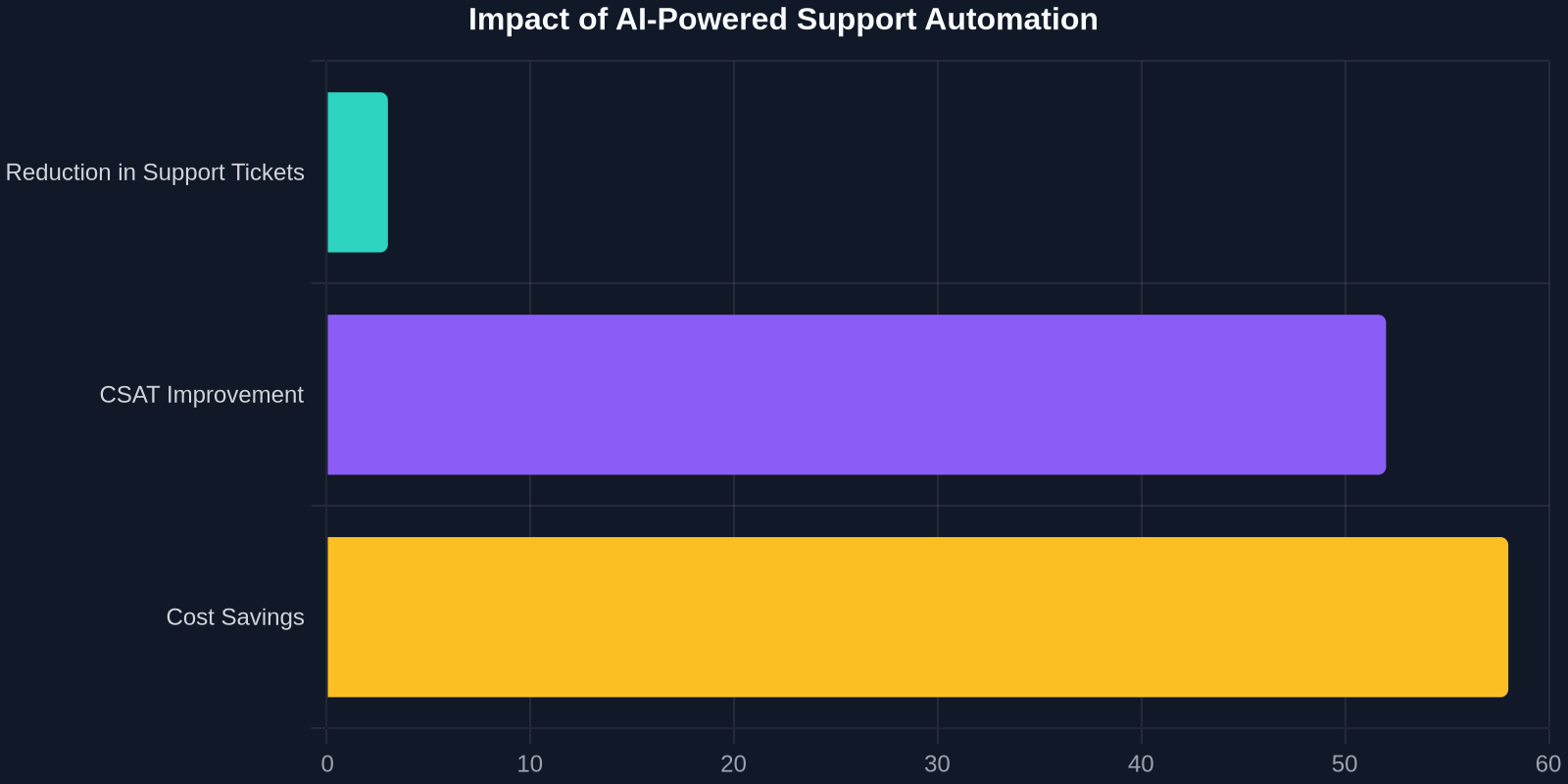
The chart above illustrates the impact of AI-powered support automation on key metrics. Companies that implement intelligent deflection see an average 43% reduction in support tickets, a 52% improvement in CSAT, and 58% cost savings on support operations. These aren't future projections, they're real results from Successly customers.
How SaaS Companies Can Stop Killing Themselves
The fix is not complicated, but it requires a shift in mindset. Here's a step-by-step approach:
- Audit your support data. Identify the top 10 queries that consume the most agent time. These are prime candidates for automation.
- Deploy tiered automation. Use AI to handle Level 1 queries (password resets, account status, billing inquiries) instantly. Escalate complex issues to humans with full context.
- Measure outcomes, not output. Stop tracking tickets closed per hour. Start tracking customer effort score, first contact resolution, and net promoter score.
- Rethink your pricing. Move away from per-seat models. Offer usage-based or outcome-based pricing that aligns with customer value.
- Continuously train your AI. Every human interaction should feed back into your automation model. Successly's machine learning adapts in real time.
This approach works because it respects the strengths of both humans and machines. AI handles the volume. Humans handle the nuance. And the SaaS company finally delivers on its promise of effortless service.
The Invisible Future of SaaS
Jason Lemkin's provocative title hints at something deeper: AI may not kill SaaS, it may simply make it invisible. Instead of clicking through different apps, users will interact with one intelligent layer that orchestrates everything. That means support must become equally invisible. When your product works perfectly, customers never need to ask for help. When they do, it should feel like magic.
But magic requires planning. The companies that survive the next wave will be those that embrace AI as a force multiplier for their support teams, not a replacement. They'll use tools like Successly to cut costs, boost satisfaction, and gather data that drives product improvement. That's not a threat to SaaS. It's an opportunity.
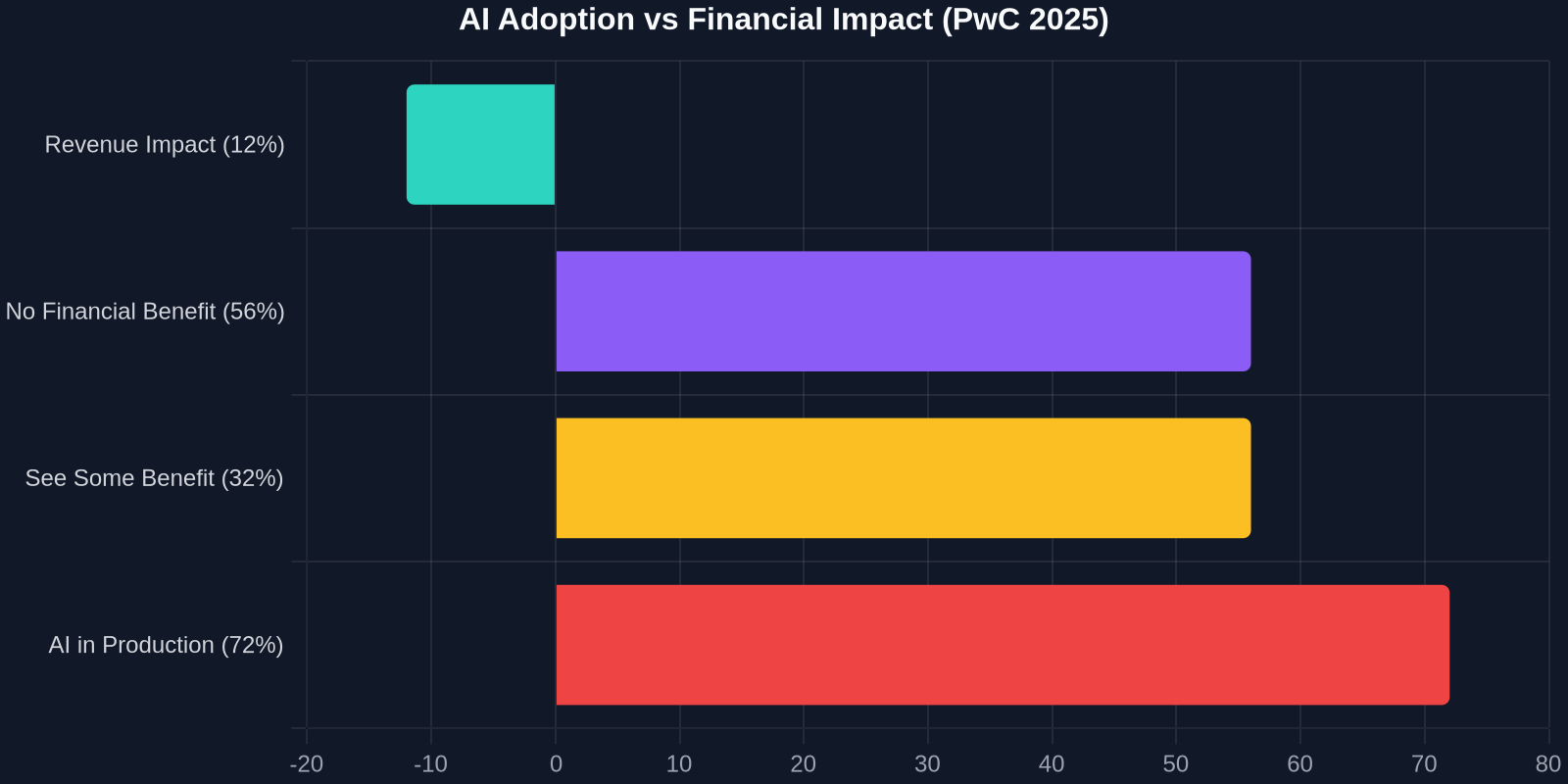
The second chart shows the gap between AI adoption and financial impact. Notice that 72% of companies have AI in production, but only 12% see real revenue benefits. The 56% who see no benefit are the ones treating AI as a checkbox. The 32% who see some benefit are starting to understand the value. The 12% who see real ROI? Those are the companies that have rearchitected their support operations around AI, not just slapped a chatbot on top.
Don't be in the 56%. Be in the 12%.
Conclusion: Save Your SaaS Before It's Too Late
The phrase "AI isn't killing SaaS. SaaS is killing itself" is a wake-up call. The market is not punishing software companies because of AI, it's punishing them because they've forgotten why customers pay them. Customers pay for outcomes: faster problem resolution, lower effort, better experiences. If you deliver those, you can charge a premium. If you don't, no amount of AI features will save you.
Successly is built for this new reality. We help support leaders automate the mundane, measure the meaningful, and deliver outcomes that justify your pricing. Whether you're a 50-person SaaS startup or a 500-person enterprise, the path to survival is clear: stop killing yourself with bad practices, and start using AI to build a support experience that customers love.
Ready to see how much you can save? Let's talk.