
O Apocalipse do SaaS Foi Superestimado: Como a IA Está Remodelando, Não Matando, a Economia de Assinaturas
Quando a Workday divulgou seus resultados do primeiro trimestre fiscal de 2025, as manchetes gritaram o óbvio: receita de assinaturas cresceu 17% ano a ano, margens operacionais em expansão e uma orientação inabalável que desafiava os nervos do mercado. Para uma indústria que havia sido declarada morta por um coro de capitalistas de risco, analistas e especialistas do Twitter apenas meses antes, o desempenho da Workday foi uma réplica silenciosa, mas poderosa. O "apocalipse do SaaS", a ameaça existencial de que a IA iria commoditizar o software, colapsar as margens de assinatura e transformar toda empresa de SaaS em uma utilidade, foi, segundo muitos participantes do mercado, "cancelado e era idiota desde o início."
Mas aqui está a verdade complexa: a narrativa não estava totalmente errada, era prematura e excessivamente simplista. A IA está de fato commoditizando a criação de código. Escrever funcionalidades padrão de software não é mais uma vantagem competitiva duradoura. A barreira de entrada colapsou para aplicações CRUD básicas, CRMs e até mesmo algumas plataformas de análise. O que os profetas do apocalipse perderam, no entanto, é a verdade essencial de que o software nunca foi apenas sobre o código.
O modelo de software como serviço sobrevive porque os clientes não compram código, eles compram resultados. Suporte, sucesso, implementação e confiança são os verdadeiros fossos. E surpreendentemente, a própria IA que ameaça commoditizar o produto é a mesma IA que pode potencializar os serviços ao seu redor.
SaaS companies that lean into AI-powered customer success and support automation are not just surviving, they’re widening their competitive moat. The companies that fail will be those that treat AI only as a cost-cutting tool rather than a service multiplier.
Rethinking the Apocalypse Narrative
The “SaaS apocalypse” moniker gained traction in early 2024 after a spate of high-profile analyst notes and VC blog posts arguing that generative AI would make SaaS obsolete. The logic was seductive: If AI can write code faster and cheaper than human engineers, new entrants can clone any SaaS product overnight. Incumbents with hundreds of millions in R&D would be undercut by a founder-and-a-laptop with a Cursor subscription and a GPT-4 API key. Margins would compress, churn would spike, and the subscription model would crumble under the weight of competition.
History suggests the opposite. Every technological wave, from the internet to mobile to cloud computing, triggered similar panic. The “death of software” was declared when Salesforce introduced the cloud CRM. The “death of on-premise” was declared with the rise of SaaS. Each time, incumbents that adapted survived, and those that rested on their code, not their customer relationships, failed.
Let’s look at the data: as of mid-2025, the cloud software index has recovered significantly from its 2023 lows. Key players like Microsoft, Salesforce, and Workday continue to expand margins, not contract. The real estate analogy is instructive, prime retail space in 2010 was supposed to die at the hands of e-commerce, but omnichannel retailers thrived by blending physical with digital. Similarly, the survivors in SaaS will be those that blend excellent code with excellent service.
The Commoditization of Code Is Real, But It’s Only Half the Story
The central argument of the doomsayers holds water: AI has made software development dramatically more efficient. Generative coding assistants like GitHub Copilot, Cursor, and others can reduce coding time by 30-50% for routine features. Founders now can prototype in days what used to take weeks. But this efficiency cuts both ways. It lowers barriers for new entrants, but it also lowers costs for incumbents to enhance their products and service layers faster than ever.

Where the “SaaS apocalypse” narrative fails is in its assumption that code quality and feature completeness are the primary determinants of customer retention and expansion. In reality, the SaaS flywheel, once acquisition, retention, and expansion, has always been driven by the post-sale experience.
When enterprises choose Workday over an AI-generated HRIS clone, they aren’t selecting a tool, they’re selecting a partner that ensures compliance with global payroll regulations, provides 24/7 support with real human empathy, and offers a success team that actively recommends process improvements. Code can be copied; trust is earned over years.
The New Moat: Hyper-Personalized Customer Success and Support
If code is becoming a commodity, what becomes the real defensible advantage? The answer lies in the layer of services, human and AI, that surround the product. Specifically, companies investing in AI-powered support and customer success are building data moats that get stronger over time.
Consider this: a traditional support team can handle 30-50 tickets per agent per day. With AI augmentation, like Successly’s intent-based routing and automated resolution for tier-1 issues, that capacity can jump dramatically. An agent isn’t drowning in repetitive password reset or billing questions; instead, they spend time on high-value, complex conversations that deepen the customer relationship.
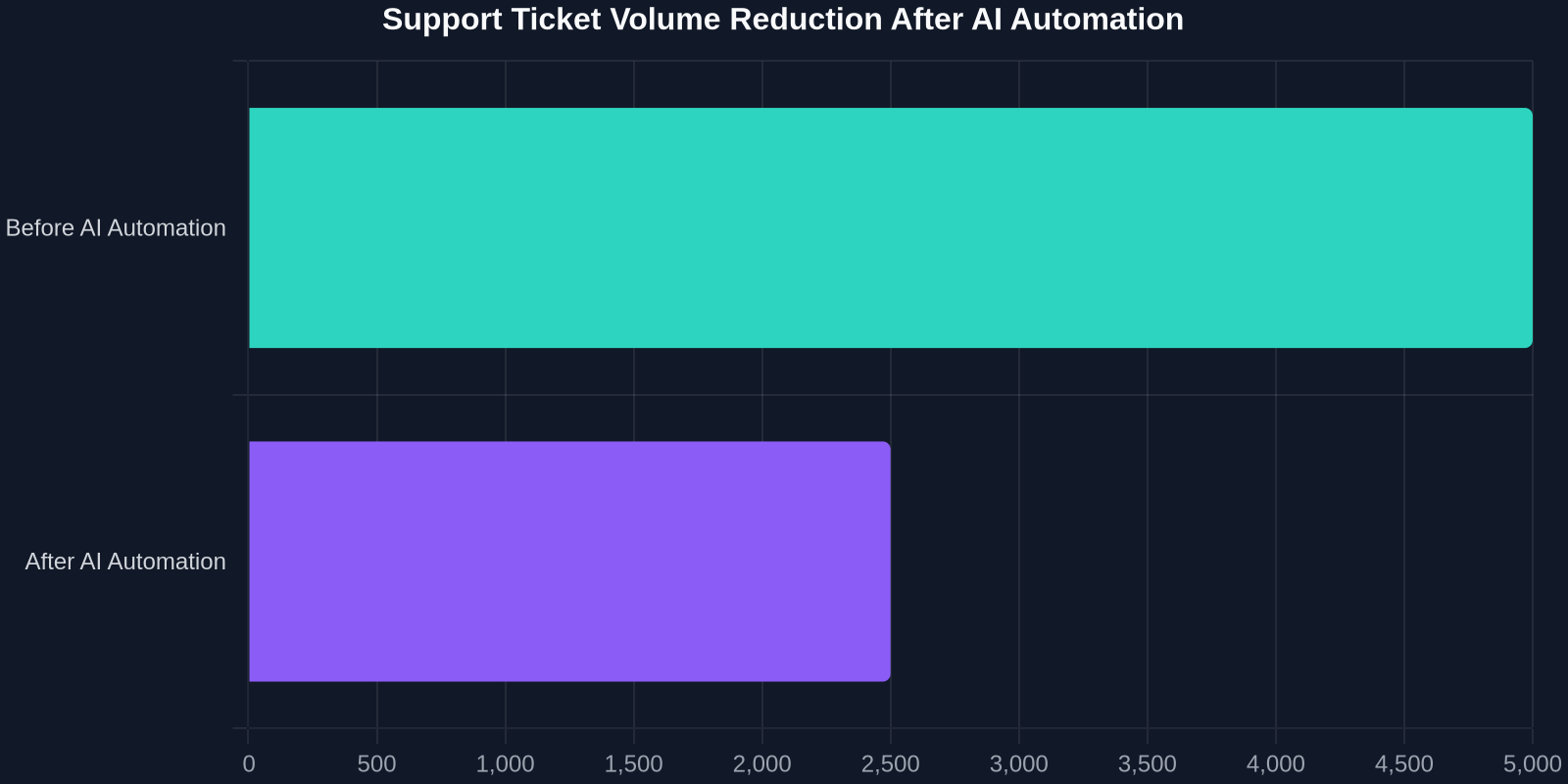
But a support automation platform does more than reduce costs. It collects an enormous amount of behavioral data about what customers struggle with, what questions they repeat, and what features they ignore. Over time, this data becomes a predictive engine: the AI can proactively identify customers at risk of churn, based on ticket sentiment, response delays, or product usage dips, and trigger a human success intervention before the customer even realizes they’re unhappy.
That is a defensible moat. A competitor can clone your UI in a week. They can’t clone five years of aggregated, anonymized support interactions that teach an AI how to predict and solve your customers’ problems before they escalate.
AI-powered support doesn’t just deflect tickets; it collects a behavioral fingerprint of each customer. Over time, this makes the support and success experience inseparable from the product itself, creating switching costs that no AI coding tool can replicate.
The Hard Problem: Implementation and Trust
A deeper look at Workday’s success reveals another counterpoint to the “apocalypse”: the hardest part of enterprise SaaS has always been implementation, change management, and trust. AI can help write the code, but it cannot hold a customer’s hand through a six-month financial system migration. It cannot navigate the politics of convincing a CFO that a new reporting structure will pass audit. It cannot assure a risk-averse compliance officer that data is secure.

Go back to the original argument from critics: “Pure software is no longer a defensible moat, AI has commoditized code creation, so startups must anchor on a genuinely hard problem in the real world.” This is precisely why SaaS isn’t dying. The genuinely hard problems, regulatory compliance, industry-specific workflows, complex integrations, change management, are being solved not by code alone, but by code wrapped in expert services.
Successly, as an AI support automation platform, helps companies reduce implementation friction by providing immediate, intelligent self-help to end users. When a new module is deployed, users have questions, often the same ones. AI-powered support can deliver answers instantly, reducing the burden on the implementation team and accelerating time-to-value. The result: fewer failed implementations, faster ROI, and higher retention.
The Great Pivot: From Feature Wars to Outcome Wars
Where does this leave the average SaaS leader? The playbook for surviving and thriving in the “post-apocalypse” era is clear but requires a strategic pivot. The starting point is moving beyond the feature checklist. Competitive differentiation today cannot rely on having the most checkboxes on G2 or Capterra. If 80% of your competitor’s code can be generated by AI, so can 80% of yours. The battlefield shifts to outcomes. Ask yourself: Does my customer achieve her business goal 30% faster with my product + support combination than with a cheaper alternative? If no, you’re vulnerable. If yes, you own the category.
Next, you must build the service flywheel. Every customer interaction, especially support tickets, contains signals. Are those signals being captured, analyzed, and acted upon? Most SaaS companies treat support as a cost center to be minimized, not a data generator to be maximized. By integrating AI support automation, you can turn every ticket resolution into a data point that improves the product and the support experience for the next user. This creates a flywheel: better data → better predictions → faster resolutions → happier customers → more data.
Stop treating support as a cost center. Move from cost-per-ticket metrics to outcome-based metrics like “net value retained per interaction” and “support-driven expansion revenue.”
Why the “Apocalypse” Narrative Survived So Long
Part of the reason the “SaaS apocalypse” narrative gained such a foothold is the meandering economic cycle of 2023-2024. High interest rates compressed valuations across growth tech. Layoffs dominated headlines. The rise of generative AI triggered genuine excitement about new possibilities but also fear about disruption. The combination of macroeconomic headwinds and a shiny new technology made it easy for pundits to sell an apocalyptic story.
As BayStreet traders have recently observed, “The $PATH SaaS apocalypse is cancelled and was dumb in the first place.” The rotation back into beaten-down software stocks reflects a more nuanced understanding: AI isn’t a wrecking ball; it’s a tide that lifts boats with strong service components. The pure-play software vendors that never diversified into services and support are the ones that will suffer, but that suffering is self-inflicted, not AI-inflicted.
The “SaaS apocalypse” was always a story about the dangers of building a business on code alone, not a story about AI. The companies that treated software as a service, not just software as a product, are emerging stronger.
The New Metrics That Matter
If you’re a support team lead or a CS leader, the post-apocalypse world requires tracking different signals than your board is likely currently reviewing. Traditional metrics like MRR, ARR, and logo counts are no longer sufficient. You need to track:
- Support-driven net retention: What percentage of revenue expansion can be directly attributed to high-quality support interactions?
- Automation rate: What percentage of Tier-1 tickets is resolved without human intervention? A target of 40-60% is realistic today.
- Time-to-outcome: How quickly does a new customer achieve their first “aha” moment? AI support can dramatically compress this timeline.
- Sentiment drift: AI can analyze ticket language to detect frustration before a customer churns. This metric is now as critical as NPS.
A Practical Roadmap for 2025 and Beyond
Here’s how you can future-proof your SaaS against both the real and imagined threats of AI commoditization:
**Phase 1: Audit Your Service Moats (Weeks 1-4)**Map every customer touchpoint from onboarding to renewal. Identify where human empathy or deep expertise is truly required, and where automation could augment without losing quality. Use a simple triage: if a 15-year-old with a manual could solve the issue, it should be automated first. **Phase 2: Implement Support Automation (Weeks 5-12)**Deploy an AI-powered support automation platform like Successly to handle the top 5 recurring ticket categories. This alone often deflates 30-50% of inbound volume. Free up your top agents to focus on complex, revenue-impacting conversations. Measure success not just by tickets deflected, but by CSAT scores from automated interactions (they should match or exceed human-only interactions).
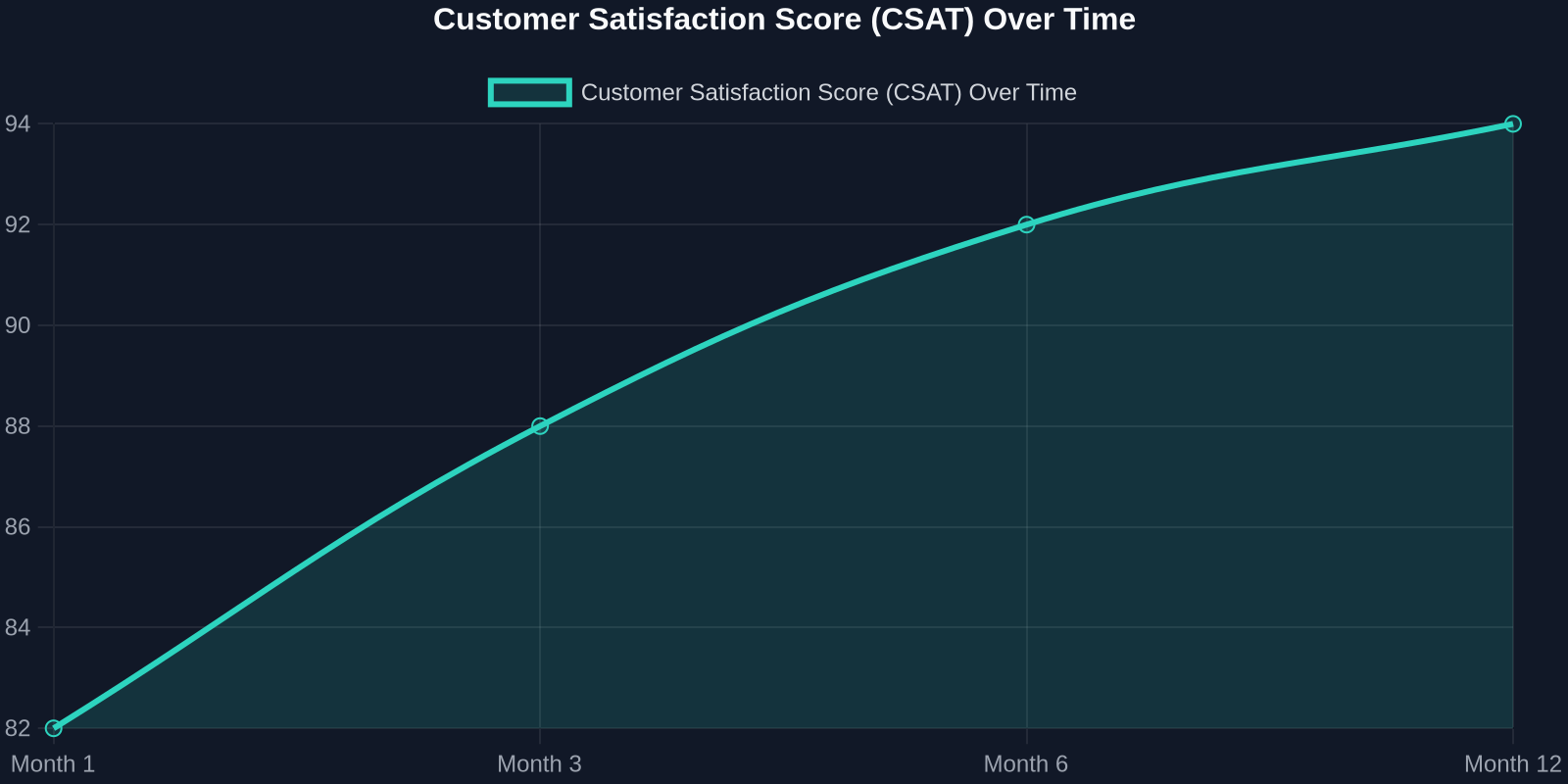
**Phase 3: Build the Data Flywheel (Months 4-6)**Integrate support analytics with your product usage data. Start training a churn prediction model based on ticket history. Use the insights to trigger proactive customer success campaigns. For example, if a customer opens a ticket about a feature being “too complex,” proactively schedule a training session before they even consider leaving. Phase 4: Expand the Service-to-Product Loop (Months 6-12) Feed support data back into product development. The most common support questions should directly inform the product roadmap. If users keep asking “how do I export data,” the product team should make export one-click. This tightens the loop between support and product, making both better.
Conclusion: The Only Apocalypse Is Complacency
The “SaaS apocalypse” narrative is a distraction. AI is not the destroyer of the subscription economy; it’s a catalyst that forces every company to become more customer-obsessed than ever. The winners will not be those with the cheapest code or the most features, they will be those who deliver the most value per subscription, supported by a personalized, always-on success experience.
Workday’s 17% growth isn’t a fluke. It’s a signal that companies are willing to pay for outcomes, not software. And the fastest way to deliver better outcomes is to surround your product with AI-augmented support and success that learns, predicts, and adapts to each customer’s needs.
The apocalypse is overrated. The transformation, from product company to outcome company, is just beginning. Are you ready?
The SaaS companies that survive will be those that redefine themselves as outcome providers, not software vendors. AI is not the enemy of the subscription, it’s the engine that powers it.