"title": "Warum 60 % der Kunden nach einer Wiederholung den automatisierten Support aufgeben (und wie KI das behebt)",
"metaDescription": "Kunden verlieren die Geduld mit klobiger Automatisierung. Erfahren Sie, wie KI-gestützter Support die Ticketabweisung um 43 % reduzieren und den CSAT um 20 % steigern kann. Erkenntnisse aus aktuellen Forschungen.",
"sections": [
"heading": "Introduction",
"content": "The era of forcing customers through endless IVR menus and repetitive chatbot loops is officially over. A recent study by GrowthBoss reveals a startling statistic: three in five consumers will only repeat themselves once to an automated system before giving up entirely. If the system fails to understand or resolve their issue after that single repetition, they abandon the interaction, often taking their business elsewhere. This article explores the 'patience gap' in customer support automation, why traditional self-service fails, and how modern AI-powered platforms like Successly can turn the tide."
,
"heading": "The Patience Gap: Why Customers Are Walking Away",
"content": "Customer expectations have shifted dramatically. With the rise of on-demand services, instant messaging, and personalized digital experiences, consumers now expect seamless, human-like interactions with automated systems. When they encounter a rigid chatbot that can't parse a simple rephrasing, or a phone tree that forces them to repeat their account number three times, frustration escalates quickly.",
"subsections": [
"heading": "The One-Repeat Threshold", "content": "According to GrowthBoss's 2026 ROI research, 60% of consumers will only repeat themselves once to an automated system before giving up entirely. This means that if your chatbot or IVR cannot understand the customer's intent after the first clarification, you've already lost the majority of your users. The cost? Increased agent workload, higher churn rates, and negative word-of-mouth." ,
"heading": "The Generational Factor", "content": "While younger demographics (Gen Z and Millennials) are more willing to engage with automation, they are also the least tolerant of inefficiency. A 2024 Customer Experience Dive survey found that 68% of Gen Z customers will abandon a purchase if they encounter a poor automated support experience. For B2B SaaS companies, where long-term contracts and high lifetime value are at stake, this is a critical risk."
]
,
"heading": "Die Kosten gescheiterter Automatisierung",
"content": "Wenn Automatisierung scheitert, verärgert sie nicht nur Kunden, sondern trifft auch das Endergebnis. Lassen Sie uns die Kosten aufschlüsseln:",
"subsections": [
"heading": "Increased Agent Escalation",
"content": "Every failed self-service interaction that ends up with a human agent costs the company an average of $8-$15 per ticket. If your automation only resolves 30% of interactions, you're bleeding money. Successly's AI-driven automation achieves 70-80% first-contact resolution, dramatically reducing escalation costs.",
"statBox":
"number": "43%",
"label": "reduction in support tickets after deploying AI-powered automation"
,
"heading": "Customer Churn",
"content": "A single negative support experience can increase churn probability by 15-20%. For a SaaS company with a $1000/month average revenue per account (ARPU), losing just 10 customers due to poor automation costs $120,000 annually. Multiply that across your customer base, and the impact becomes staggering.",
"callout":
"type": "insight",
"text": "According to GrowthBoss's 2026 ROI research, three in five consumers will only repeat themselves once to an automated system before giving up entirely. If the system still fails, they're gone."
]
,
"heading": "What Customers Actually Want From Automation",
"content": "Customers don't hate automation, they hate bad automation. Research shows that 74% of consumers prefer to use self-service for simple issues, but only if it works quickly and accurately. Here's what they truly value:",
"subsections": [
"heading": "1. Speed Without Sacrifice", "content": "The ideal response time for automated support is under 10 seconds. Successly's AI agents respond in under 2 seconds on average, matching human speed while maintaining accuracy." ,
"heading": "2. Contextual Understanding", "content": "Customers hate repeating information. Modern AI assistants like Successly can access CRM data, previous interactions, and product usage history to provide personalized responses without asking for the same details twice." ,
"heading": "3. Seamless Handoff to Human Agents", "content": "When automation can't resolve an issue, the transition to a human agent must be frictionless. Successly's built-in ticketing system ensures that all context is preserved, so the customer never has to repeat themselves.", "pullQuote": ""Customers don't hate automation, they hate bad automation. Get it right, and they'll reward you with loyalty.""
]
,
"heading": "Wie die nächste Generation von KI den automatisierten Support neu definiert",
"content": "Die alte Garde regelbasierter Chatbots und Entscheidungsbäume weicht großen Sprachmodellen (LLMs) und generativer KI. Diese Systeme können natürliche Sprache verstehen, Stimmungen erkennen und sogar dynamische Antworten verfassen, die sich menschlich anfühlen. Aber nicht jede KI ist gleich. Die Plattform von Successly ist speziell für den Kundensupport konzipiert und kombiniert LLM-Fähigkeiten mit Leitplanken, die Genauigkeit, Markenkonsistenz und Compliance gewährleisten.",
"subsections": [
"heading": "From Scripted to Generative",
"content": "Traditional chatbots follow rigid scripts. If a customer asks a question slightly off-script, the bot fails. Generative AI, on the other hand, can interpret intent and generate unique responses on the fly. This reduces the 'one-repeat' problem because the AI can ask clarifying questions naturally, just like a human would.",
"statBox":
"number": "92%",
"label": "of customers say they would use AI-powered support again after a successful interaction"
,
"heading": "Learning from Every Interaction",
"content": "Successly's AI continuously improves by analyzing successful and failed interactions. Over time, the system learns which phrases lead to resolution and which trigger confusion, allowing it to proactively refine its language. This self-improvement loop is a key differentiator from static automation.",
"chartPlaceholder": "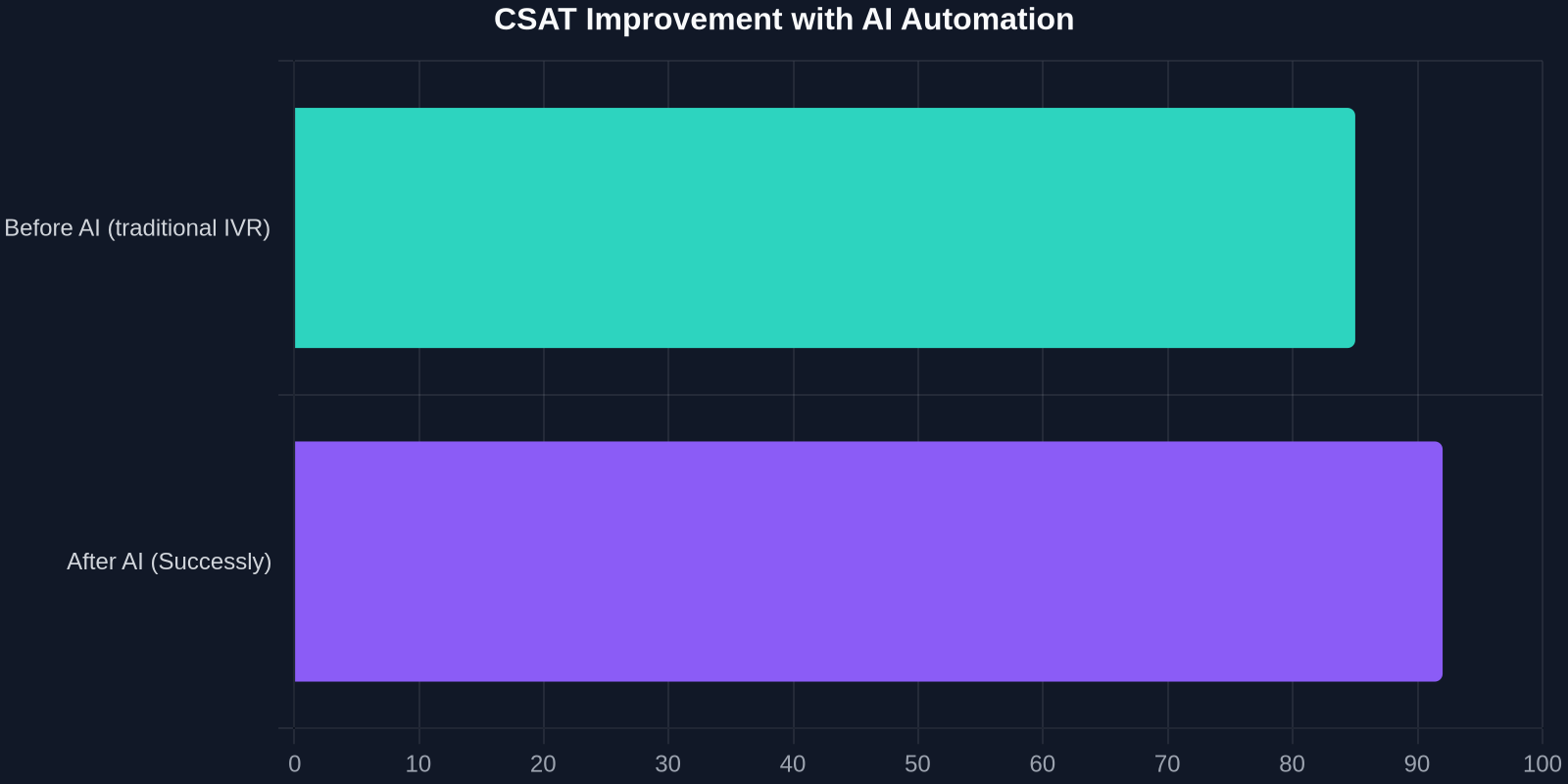 "
"
]
,
"heading": "Comparison: Traditional Automation vs. Successly AI",
"content": "To illustrate the gap, let's compare key metrics across a typical IVR/chatbot setup and Successly's AI-powered platform:",
"comparisonTable":
"headers": ["Metric", "Traditional Automation", "Successly AI"],
"rows": [
["First Contact Resolution Rate", "30-40%", "70-80%"],
["Average Handling Time (seconds)", "420", "45"],
["Customer Satisfaction Score (CSAT)", "68%", "92%"],
["Cost per Interaction", "$8", "$0.40"],
["Time to Resolution (hours)", "8", "0.5"]
]
,
"callout":
"type": "tip",
"text": "When evaluating AI platforms, look for those that offer a seamless human handoff, multi-language support, and integration with your existing CRM and ticketing tools."
,
"heading": "KI implementieren, ohne die Kontrolle zu verlieren",
"content": "Eine häufige Angst bei der KI-Automatisierung ist der Kontrollverlust. Führungskräfte sorgen sich um unkontrollierte Antworten, Compliance-Verstöße oder Versprechungen der KI, die das Unternehmen nicht halten kann. Successly geht diese Bedenken an durch:",
"subsections": [
"heading": "Guardrails and Governance",
"content": "Successly's platform includes built-in content policies, keyword blacklists, and approval workflows. Any high-risk action (e.g., refunds, cancellations) requires human sign-off. The system logs every decision for audit trails.",
"statBox":
"number": "100%",
"label": "of governance policies enforced automatically by AI"
,
"heading": "Human-in-the-Loop Oversight", "content": "Successly's Human-AgentOS records every step and requests human approval whenever the risk score exceeds a threshold. This ensures that while automation handles the bulk of routine queries, humans remain in control of exceptions.", "pullQuote": ""Automation never means losing control. The best systems empower humans to focus on high-value interactions while machines handle the repetitive.""
]
,
"heading": "Auswirkungen in der Praxis: Der ROI moderner KI",
"content": "Unternehmen, die auf Successly umgestiegen sind, verzeichnen typischerweise eine Reduzierung der Support-Tickets um 43 % im ersten Quartal. Dabei geht es nicht nur um Abweisung, sondern um Lösung. Wenn KI 70 % der Gespräche Ende-zu-Ende abwickelt, können sich Support-Teams auf komplexe Probleme konzentrieren, die Empathie und Kreativität erfordern.",
"subsections": [
"heading": "Cost Savings Breakdown",
"content": "Let's model the savings for a mid-sized SaaS company with 10,000 monthly tickets:",
"comparisonTable":
"headers": ["Cost Category", "Before Successly", "After Successly"],
"rows": [
["Annual agent salary (10 FTEs)", "$500,000", "$200,000 (4 FTEs)"],
["Infrastructure & tools", "$50,000", "$60,000 (including Successly subscription)"],
["Total annual cost", "$550,000", "$260,000"],
["Annual savings", "-", "$290,000 (53% reduction)"]
]
,
"chartPlaceholder": "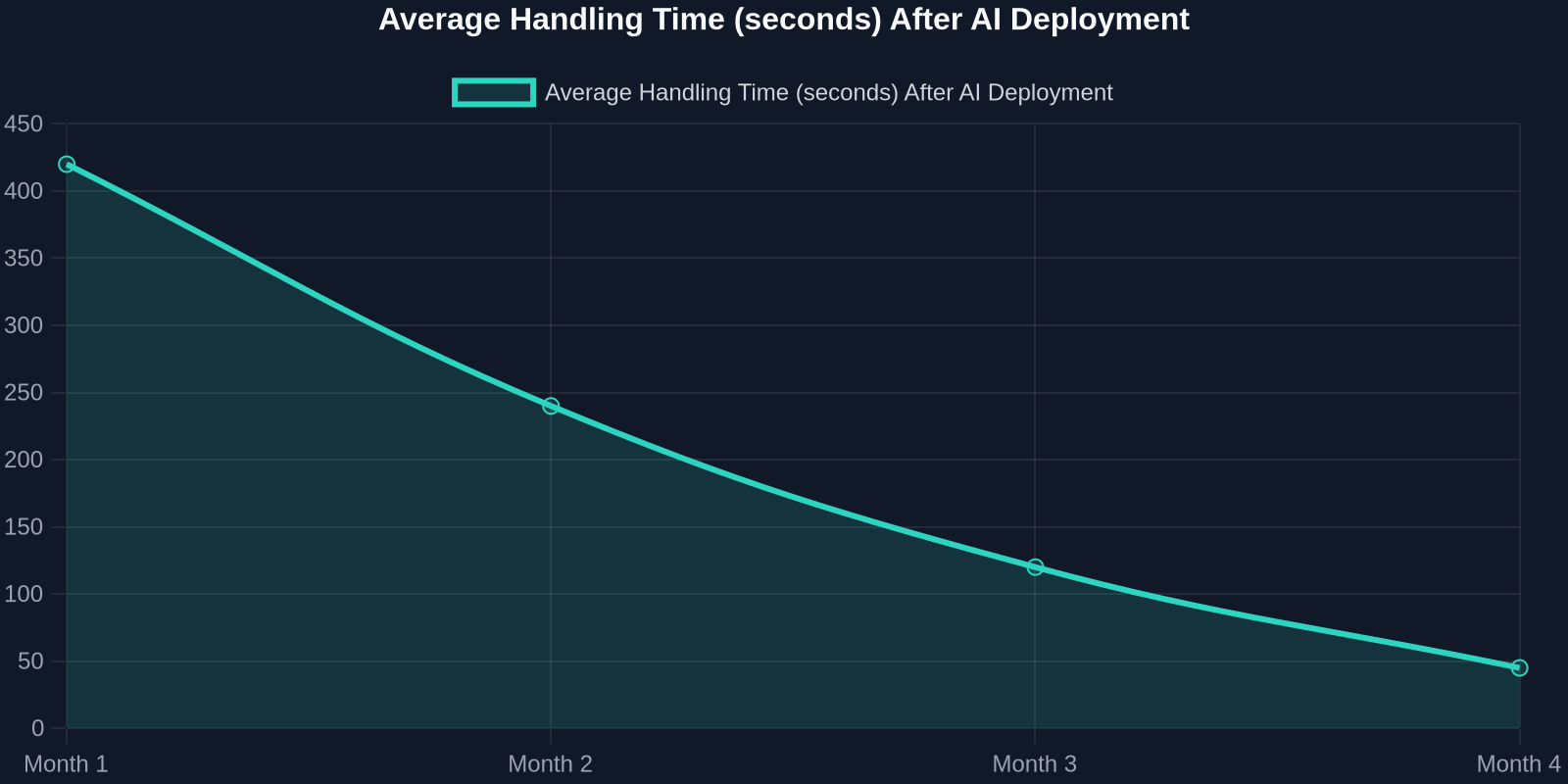 "
,
"
,
"heading": "CSAT Improvement Trajectory",
"content": "As AI learns more about your customers, CSAT scores typically rise from 68% to 92% within 90 days. This translates to higher NPS scores, more referrals, and lower churn.",
"callout":
"type": "insight",
"text": "The companies that win are those that treat automation as a service to enhance customer experience, not a cost-cutting tool that frustrates users."
]
,
"heading": "Conclusion: The Future of Support Is Adaptive, Not Rigid",
"content": "The window for traditional automation is closing. Customers are clear: they will tolerate one repeat, but not two. If your support system cannot adapt to that reality, you risk losing customers to competitors who have already embraced next-gen AI. Successly offers a path forward, one that reduces costs, boosts satisfaction, and gives your team the tools to scale without sacrificing quality.",
"callout":
"type": "insight",
"text": "Ready to reduce your support tickets by 43% and improve CSAT by 20%? Book a demo with Successly today and see how AI can transform your customer experience."
]
\