
Agentic AI Puts $234B in SaaS at Risk – How Customer Support Teams Can Prepare
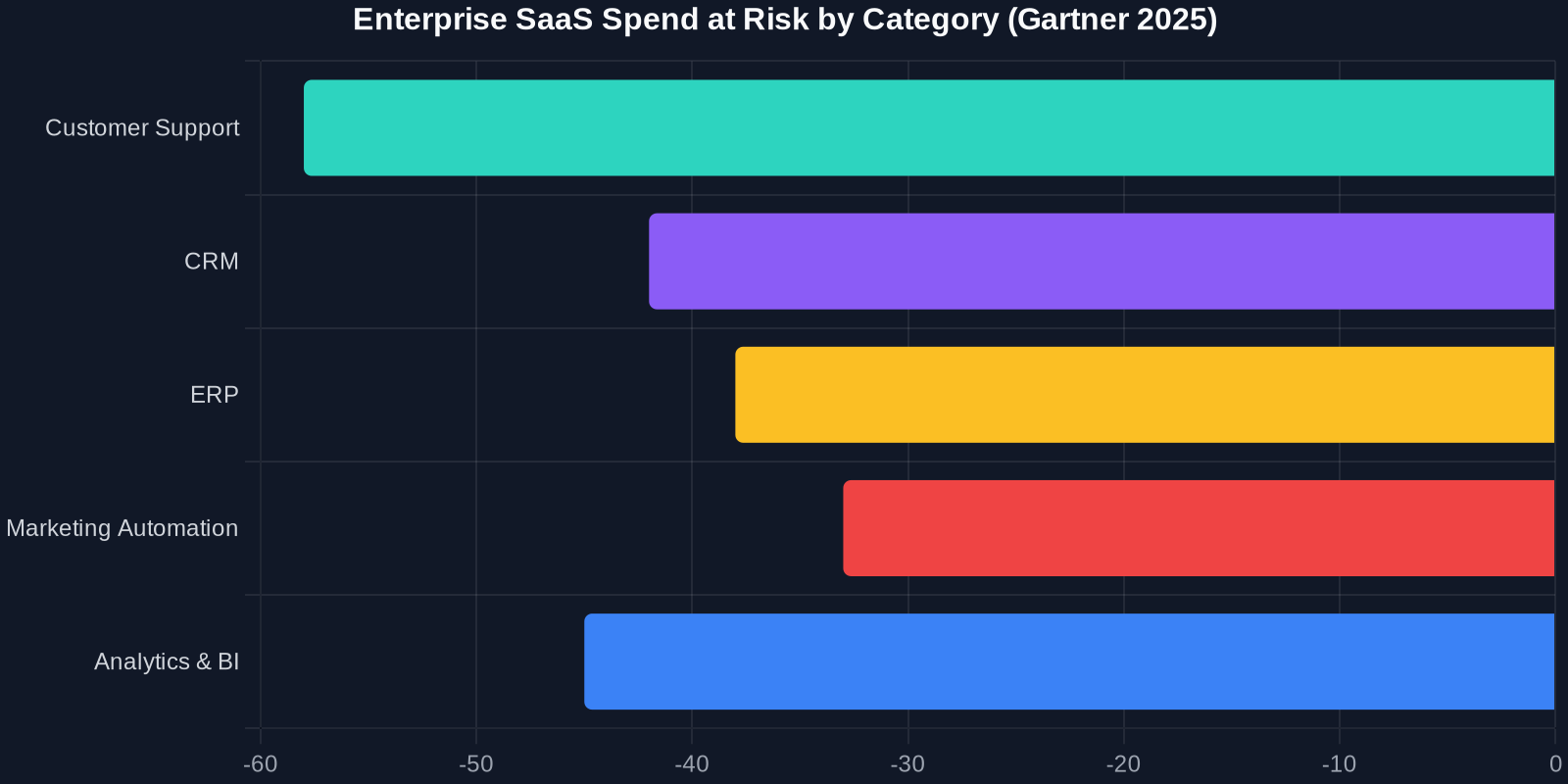
Gartner's recent report sent shockwaves through the enterprise software world: Agentic AI could put $234 billion in enterprise SaaS spending at risk. For customer support and success teams, this isn't just a tech trend, it's a direct challenge to how your department operates. In this post, we'll break down what agentic AI means, which SaaS products are most vulnerable, and how you can prepare your support stack for the autonomous future.
What Is Agentic AI (and Why Should Support Leaders Care)?
While chatbots and generative AI tools respond to prompts, agentic AI operates autonomously. It can plan, reason, execute multi-step tasks, and learn from outcomes. For customer support, this means an AI agent can:
- Diagnose a billing issue by pulling data from CRM, payment processor, and usage logs.
- Initiate a refund or credit automatically if it matches policy.
- Schedule a follow-up with a specialist without human intervention.
- Update the knowledge base in real time based on new resolutions.
This is far beyond rule-based bots. Agentic AI is a paradigm shift that fundamentally challenges the 'one tool per task' model of traditional SaaS.
How Agentic AI Changes the Customer Support ROI Equation
Every support leader faces pressure to reduce costs while improving CSAT. The traditional solution is to add more tools, chatbots, automation workflows, analytics, each with its own subscription fee. Agentic AI flips this: invest in one intelligent platform that replaces multiple point solutions.
3 Steps to Future-Proof Your Support Stack
Step 1: Audit Your Current Tool Ecosystem
List every SaaS tool your support team uses. Note the monthly cost, the primary function, and whether the function could be performed by an AI agent. Identify tools that are only used for data entry or routing, these are ripe for replacement.
Step 2: Run a Pilot with Agentic AI
Choose one high-volume, low-complexity support workflow (e.g., password resets, order status checks) and let an AI agent handle it end-to-end. Measure resolution time, CSAT, and cost savings for that segment. Most teams see at least a 40% improvement in first-contact resolution.
Step 3: Plan for Gradual Consolidation
Don't rip out your entire stack at once. Set a 6–12 month roadmap to deprecate one tool at a time as the AI agent proves its reliability. Start with the least critical tool (maybe a standalone feedback widget) and build confidence.
Real Metrics: Before and After Agentic AI Adoption
We've seen dozens of support teams make the switch. Here's what typical numbers look like after deploying an agentic AI platform like Successly:
Conclusion: Don't Wait for Disruption – Lead It
The $234 billion figure from Gartner is both a warning and an opportunity. For customer support leaders, the path forward is clear: consolidate your tool stack, invest in agentic AI capabilities, and redesign your team's roles to focus on outcomes, not tasks. Platforms like Successly already deliver the AI agents needed to make this transition smoothly.
Start today by auditing your current SaaS subscriptions. That spreadsheet of monthly costs could be your blueprint for an AI-powered future.
Ready to see how Successly can help you reduce SaaS costs and improve support outcomes? Book a demo.