Trump AI Executive Order 2026: nieuwe cyberbeveiligingsregels en 30 dagen durende AI-beoordelingen

Inleiding: een nieuw tijdperk van AI-toezicht
In juni 2026 ondertekende president Donald Trump een baanbrekend uitvoerend bevel met de titel "Promoting Advanced Artificial Intelligence Innovation and Security". Dit uitgebreide document van 40 pagina's bevat mandaten voor veilige softwareontwikkeling, cloudbeveiliging, AI-gestuurde cyberbescherming en federale adoptie van digitale identiteiten. Het bevel vertegenwoordigt een aanzienlijke verschuiving in de relatie tussen de Amerikaanse overheid en de technologie-industrie, met name wat betreft de introductie van geavanceerde AI-systemen.
This 30-day review period is intended to allow government cybersecurity experts to test the models for potential security vulnerabilities, including the ability to be used in cyberattacks, generate disinformation, or otherwise threaten critical infrastructure. The voluntary nature of the submissions has sparked debate: some argue it gives the government a necessary head start to prevent catastrophic misuse, while others worry it could create a chilling effect on innovation.
How the Review Process Works
Companies that develop AI systems with "advanced cyber capabilities"—a term the order defines broadly to include models that can autonomously exploit software vulnerabilities, generate sophisticated phishing campaigns, or analyze large datasets for national security threats—are expected to:
- Notify the Department of Homeland Security's Cybersecurity and Infrastructure Security Agency (CISA) 30 days prior to any public release.
- Submit the model, along with a detailed technical description of its training data, architecture, intended uses, and limitations.
- Allow government security teams to conduct penetration testing and vulnerability assessments.
- Cooperate with any remediation steps identified during the review period.
Cybersecurity Mandates and Federal Adoption
Beyond the 30-day review process, the executive order establishes a comprehensive framework for AI cybersecurity across the federal government. The order mandates secure software development practices for all AI systems used by federal agencies, cloud security standards for AI workloads, and the integration of AI-driven cyber protection tools across government networks.
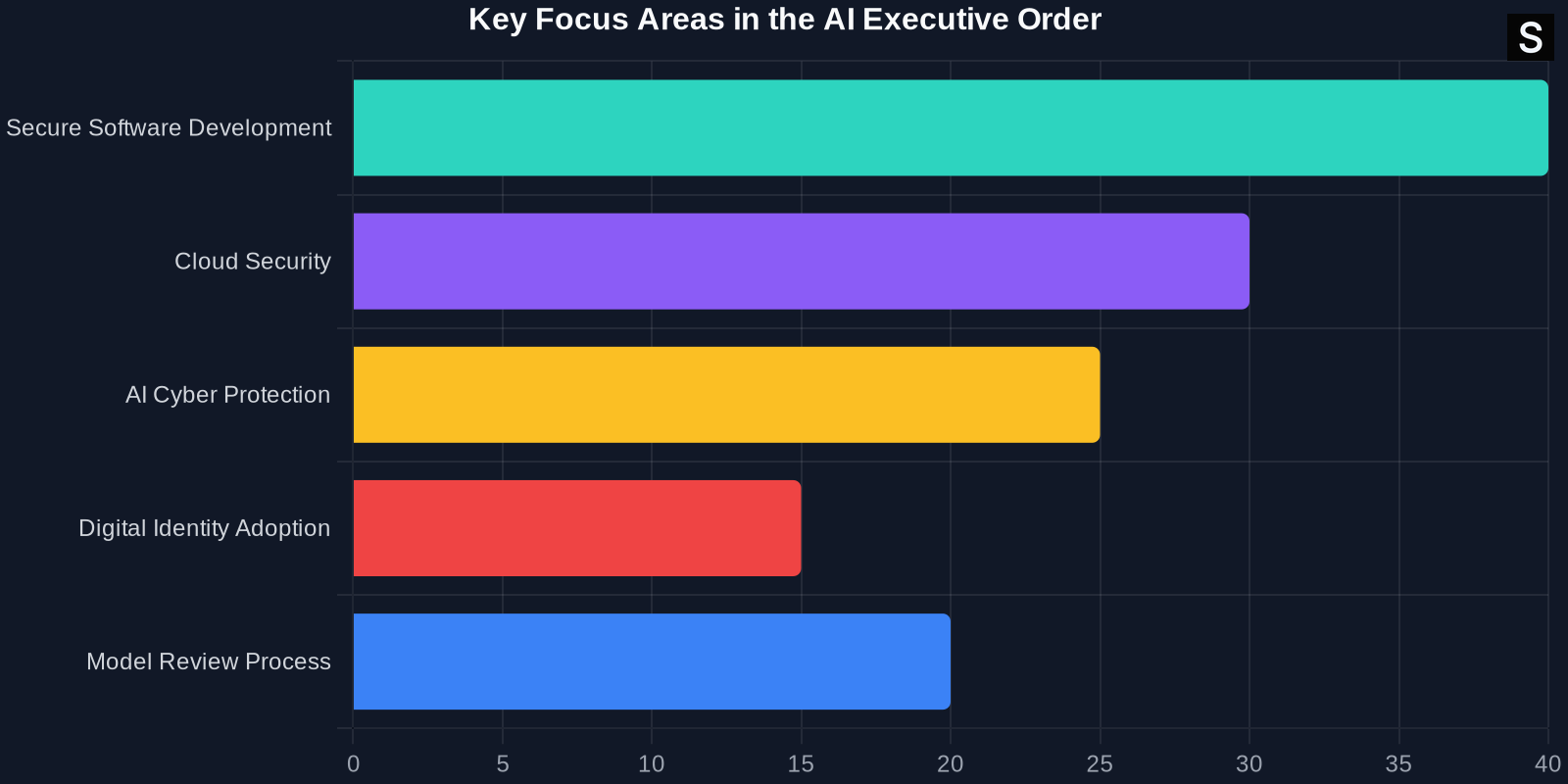
This chart illustrates the primary areas of focus within the executive order, highlighting the emphasis on secure software development and cloud security.
The order also calls for the accelerated adoption of digital identities across federal services. By requiring federal agencies to implement verifiable digital credentials for citizens accessing government systems, the order aims to reduce identity fraud and streamline secure access to AI-powered public services.
Industry Response and Implications
The response from the AI industry has been mixed. Some companies, including major players like OpenAI and Google, have expressed willingness to participate voluntarily in the government review process, citing the importance of national security. Others, particularly smaller startups, have voiced concerns about the competitive implications of disclosing their innovations before market release.

Conclusie: wat is de toekomst voor AI-regulering?
Het AI-uitvoeringsbesluit van Trump van juni 2026 markeert het begin van een nieuw hoofdstuk in AI-beheer. Door dertig dagen evaluaties en vrijwillige cyberveiligheidstests te eisen, heeft de regering een precedent geschapen dat innovatie in evenwicht brengt met nationale veiligheid. Hoewel het bevel vrijwillig is, zal de reactie van de industrie waarschijnlijk toekomstige regelgevingskaders vormgeven, wat mogelijk zal leiden tot verplichte nalevingsvereisten.
Voor bedrijven en ontwikkelaars zal de sleutel tot succes het omarmen van transparantie en veiligheid vanaf het begin zijn. Naarmate de mogelijkheden van AI blijven toenemen, zal het vertrouwen dat wordt opgebouwd door middel van verantwoorde openbaarmaking en samenwerking met de overheid een waardevol bezit zijn.
Blijf voorop lopen door uw AI-beveiligingspraktijken vandaag nog te herzien en u voor te bereiden op een toekomst waarin overheidstoezicht de norm wordt. Het uitvoeringsbesluit is niet alleen een beleidswijziging; het is een signaal dat het tijdperk van ongereguleerde AI-ontwikkeling ten einde loopt.
Raadpleeg voor de oorspronkelijke aankondiging de berichtgeving in de New York Times over het uitvoeringsbesluit.