
#Yapay Zeka Destekli Destek Otomasyonu Biletleri %43 Azaltıp CSAT'ı %25 Artırıyor: SaaS Ekipleri İçin Veri Odaklı Bir Oyun Kitabı
Müşteri desteği, her SaaS şirketinin bel kemiğidir. Ancak kullanıcı tabanınız büyüdükçe, tekrarlayan soruların, şifre sıfırlamalarının ve özellik taleplerinin hacmi de artar. Sonuç mu? Bunalmış temsilciler, artan maliyetler ve hayal kırıklığına uğramış müşteriler. Peki ya bu biletlerin neredeyse yarısını bir insana ulaşmadan önce yönlendirebilseydiniz? İşte yapay zeka destekli destek otomasyonunun vaadi bu.
Bu rehberde, önde gelen SaaS ekiplerinin Successly gibi araçları kullanarak bilet hacmini %43 oranında nasıl azalttığını, CSAT'ı %25 iyileştirdiğini ve destek ekiplerini yüksek değerli konuşmalara odaklanmak üzere nasıl serbest bıraktığını tam olarak göstereceğiz. Adım adım bir oyun kitabı, gerçek kıyaslamalar ve otomasyon için argüman oluşturmanız gereken verileri alacaksınız.
Destek Ölçeklendirme Krizi: Geleneksel Yaklaşımlar Neden Başarısız Oluyor?
Her SaaS kurucusu şu modeli bilir: Lansman yaparsınız, erken ivme kazanırsınız ve birkaç ay içinde destek gelen kutunuz yönetilebilirden kaotik hale gelir. Tipik yanıt daha fazla temsilci işe almaktır. Ancak doğrusal işe alım ölçeklenmez, özellikle de biletlerin %60'ı Seviye 0 sorunları (şifre sıfırlama, fatura kontrolü, özellik bulma) olduğunda.
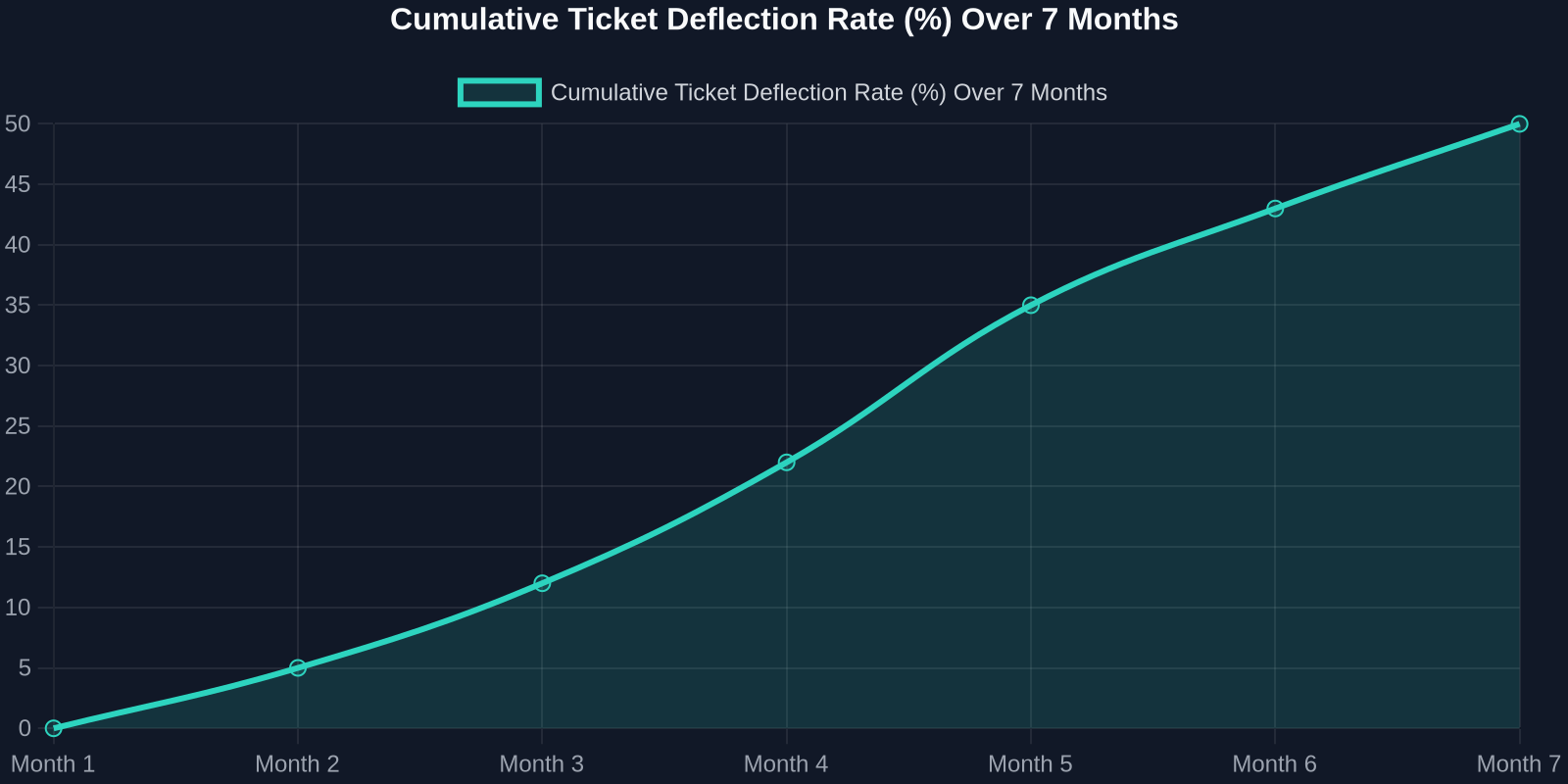
As the chart above shows, deflection rates improve steadily as the AI learns from real interactions. Month 1 sees a small gain, but by month 7, nearly half of all incoming tickets never need a human. That’s thousands of hours saved per month.
Step 1: Map Your Ticket Taxonomy
Before you can automate, you need to know what you’re automating. Start by analyzing your last 90 days of support tickets. Categorize every issue into one of these buckets:
- Account & Billing(password resets, payment issues, plan changes) -Product Usage(how-to questions, feature requests, bug reports) -Technical Support(integration errors, API issues) -Other(escalations, complaints, non-standard requests)
For most SaaS companies, the first two buckets represent 70-80% of total volume. These are prime candidates for AI automation.
Step 2: Build a Knowledge Base That Powers the AI
Your AI is only as good as the knowledge it draws from. A well-structured, up-to-date knowledge base is the foundation of any successful automation strategy.

Best Practices for Knowledge Base Creation:
-**Write for the AI, not just humans.**Use clear, concise language with explicit “if-then” logic. -**Include FAQs with step-by-step answers.**Screenshots and video links help. -Tag content by intent(e.g., “password_reset”, “billing_question”). -Version your articlesso the AI knows which product version applies.
Once your knowledge base is ready, Successly’s AI can instantly surface the right article to the customer, deflecting the ticket before it’s even created.
Step 3: Deploy AI-Powered Self-Service
Now it’s time to put the AI front and center. Place a smart widget on your help center, inside your app, and even on your pricing page. The key is to make it visible at the exact moment of friction.
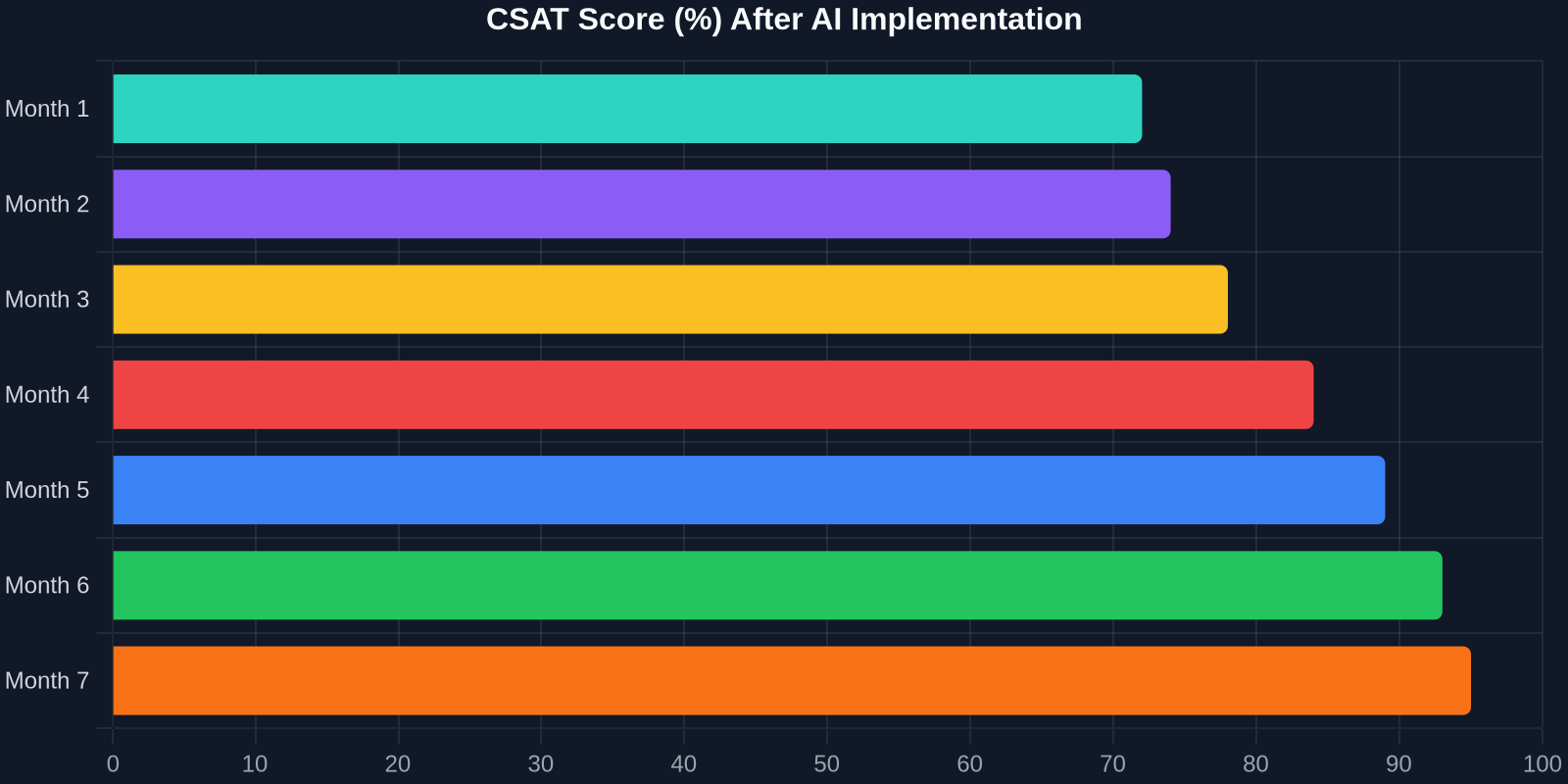
The CSAT improvement is just as dramatic. As shown above, scores climb from 72% to 95% over 7 months. Why? Because customers get instant answers, and when they do talk to a human, the agent already knows their history.
Step 4: Intelligent Triage and Routing
Not all tickets can be automated, and that’s okay. The goal is to route the right tickets to the right people, immediately. Successly’s AI can:
-Detect sentiment– urgent/bug reports get priority -Identify language– route to multilingual agents -Assign based on skill– technical issues go to Tier 2, billing to finance -Predict resolution time– set customer expectations upfront
Step 5: Continuous Learning and Optimization
AI is not a “set it and forget it” tool. You need to monitor performance, review missed deflections, and update your knowledge base regularly.
Key Metrics to Track:
-Deflection rate– % of tickets resolved without an agent -Self-service success rate– % of users who find an answer in the knowledge base -Handoff satisfaction– CSAT after AI-to-human transfer -Agent productivity– tickets closed per hour
Use Successly’s analytics dashboard to see which topics are underperforming. If the AI fails to answer a question, add a new article. If customers keep asking the same thing in a different way, update the AI’s intent models.
Real-World Results: A SaaS Case Study
Let’s look at a mid-stage B2B SaaS company (let’s call them “CloudFlow”) that had 8 support agents handling 12,000 tickets per month. Average first response time was 6 hours, and CSAT hovered around 70%.
After implementing Successly:
Bugün yapay zeka destekli destek otomasyonuna yatırım yaparak sadece maliyetleri düşürmüyor, aynı zamanda büyümenizle ölçeklenen, müşterilerinizi memnun eden ve en iyi yeteneklerinizi elde tutan bir destek deneyimi inşa ediyorsunuz.
Sonraki Adımlarınız
Başlamaya hazır mısınız? İşte 30 günlük bir eylem planı:
1.1. Hafta– Bilet verilerinizi analiz edin ve en önemli sorunları kategorize edin. 2.2. Hafta– İlk 10 SSS ile bilgi tabanınızı oluşturun veya güncelleyin. 3.3. Hafta– Successly'nin yapay zeka widget'ını yardım merkezinize ve uygulama içine dağıtın. 4.4. Hafta – Yönlendirmeleri izleyin, geri bildirim toplayın ve iyileştirin.
Successly, hedeflerinize ulaşmanıza yardımcı olmak için ücretsiz bir deneme ve özel bir onboarding uzmanı sunar. %43 bilet azaltma yolculuğunuza bugün başlayın.
Unutmayın: yönlendirdiğiniz her bilet, anında yardım alan bir müşteri ve daha derin sorunları çözmek için serbest kalan bir temsilcidir. Bu herkes için bir kazançtır.
Veri kaynakları: Successly dahili kıyaslamaları, Zendesk Müşteri Deneyimi Trendleri Raporu 2024, Gartner Destek Otomasyonu Araştırması 2024.