Trump AI Executive Order 2026: New Cybersecurity Rules and 30-Day AI Reviews

Introduction: A New Era of AI Oversight
In June 2026, President Donald Trump signed a landmark executive order titled "Promoting Advanced Artificial Intelligence Innovation and Security." This comprehensive 40-page document lays out mandates for secure software development, cloud security, AI-driven cyber protection, and federal adoption of digital identities. The order represents a significant shift in the relationship between the U.S. government and the tech industry, particularly regarding the release of advanced AI systems.
This 30-day review period is intended to allow government cybersecurity experts to test the models for potential security vulnerabilities, including the ability to be used in cyberattacks, generate disinformation, or otherwise threaten critical infrastructure. The voluntary nature of the submissions has sparked debate: some argue it gives the government a necessary head start to prevent catastrophic misuse, while others worry it could create a chilling effect on innovation.
How the Review Process Works
Companies that develop AI systems with "advanced cyber capabilities"—a term the order defines broadly to include models that can autonomously exploit software vulnerabilities, generate sophisticated phishing campaigns, or analyze large datasets for national security threats—are expected to:
- Notify the Department of Homeland Security's Cybersecurity and Infrastructure Security Agency (CISA) 30 days prior to any public release.
- Submit the model, along with a detailed technical description of its training data, architecture, intended uses, and limitations.
- Allow government security teams to conduct penetration testing and vulnerability assessments.
- Cooperate with any remediation steps identified during the review period.
Cybersecurity Mandates and Federal Adoption
Beyond the 30-day review process, the executive order establishes a comprehensive framework for AI cybersecurity across the federal government. The order mandates secure software development practices for all AI systems used by federal agencies, cloud security standards for AI workloads, and the integration of AI-driven cyber protection tools across government networks.
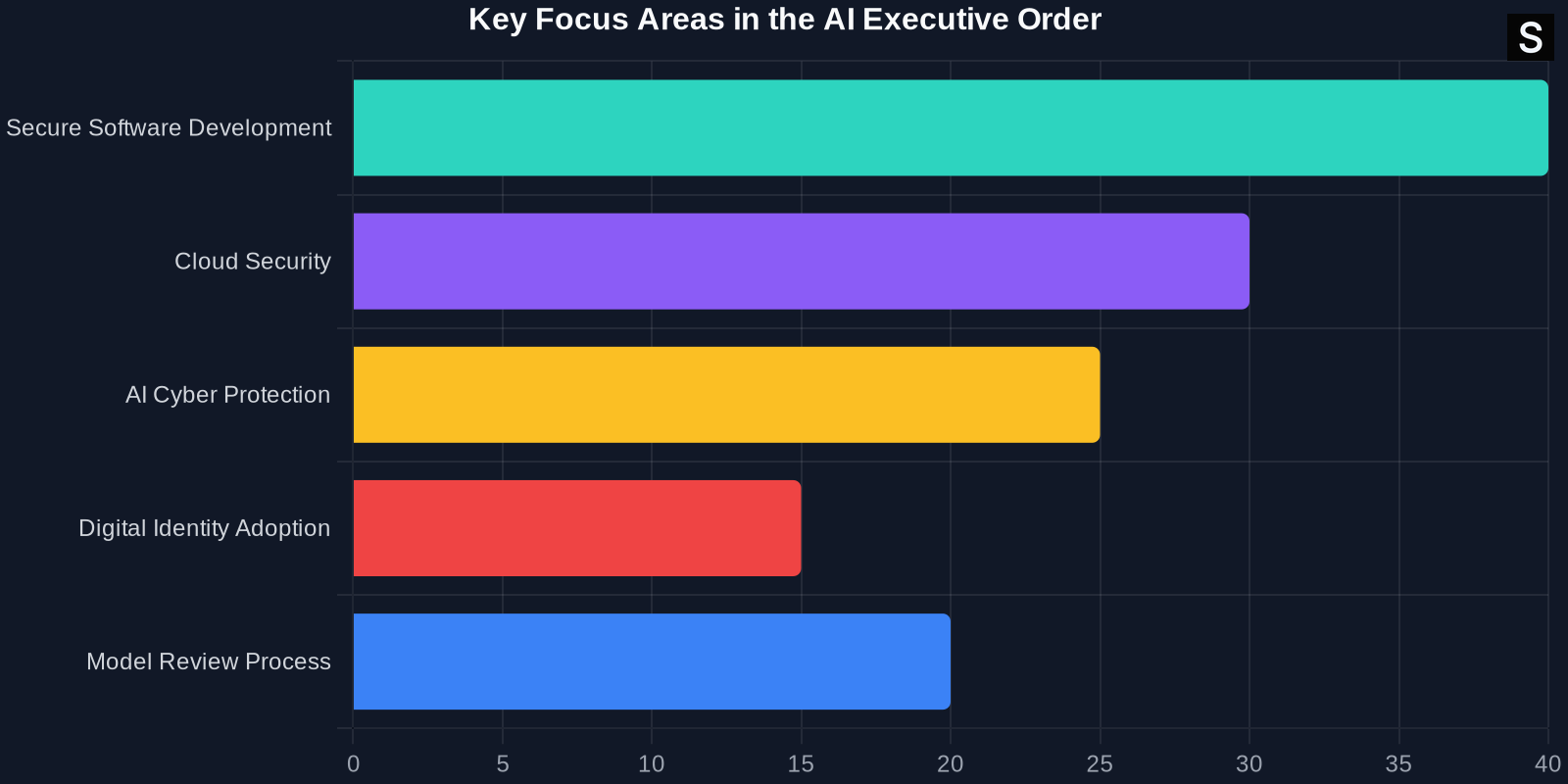
This chart illustrates the primary areas of focus within the executive order, highlighting the emphasis on secure software development and cloud security.
The order also calls for the accelerated adoption of digital identities across federal services. By requiring federal agencies to implement verifiable digital credentials for citizens accessing government systems, the order aims to reduce identity fraud and streamline secure access to AI-powered public services.
Industry Response and Implications
The response from the AI industry has been mixed. Some companies, including major players like OpenAI and Google, have expressed willingness to participate voluntarily in the government review process, citing the importance of national security. Others, particularly smaller startups, have voiced concerns about the competitive implications of disclosing their innovations before market release.
Conclusion: What's Next for AI Regulation?
The Trump AI executive order of June 2026 marks the beginning of a new chapter in AI governance. By requiring 30-day reviews and voluntary cybersecurity tests, the administration has set a precedent that balances innovation with national security. While the order is voluntary, the industry's response will likely shape future regulatory frameworks, possibly leading to mandatory compliance requirements.
For businesses and developers, the key to success will be embracing transparency and security from the outset. As AI capabilities continue to accelerate, the trust built through responsible disclosure and government collaboration will be a valuable asset.
Stay ahead of the curve by reviewing your AI security practices today and preparing for a future where government oversight becomes the norm. The executive order is not just a policy change; it's a signal that the era of unregulated AI development is ending.
For the original announcement, refer to the New York Times coverage of the executive order.