AI Shopping Assistant Market: Growth, Trends & Forecast (2025-2033)

The AI Shopping Assistant Market Is Exploding — Here’s What You Need to Know
The way people shop has fundamentally changed. Gone are the days of browsing endless product pages. Instead, consumers now expect personalized, instant, and conversational shopping experiences — and AI shopping assistants are delivering exactly that. The market intelligence firm Market.us reports that the AI shopping assistant market is valued at USD 69.48 billion in 2025and is projected to rocket toUSD 465.15 billion by 2033. This represents a compound annual growth rate (CAGR) of nearly 27% over the forecast period.
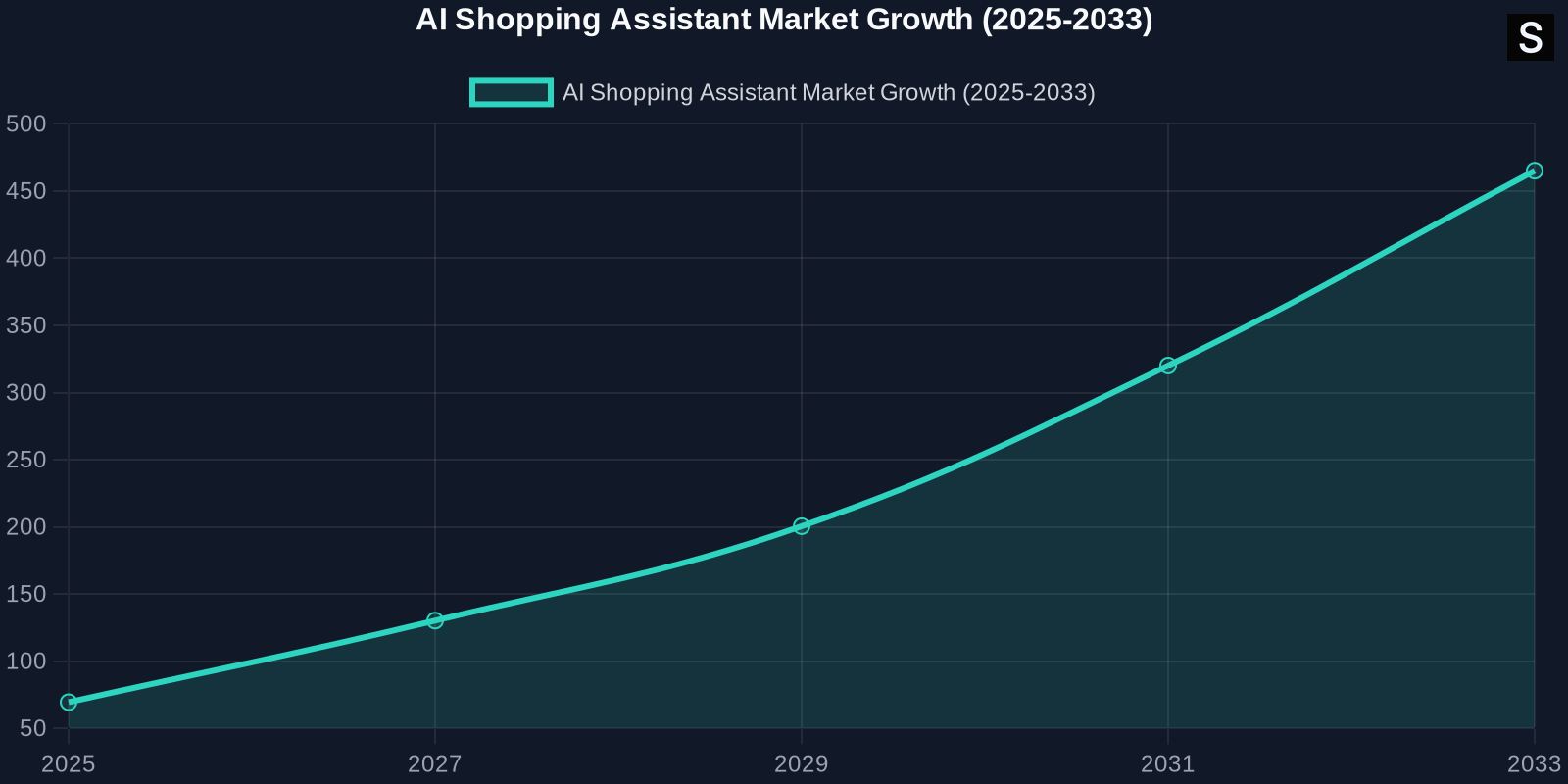
This explosive growth is driven by consumer demand for convenience, the rise of voice commerce, and the increasing sophistication of natural language processing (NLP) and machine learning algorithms. For businesses, ignoring this trend means leaving massive revenue on the table. For consumers, AI shopping assistants are becoming the new norm — a smart, always-on personal shopper available 24/7.
What Is an AI Shopping Assistant?
An AI shopping assistant is a software agent powered by artificial intelligence that helps users discover, compare, and purchase products. These assistants can be integrated into websites, mobile apps, messaging platforms (like WhatsApp or Facebook Messenger), or smart speakers. They use natural language understanding (NLU) to interpret user requests, provide personalized product recommendations, answer questions, and even complete transactions.
Key capabilities include:
- Personalized product recommendationsbased on browsing history and preferences -Price comparisonacross multiple retailers -Order trackingand real-time shipping updates -Voice commercefor hands-free shopping -Customer supportvia chatbots with human-like responses
Platform Dominance: Android Leads the Charge
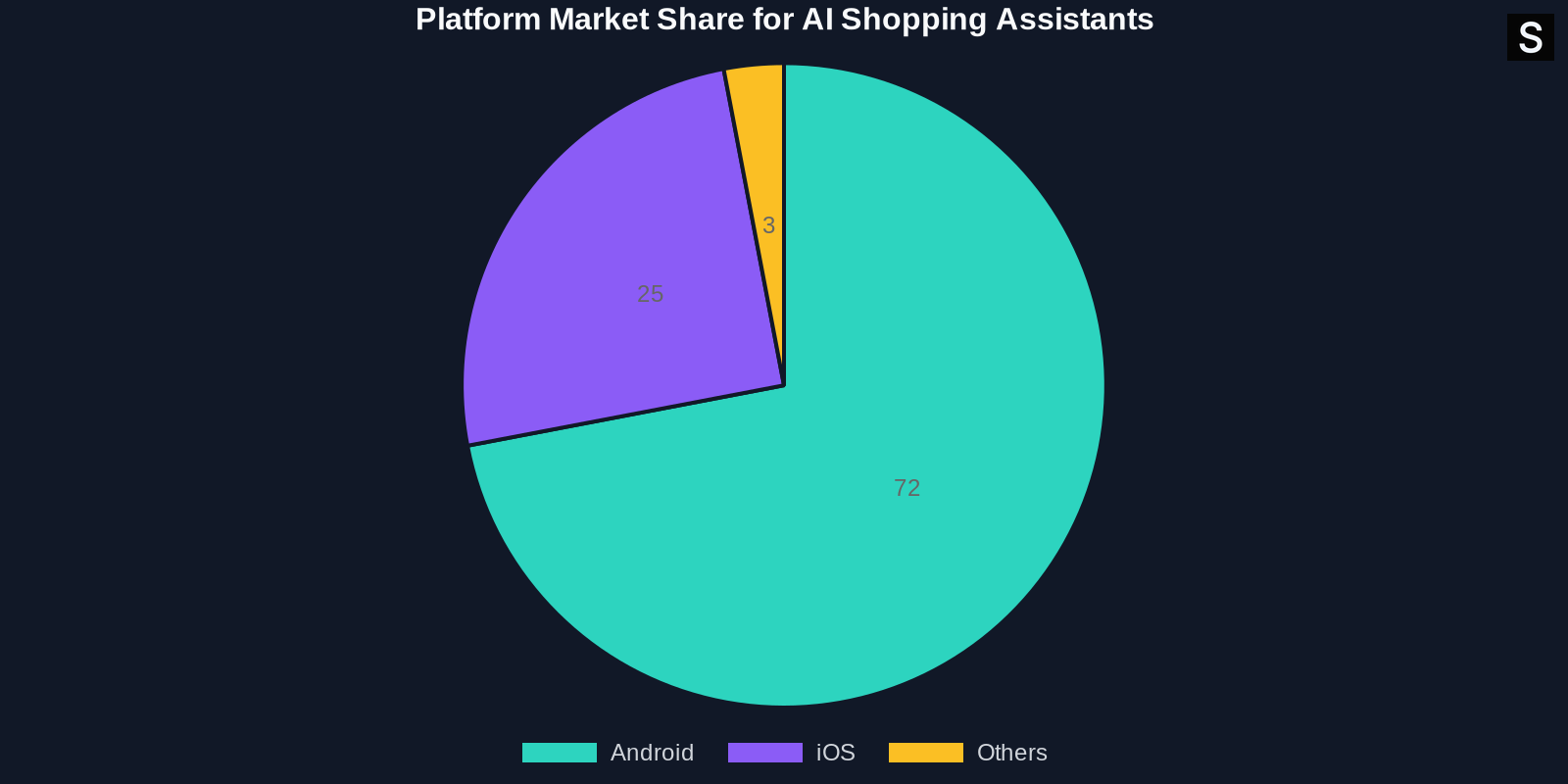
An interesting data point from the report is the dominance of the Android platformin the AI shopping assistant market. With over 70% of the global mobile OS market share, Android provides the largest installed base for AI shopping apps.
Challenges and Restraints
No market analysis is complete without examining the headwinds.
Data Privacy Concerns
AI assistants require access to personal data to function effectively. With regulations like GDPR in Europe and CCPA in California, companies must tread carefully. Mishandling data can lead to massive fines and loss of consumer trust. The report notes that privacy concerns remain the #1 barrier to adoption for 41% of potential users.
Integration Complexity
Legacy retail systems — including POS, inventory management, and CRM — were not built for AI integration. Retrofitting these systems can be costly and time-consuming. Small and medium-sized retailers, in particular, may struggle with the upfront investment.
Language and Cultural Nuances
AI assistants must understand not just words but context, slang, and cultural references. NLP models continue to improve, but perfect cross-cultural fluency remains elusive. This is especially challenging for global retailers serving diverse markets.
Regional Analysis: North America Leads, Asia-Pacific Surges
The report provides a regional breakdown that is essential for global strategy.

North America
Currently, North America holds the largest market share, driven by early adoption by major retailers and high consumer spending power. The US alone accounts for over 35% of global revenue.
Europe
Europe is a mature market with strong growth, though it is more fragmented due to language diversity. The UK, Germany, and France are the key players.
Asia-Pacific
This region is the fastest-growing, with China, India, and Southeast Asian nations leading the charge. Massive smartphone adoption, a young population, and the dominance of super-apps (like WeChat) create a fertile environment for AI shopping assistants.
Key Takeaways
Conclusion
The AI shopping assistant market is not just a trend — it is a paradigm shift in how consumers interact with brands. With the market forecast to reach nearly half a trillion dollars by 2033, the time to invest in AI-powered shopping experiences is now. Whether you are a retailer looking to improve conversion rates, a developer building the next great shopping app, or an investor seeking growth sectors, the data is clear: AI shopping assistants are the future of commerce.
Are you ready to transform your business? Start by exploring how an AI shopping assistant can fit into your current digital strategy. The market is moving fast — don't get left behind.