Analytical AI Agents: The Future of Data-Driven Decision Making


Analytical AI Agents: Transforming Data into Strategic Insights
In today's data-driven world, businesses are constantly seeking innovative ways to harness the power of information. Analytical AI agents have emerged as game-changers, revolutionizing how organizations process, interpret, and act on complex data sets. These intelligent systems are not just tools but strategic partners that can transform raw data into actionable insights, driving smarter decision-making across industries.
Understanding Analytical AI Agents
Analytical AI agents represent a sophisticated fusion of artificial intelligence and advanced data analytics. Unlike traditional analytics tools that require human intervention at every stage, these AI agents can autonomously perform complex analyses, identify patterns, and generate insights with minimal human oversight.
Core Capabilities
- Autonomous Data Processing: These agents can ingest, clean, and structure vast amounts of data from multiple sources without constant human supervision.
- Pattern Recognition: Using machine learning algorithms, they identify trends and anomalies that might escape human analysts.
- Predictive Analytics: By analyzing historical data, they can forecast future trends with remarkable accuracy.
- Natural Language Processing: Many advanced agents can understand and generate human-like text, making insights more accessible.
- Continuous Learning: They improve their performance over time through continuous exposure to new data and outcomes.
The Evolution of Business Intelligence
The journey from traditional business intelligence to AI-powered analytics has been transformative. Where once businesses relied on static reports and manual data analysis, we now have systems capable of real-time insights and predictive modeling.
From Descriptive to Prescriptive Analytics
- Descriptive Analytics: "What happened?" - Traditional BI tools focused on historical data reporting.
- Diagnostic Analytics: "Why did it happen?" - Early AI applications helped identify causes behind trends.
- Predictive Analytics: "What might happen?" - Current AI systems forecast future scenarios.
- Prescriptive Analytics: "What should we do?" - The cutting edge, where analytical AI agents recommend actions.
The true power of analytical AI agents lies not in their ability to process data, but in their capacity to transform information into strategic action plans.
Industry Applications and Use Cases
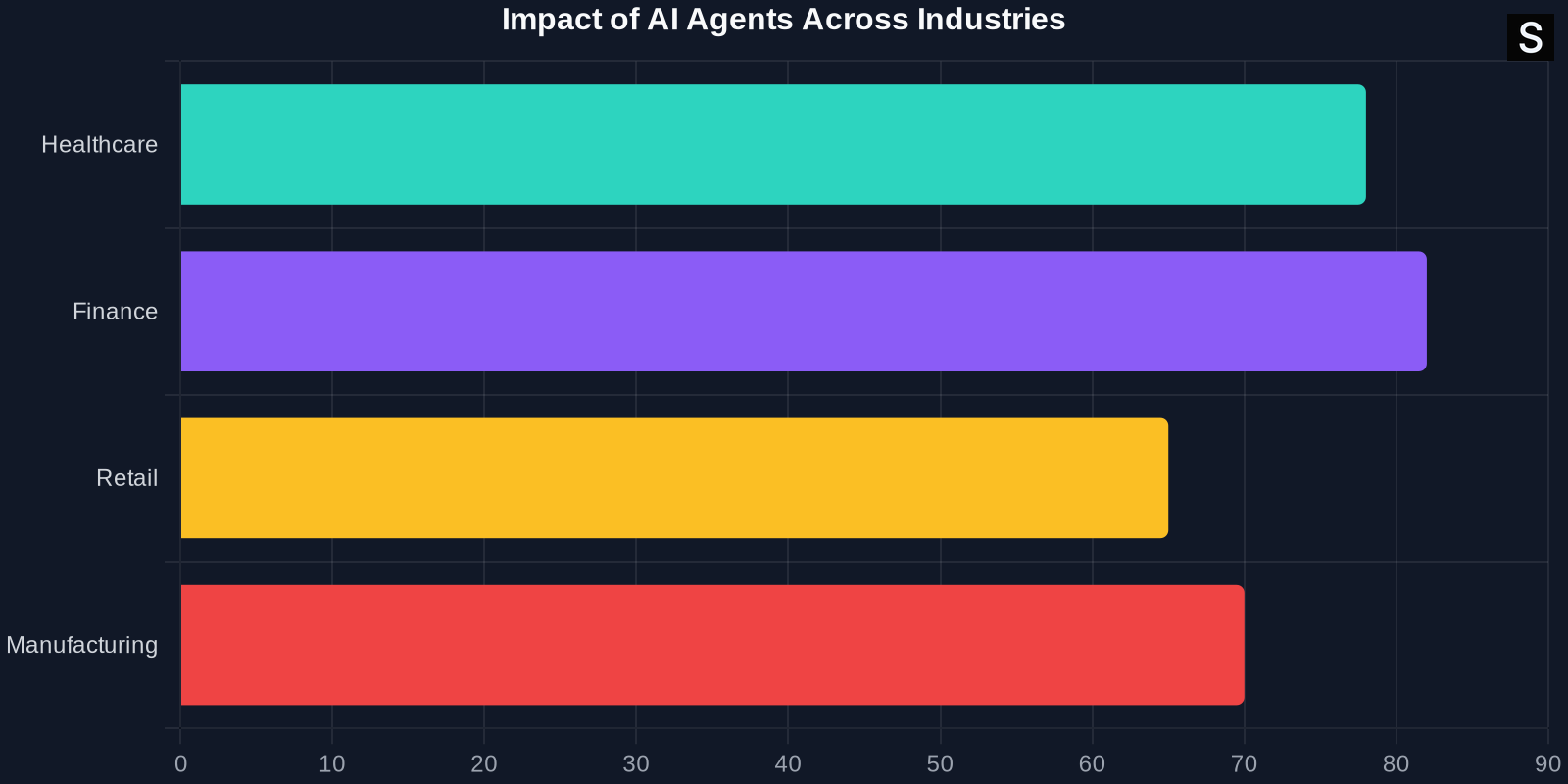
Analytical AI agents are making significant impacts across various sectors:
Healthcare Revolution
- Patient Outcome Prediction: Analyzing patient data to forecast health risks and treatment efficacy.
- Operational Efficiency: Optimizing hospital resource allocation and staff scheduling.
- Drug Discovery: Accelerating research by analyzing vast biomedical datasets.
Financial Services Transformation
- Fraud Detection: Identifying suspicious transactions in real-time with high accuracy.
- Risk Assessment: Evaluating loan applications and investment risks more comprehensively.
- Personalized Banking: Offering tailored financial products based on customer behavior analysis.
Retail and E-commerce Innovation
- Demand Forecasting: Predicting product demand with greater accuracy to optimize inventory.
- Customer Insights: Analyzing purchasing patterns to create hyper-personalized marketing.
- Pricing Optimization: Dynamically adjusting prices based on multiple market factors.
Implementing Analytical AI Agents
Adopting analytical AI agents requires careful planning and execution. Organizations should follow a structured approach to ensure successful implementation.
Step-by-Step Implementation Guide
- Assess Readiness: Evaluate your organization's data maturity and infrastructure capabilities.
- Define Objectives: Clearly outline what business problems you aim to solve with AI analytics.
- Data Preparation: Ensure your data is clean, structured, and accessible to the AI systems.
- Select Vendors: Choose between building in-house solutions or partnering with specialized providers.
- Pilot Testing: Start with small-scale implementations to test effectiveness and gather feedback.
- Scale Gradually: Expand the AI agents' responsibilities as they prove their value and reliability.
- Continuous Monitoring: Regularly evaluate performance and make necessary adjustments.
| Aspect | Before AI Agents | With AI Agents |
|---|---|---|
| Data Processing Speed | Hours/Days | Real-time |
| Insight Generation | Manual Analysis | Automated Insights |
| Decision Making | Reactive | Proactive |
| Error Rates | Higher | Reduced |
Overcoming Implementation Challenges
While the benefits are substantial, organizations often face hurdles when adopting analytical AI agents:
- Data Quality Issues: AI systems require high-quality, well-structured data to function effectively.
- Integration Complexities: Incorporating AI agents into existing IT ecosystems can be challenging.
- Skill Gaps: Organizations may lack personnel with the necessary AI and data science expertise.
- Change Management: Employees may resist AI adoption due to fears about job security or changes in workflow.
- Ethical Considerations: Ensuring AI systems make fair, unbiased decisions is an ongoing concern.
Measuring the Impact of Analytical AI Agents
To truly understand the value these systems bring, organizations need to establish clear metrics for evaluation:
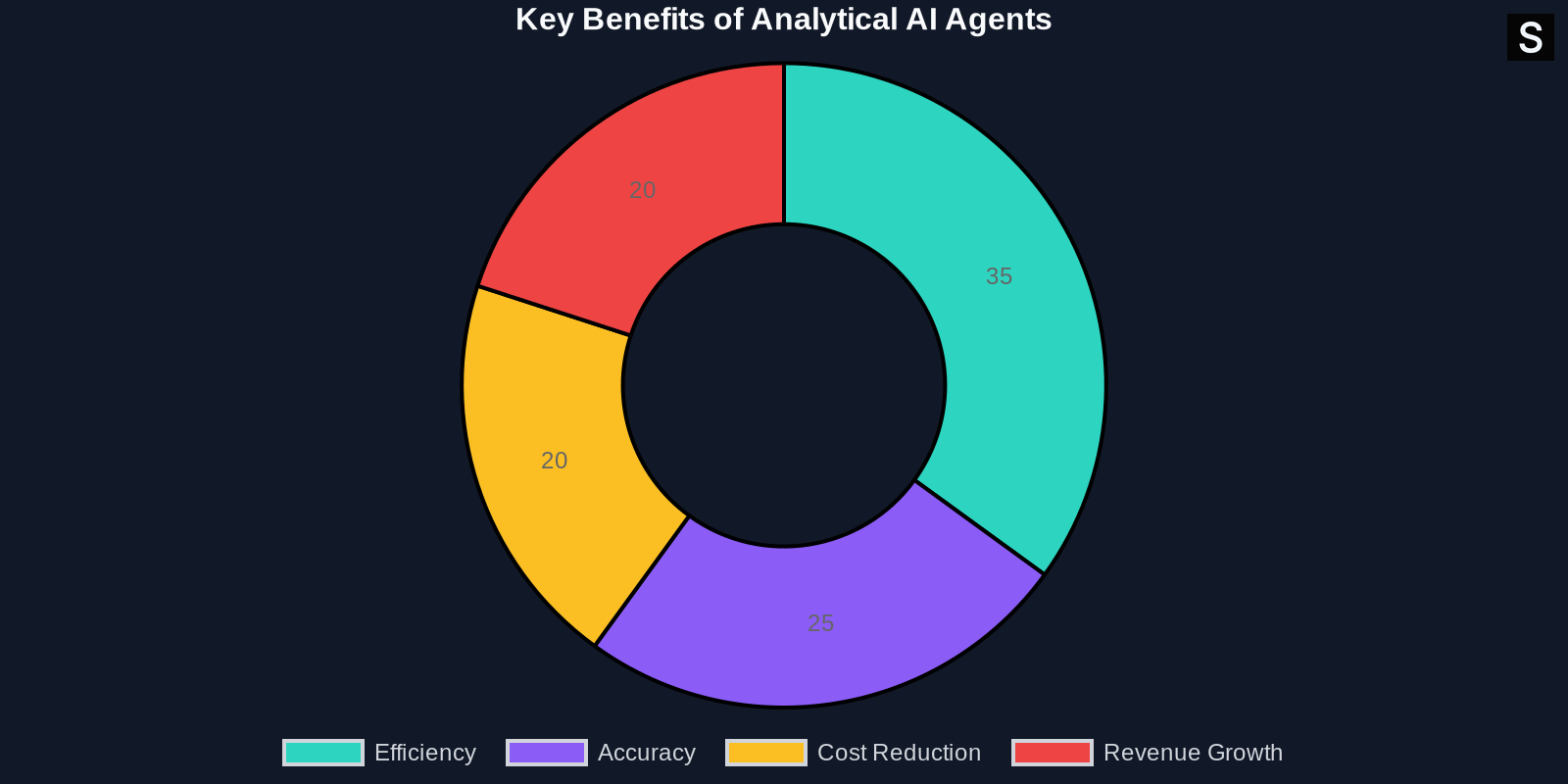
Key Performance Indicators
- Operational Efficiency: Reduction in time spent on data processing and analysis.
- Decision Quality: Improvement in the accuracy and outcomes of business decisions.
- Cost Savings: Direct financial benefits from optimized operations and reduced errors.
- Revenue Growth: Increased sales or new business opportunities identified through AI insights.
- Customer Satisfaction: Improvements in customer metrics driven by AI-enhanced personalization.
Future Trends in Analytical AI
The field of analytical AI is evolving rapidly, with several exciting developments on the horizon:
- Autonomous Decision Making: AI agents that can not only recommend but also implement decisions within defined parameters.
- Enhanced Explainability: Improvements in making AI decision processes more transparent and understandable to humans.
- Edge AI Analytics: Bringing analytical capabilities to edge devices for real-time, on-site decision making.
- Collaborative AI: Systems that work more seamlessly alongside human analysts, understanding context and intent better.
- Ethical AI Frameworks: Development of standardized approaches to ensure fair and unbiased AI analytics.
Key Takeaways
Conclusion: The Strategic Imperative of AI Analytics
Analytical AI agents represent more than just a technological advancement; they signify a fundamental shift in how businesses approach decision-making. By transforming vast, complex datasets into clear, actionable insights, these intelligent systems enable organizations to operate with unprecedented levels of precision and foresight.
As we look to the future, the organizations that will thrive are those that successfully integrate analytical AI agents into their strategic frameworks. The journey requires careful planning, investment in infrastructure, and a commitment to developing the necessary human-AI collaboration models. However, the potential rewards—enhanced efficiency, improved decision quality, and sustained competitive advantage—make this one of the most important technological adoptions of our time.
For businesses ready to embark on this transformative journey, the message is clear: the future of strategic decision-making is here, and it's powered by analytical AI agents. The question is no longer whether to adopt these technologies, but how quickly and effectively you can integrate them into your organization's strategic toolkit.