
How AI Agents Handle 30% of Airbnb Customer Support Tickets, and What It Means for Your Business
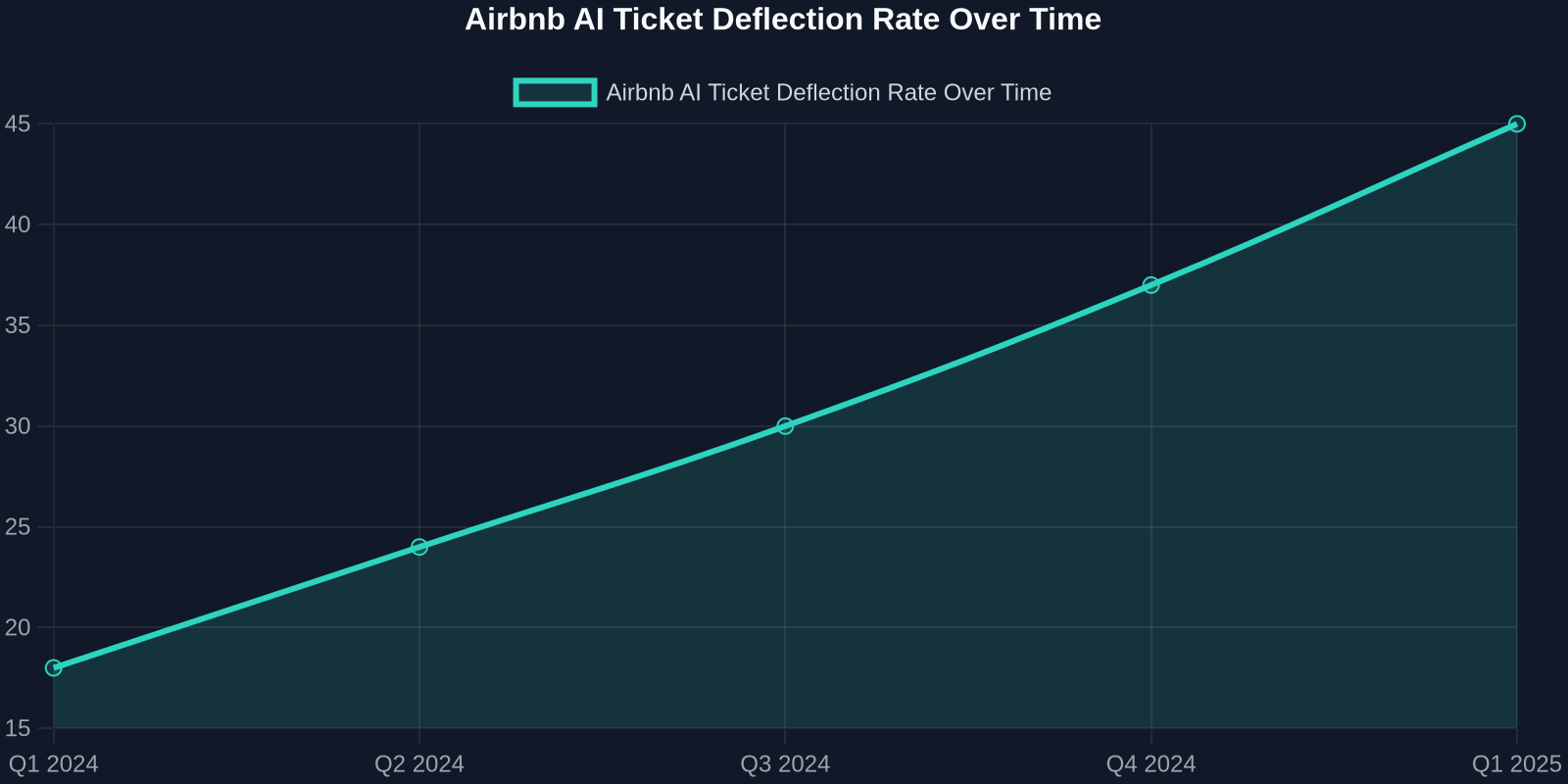
In the fast-paced world of customer experience, a quiet revolution is underway. Airbnb, the global hospitality giant, recently disclosed that its AI agents now handle 30% of all customer support tickets, a milestone that signals a fundamental shift in how support teams scale. This isn't just a tech experiment; it's a proven strategy for reducing costs, improving response times, and freeing human agents for higher-value work.
For support leaders and SaaS founders, the question is no longer whether to adopt AI, but how to implement it effectively to achieve similar results. In this post, we'll break down Airbnb's approach, the business case for AI automation, and actionable steps you can take to replicate their success.
The Shift to AI-Driven Support
Customer support has long been one of the highest-cost operations for any service-oriented business. The traditional model relies on a large team of human agents to handle repetitive inquiries, password resets, booking changes, refund status, all of which consume time and resources. According to industry benchmarks, the average cost per ticket for a fully human-staffed support center is around $2.50.
AI is changing that equation. As one expert noted, "AI is extremely good at jobs that are repetitive or predictable. That's why roles in data entry, bookkeeping, customer support, manufacturing, etc. are at high risk of automation." Airbnb's 30% deflection rate is a proof point that AI can handle a significant share of these predictable tasks without sacrificing quality.
Why Airbnb's Approach Works
Airbnb's AI agents are built on large language models, including open-source models like Qwen, which the company has publicly acknowledged using. These models are trained on historical support conversations, knowledge bases, and policy documents. The result is an agent that can understand context, generate accurate responses, and even take actions like issuing refunds or modifying bookings.
How Airbnb Achieved 30% Ticket Deflection
Airbnb's journey didn't happen overnight. The company began experimenting with AI in 2023, focusing on a small set of ticket types. By 2024, they expanded to a broader range of categories, including booking modifications, payment issues, and account verification. The system learned from human agent corrections and improved over time.

The Role of Open-Source AI
Airbnb's use of open-source models like Qwen is noteworthy. It allows them to customize the model for their specific domain (travel, hospitality, policy) and run it on their own infrastructure, reducing dependency on third-party API costs. This approach aligns with a broader trend: "Airbnb openly use Qwen, Chinese open models have become a de facto standard among startups," as reported in the industry.
The Business Case for AI in Customer Support
Beyond the headline deflection rate, the financial impact is compelling. Capital One's proprietary AI tools have shown that instant access to information can enhance both efficiency and service quality. Similarly, Airbnb's AI agents reduce the workload on human agents, allowing them to focus on complex, high-value interactions.
Cost Comparison: Manual vs. AI-Only vs. Hybrid
Let's compare the cost per ticket across three support models:
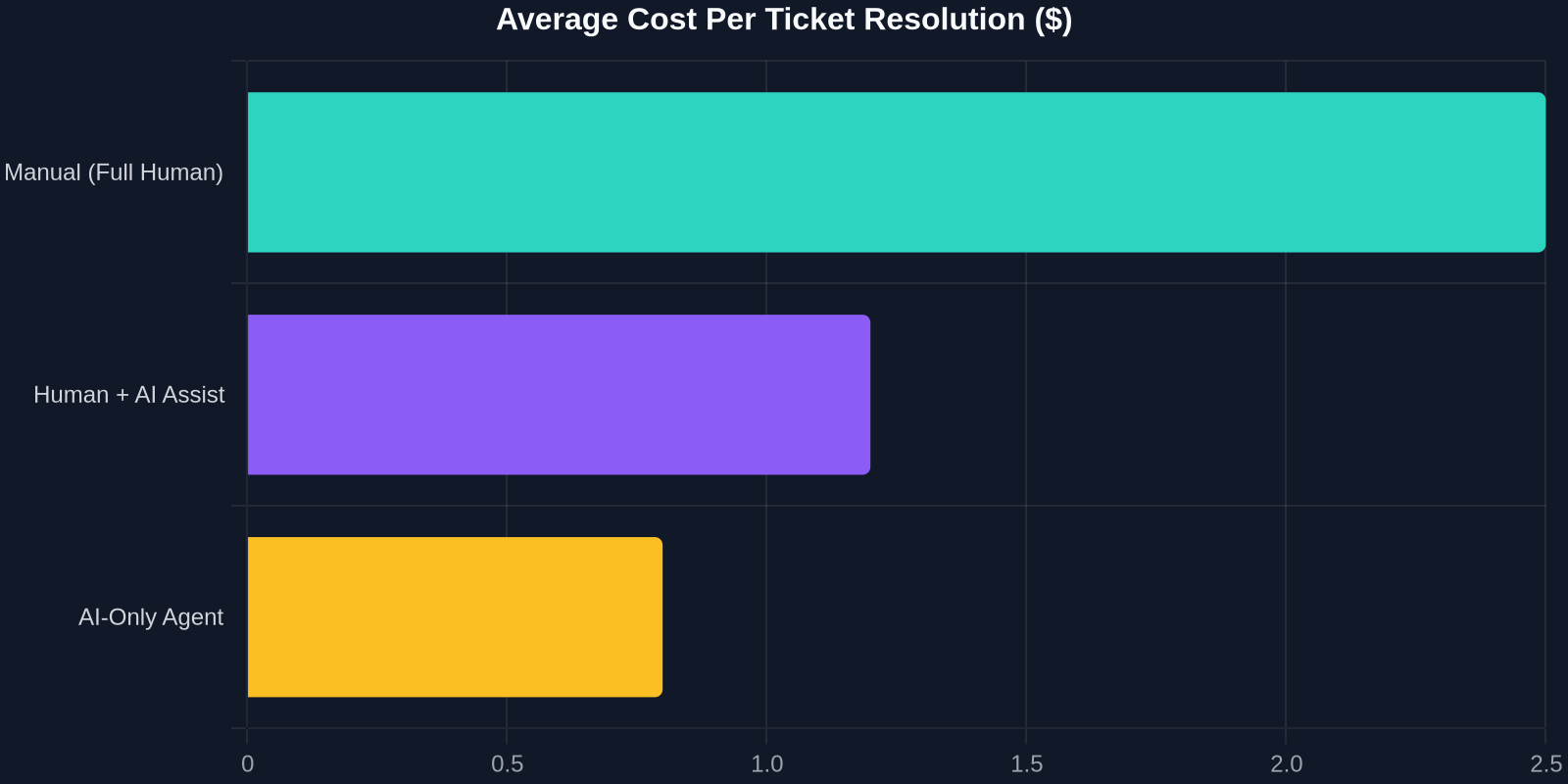
As the chart shows, AI-only agents can bring the cost down to $0.80 per ticket, a 68% reduction from manual handling. The hybrid model (human + AI assist) sits in the middle at $1.20, but offers the best balance for complex issues.
The Future of AI in Customer Experience
Airbnb's 30% deflection rate is a harbinger of what's possible. As AI models become more sophisticated, the line between bot and human will blur even further. Companies like Sable are building AI agents that can run live product demos, and the funding landscape reflects that confidence, Sable raised $45M from Sequoia and 8VC.
For the travel industry, AI is reshaping guest interactions. Short-term rentals are entering a risky era, and AI can help hosts manage inquiries, check-ins, and maintenance requests automatically. The result is a smoother experience for guests and lower operational costs for hosts.
What This Means for Your Business
Whether you run a SaaS company, an e-commerce store, or a B2B service, the principles are the same. AI can handle the repetitive, freeing your team to focus on building relationships and solving complex problems. The ROI is clear: faster response times, higher CSAT, and lower costs.
At Successly, we help companies achieve exactly this. Our AI-powered support automation platform integrates with your existing tools and learns from your data. You can have your first AI agent handling tickets within days, not months.
Conclusion
Airbnb's achievement of 30% ticket deflection via AI agents is a landmark moment for the customer support industry. It proves that AI automation is not just a cost-cutting measure, it's a strategic advantage. By embracing AI, you can scale your support operations, improve customer satisfaction, and give your team the tools they need to excel.

The question is: will you be an early adopter or a late follower? The data is clear. The time to act is now.