The AI Revolution in Procurement: Beyond Automation to Strategic Transformation

The AI Revolution in Procurement: Beyond Automation to Strategic Transformation
Did you know that by 2025, 62% of Gen Z will trust AI influencers more than real people for product recommendations? This shift in trust is just one example of how artificial intelligence is transforming our world, and procurement is no exception. The real AI shift in procurement starts now, moving beyond simple automation to strategic, data-driven decision-making that reshapes entire supply chains.
The Evolution of AI in Procurement
The journey of AI in procurement has been remarkable, evolving from basic automation to sophisticated cognitive capabilities. Let's explore this transformation:
- Automation Phase (2010-2018): Focused on rule-based automation of repetitive tasks
- Augmentation Phase (2018-2022): AI began enhancing human decision-making with predictive analytics
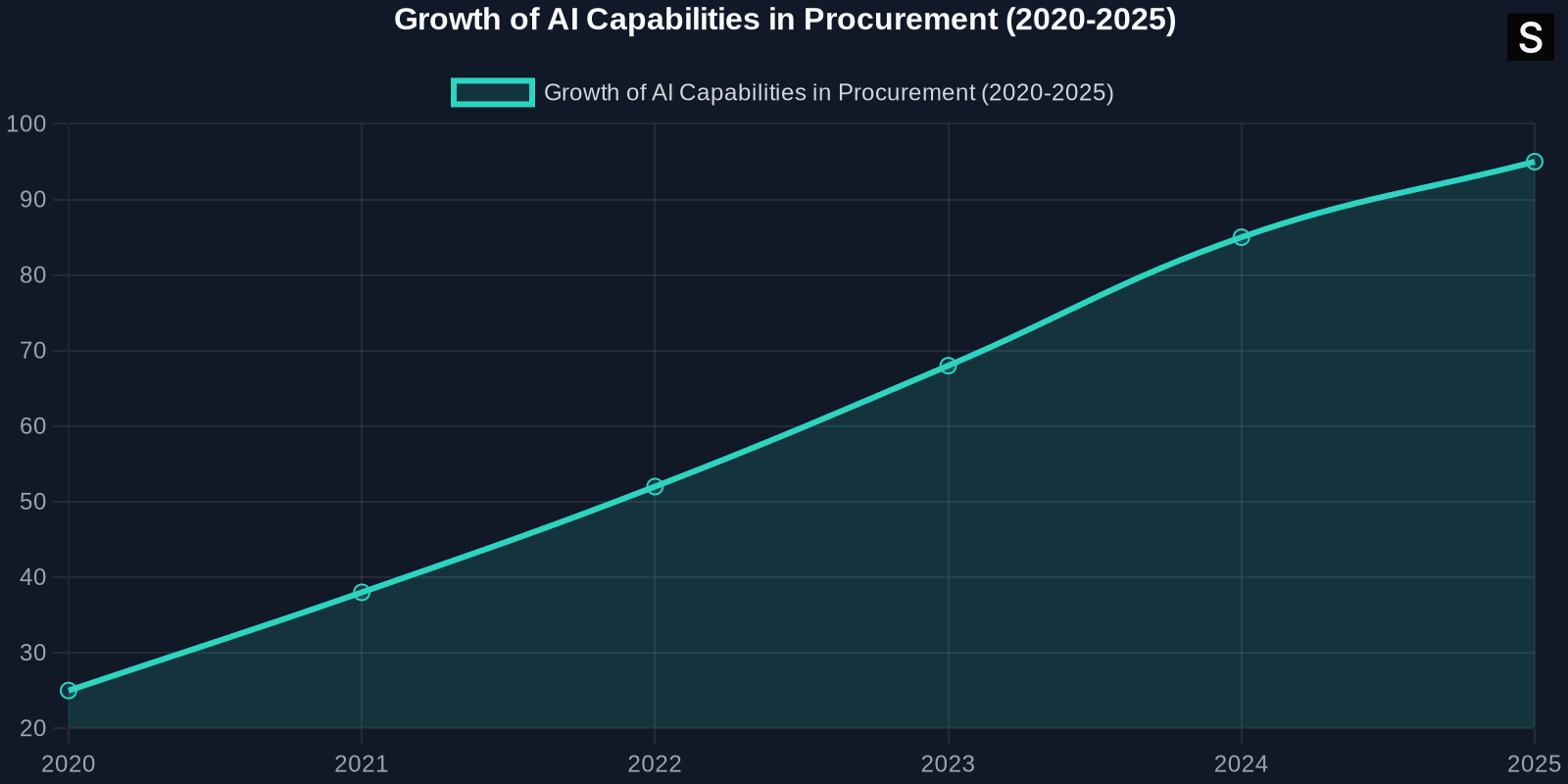
- Autonomous Phase (2023-Present): AI systems now make independent decisions with human oversight
From Simple Automation to Cognitive Capabilities
Early procurement AI focused on automating routine tasks like purchase order processing and invoice matching. Today's AI systems can:
- Analyze complex spend patterns
- Predict market trends
- Negotiate with suppliers
- Manage risk across global supply chains
This evolution mirrors the findings from the International Journal of Scientific Research Archive about the rise of the "smart" supply chain, where AI and automation are revolutionizing logistics and procurement.
The Strategic Impact of AI on Procurement
AI is transforming procurement from a tactical function to a strategic powerhouse. The most significant impacts include:
Enhanced Decision Making
AI systems analyze vast amounts of data to provide insights that were previously impossible to obtain. This includes:
- Real-time market analysis
- Supplier risk assessment
- Demand forecasting
- Spend optimization
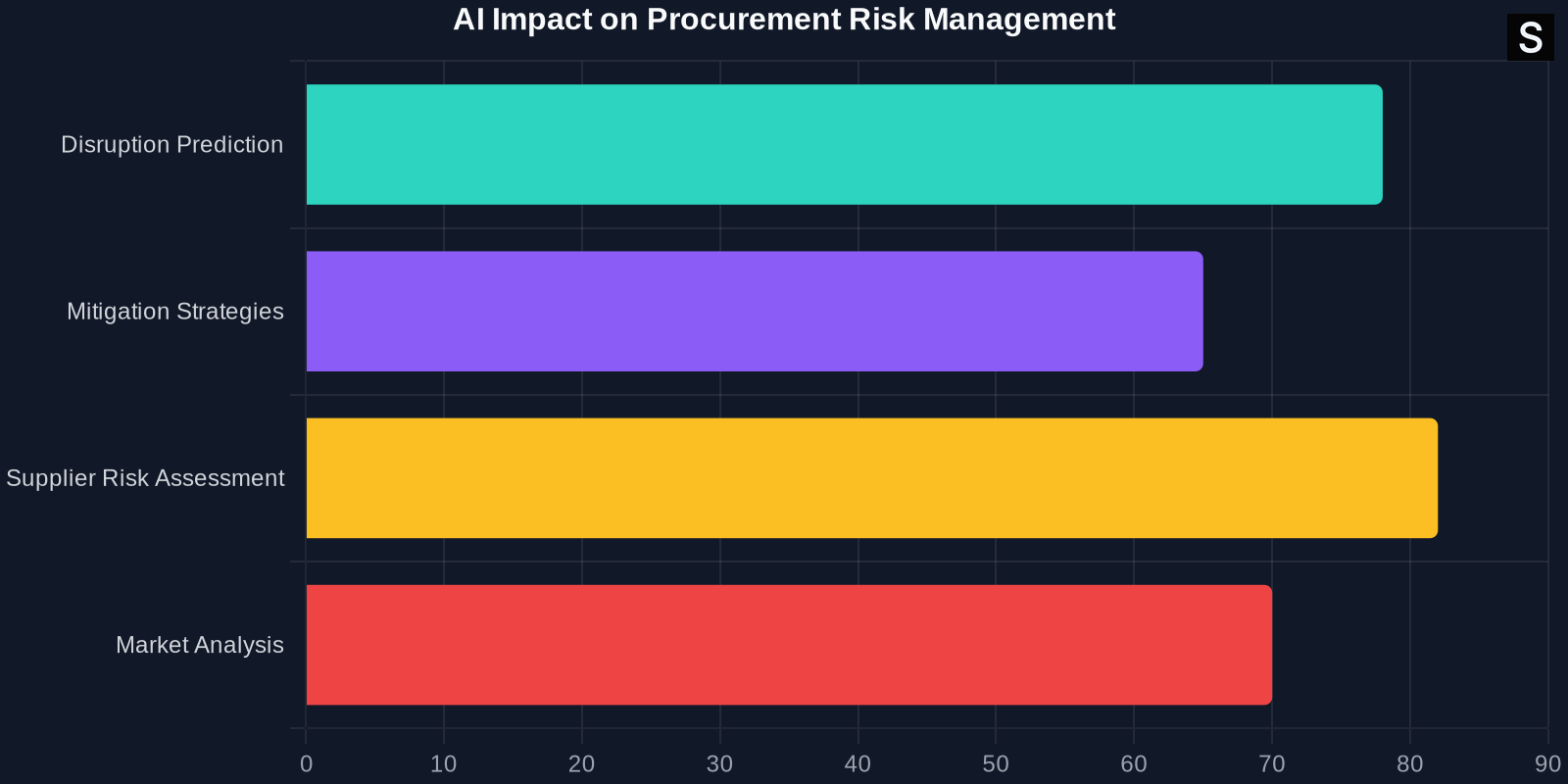
Risk Management and Resilience
AI's ability to process and analyze vast datasets enables procurement teams to:
- Identify potential supply chain disruptions before they occur
- Develop mitigation strategies
- Build more resilient supply chains
- Monitor global risk factors in real-time
Supplier Relationship Management
AI is transforming how organizations manage supplier relationships through:
- Automated supplier performance monitoring
- Predictive quality analysis
- Dynamic pricing optimization
- Automated contract management
Implementing AI in Procurement: Best Practices
Successful AI implementation in procurement requires careful planning and execution. Here are key best practices:
Building AI Workflows Around Real SOPs
The most successful organizations don't just implement AI—they integrate it into their standard operating procedures. This involves:
- Mapping current procurement processes
- Identifying AI integration points
- Redesigning workflows to leverage AI capabilities
- Continuous testing and optimization
They build AI workflows around real SOPs. They test new hires on AI capability. They budget for tokens like any other business resource.
Developing AI Capabilities in Teams
As AI becomes more integral to procurement, organizations must focus on:
- Training programs for AI literacy
- Hiring for AI-related skills
- Creating cross-functional AI teams
- Establishing centers of excellence for AI in procurement
Budgeting for AI Resources
AI implementation requires proper resource allocation, including:
- Token budgets for AI model usage
- Investment in AI infrastructure
- Allocation for continuous learning and adaptation
- Funding for AI governance and ethics programs
Overcoming Challenges in AI Adoption
While the benefits of AI in procurement are substantial, organizations face several challenges in adoption:
Data Quality and Integration
AI systems require high-quality, integrated data to function effectively. Organizations must:
- Clean and standardize existing data
- Implement data governance policies
- Invest in data integration platforms
- Establish data quality metrics
Change Management
AI adoption represents a significant change for procurement teams. Successful change management involves:
- Clear communication of AI benefits
- Involvement of teams in implementation
- Addressing concerns and misconceptions
- Demonstrating quick wins
Ethical Considerations
As AI becomes more prevalent in procurement, organizations must address ethical concerns:
- Transparency in AI decision-making
- Fairness in supplier selection
- Data privacy and security
- Compliance with regulations
The Future of AI in Procurement
Looking ahead, several trends are shaping the future of AI in procurement:
Hyper-Personalization of Procurement
AI will enable procurement to become more personalized, with systems that:
- Adapt to individual user preferences
- Learn from specific organizational patterns
- Provide tailored recommendations
- Customize interfaces for different roles
AI-Driven Innovation
AI will increasingly drive innovation in procurement through:
- Identification of new supplier markets
- Development of innovative sourcing strategies
- Creation of new procurement models
- Automation of innovation processes
The Rise of Autonomous Procurement
The ultimate goal for many organizations is autonomous procurement, where AI systems can:
- Make independent procurement decisions
- Execute transactions without human intervention
- Continuously optimize procurement strategies
- Self-improve through machine learning
Key Takeaways
Conclusion: The Time for AI in Procurement is Now
The AI revolution in procurement is well underway, transforming the function from a tactical operation to a strategic powerhouse. Organizations that successfully implement AI in their procurement processes will gain significant competitive advantages in terms of efficiency, cost savings, risk management, and innovation.
The journey requires careful planning, investment in capabilities, and a commitment to continuous learning and adaptation. As we look to the future, the potential for AI in procurement is limitless, with possibilities for hyper-personalization, autonomous decision-making, and AI-driven innovation.
Now is the time for procurement leaders to embrace AI, not just as a tool for automation, but as a strategic partner in driving business value and competitive advantage. The real AI shift in procurement starts now—will your organization be leading the charge or playing catch-up?
For further reading on AI's impact across industries, consider these resources: