AI Shopping Assistant Market: Size, Trends, and Forecast 2025-2033

The AI shopping assistant market is reshaping how consumers discover, evaluate, and purchase products online and in-store. With global e-commerce sales surging and customer expectations for personalized experiences at an all-time high, retailers are rapidly adopting AI-powered assistants to drive engagement, boost conversions, and streamline operations. According to recent market analysis, the global AI shopping assistant market is valued at USD 69.48 billion in 2025and is projected to skyrocket toUSD 465.15 billion by 2033, reflecting a compound annual growth rate (CAGR) of approximately 26.8%.
4. Cost Reduction and Operational Efficiency for Retailers
AI assistants automate repetitive queries, reduce cart abandonment through proactive engagement, and handle multiple customer interactions simultaneously. A 2024 study found that retailers using AI chatbots saw a 35% reduction in customer service costs and a 20% increase in average order value.
Market Segmentation: A Closer Look
By Component: Solutions Lead, Services Surge
-Solutions(platforms/software): Accounted for over 65% of revenue in 2025. Includes chatbot builder platforms, recommendation engines, and voice-enabled shopping apps. -Services(professional & managed): Expected to grow at a CAGR of 28% as enterprises require customization, integration, and ongoing support.
Regional Insights: Where the Growth Is Happening
North America: Mature Market with Strong AI Ecosystem

North America held the largest revenue share in 2025, led by major players like Amazon, Google, Microsoft, and IBM. The region benefits from high smartphone penetration, advanced cloud infrastructure, and early adoption of voice commerce. The U.S. alone accounts for over 40% of the global market.
Asia-Pacific: Fastest Growth Trajectory
Countries like China, India, Japan, and South Korea are witnessing explosive adoption. China’s Alibaba and JD.com have integrated AI shopping assistants into their platforms, handling billions of interactions daily. India’s booming e-commerce sector, combined with affordable Android devices, makes it a hotspot for shopping assistant apps.
Future Outlook: What’s Next for AI Shopping Assistants?
Looking ahead to 2033 and beyond, the AI shopping assistant market will continue to evolve with advancements in generative AI, augmented reality (AR), and emotion recognition. Imagine virtual assistants that can detect frustration in a customer’s voice and proactively offer solutions, or AR-based shopping assistants that let you visualize furniture in your home before purchasing.

The integration of generative AI (like ChatGPT) into shopping assistants will enable more natural, human-like conversations and dynamic content generation for product descriptions, comparisons, and reviews.
However, challenges remain. Data privacy and security concerns, algorithm bias, and the need for continuous training to keep up with evolving consumer preferences are areas that require attention. Additionally, the digital divide in less developed regions may slow adoption.
Conclusion
The AI shopping assistant market is on an impressive growth trajectory, with the market size expected to increase more than sixfold from 2025 to 2033. Retailers and technology providers that invest in AI-powered shopping experiences now will be well-positioned to capture market share as consumer expectations continue to rise. With Android leading the mobile ecosystem, cloud-based deployments gaining dominance, and Asia-Pacific emerging as the next growth frontier, the opportunities are vast.
To stay competitive, businesses must prioritize personalization, adopt omnichannel strategies, and ensure compliance with data regulations. Whether you’re a retailer looking to enhance customer experience or a developer building the next generation of shopping assistants, the time to embrace AI is now. Key Takeaways:
- The global AI shopping assistant market is projected to grow from USD 69.48 billion in 2025 to USD 465.15 billion by 2033 at a CAGR of 26.8%.
- Android commands the largest market share among mobile OS platforms used for shopping assistants.
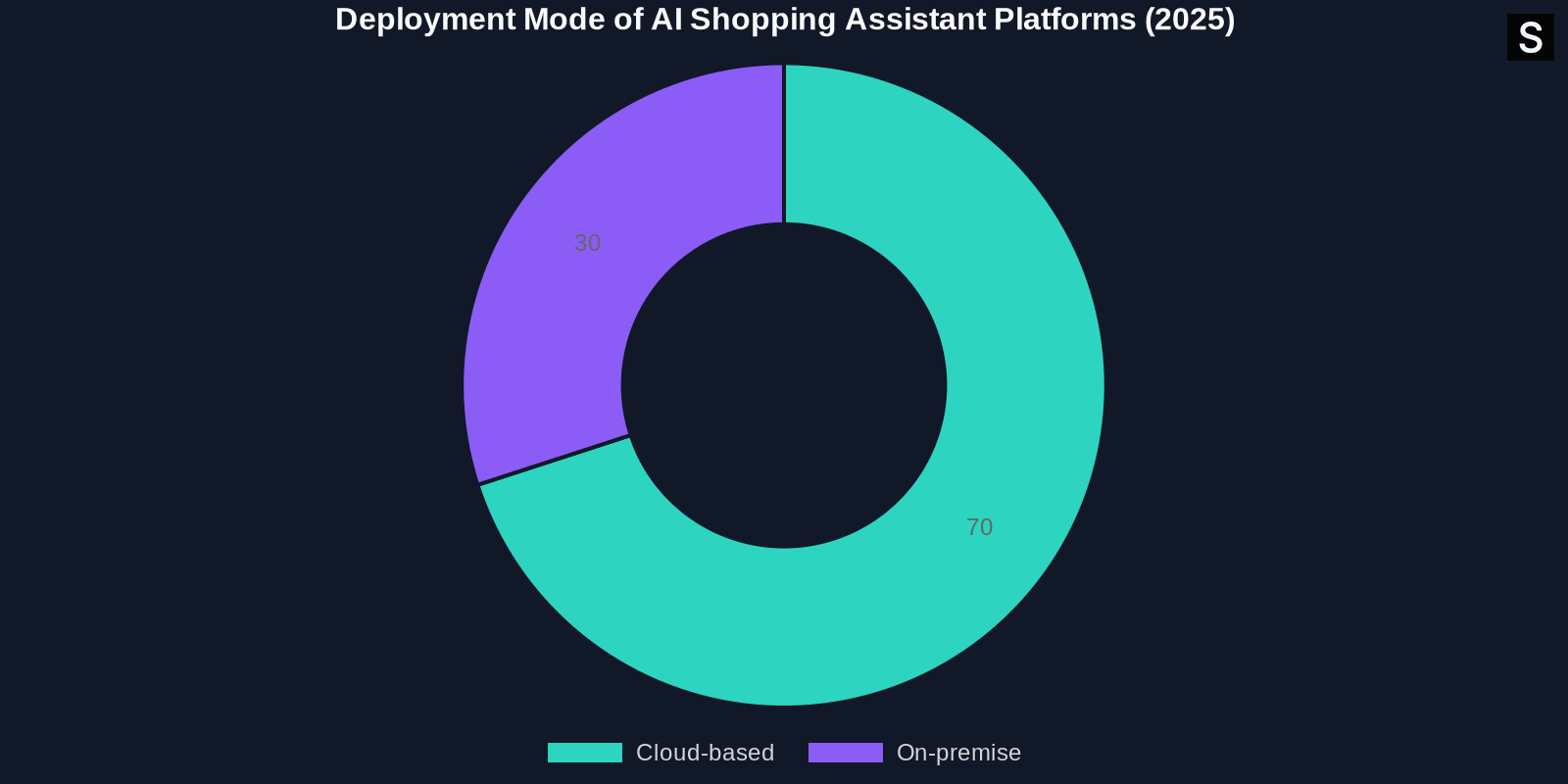
- Cloud-based deployment holds a 70% market share, and the software segment dominates revenue.
- Asia-Pacific is the fastest-growing region, while North America leads in revenue.
- Data privacy and regulatory compliance are critical factors for sustainable growth.
For a deeper dive into the report, including detailed segmentation, competitive analysis, and forecasts, refer to the full study at Market.us.
This article is based on the latest available data as of 2025. Market projections are subject to change based on macroeconomic conditions and technology shifts.