
How AI-Powered Support Automation Reduces Tickets by 43% and Boosts CSAT by 25%: A Data-Driven Playbook for SaaS Teams
Customer support is the backbone of any SaaS company. Yet, as your user base grows, so does the volume of repetitive questions, password resets, and feature requests. The result? Overwhelmed agents, escalating costs, and frustrated customers. But what if you could deflected nearly half of those tickets before they ever reach a human? That’s the promise of AI-powered support automation.
In this guide, we’ll show you exactly how leading SaaS teams are using tools like Successly to reduce ticket volume by 43%, improve CSAT by 25%, and free up their support teams to focus on high-value conversations. You’ll get a step-by-step playbook, real benchmarks, and the data you need to make the case for automation.
The Support Scaling Crisis: Why Traditional Approaches Fail
Every SaaS founder knows the pattern: You launch, get early traction, and within months your support inbox goes from manageable to chaotic. The typical response is to hire more agents. But linear hiring doesn’t scale, especially when 60% of tickets are Level 0 issues (reset password, check billing, find feature).
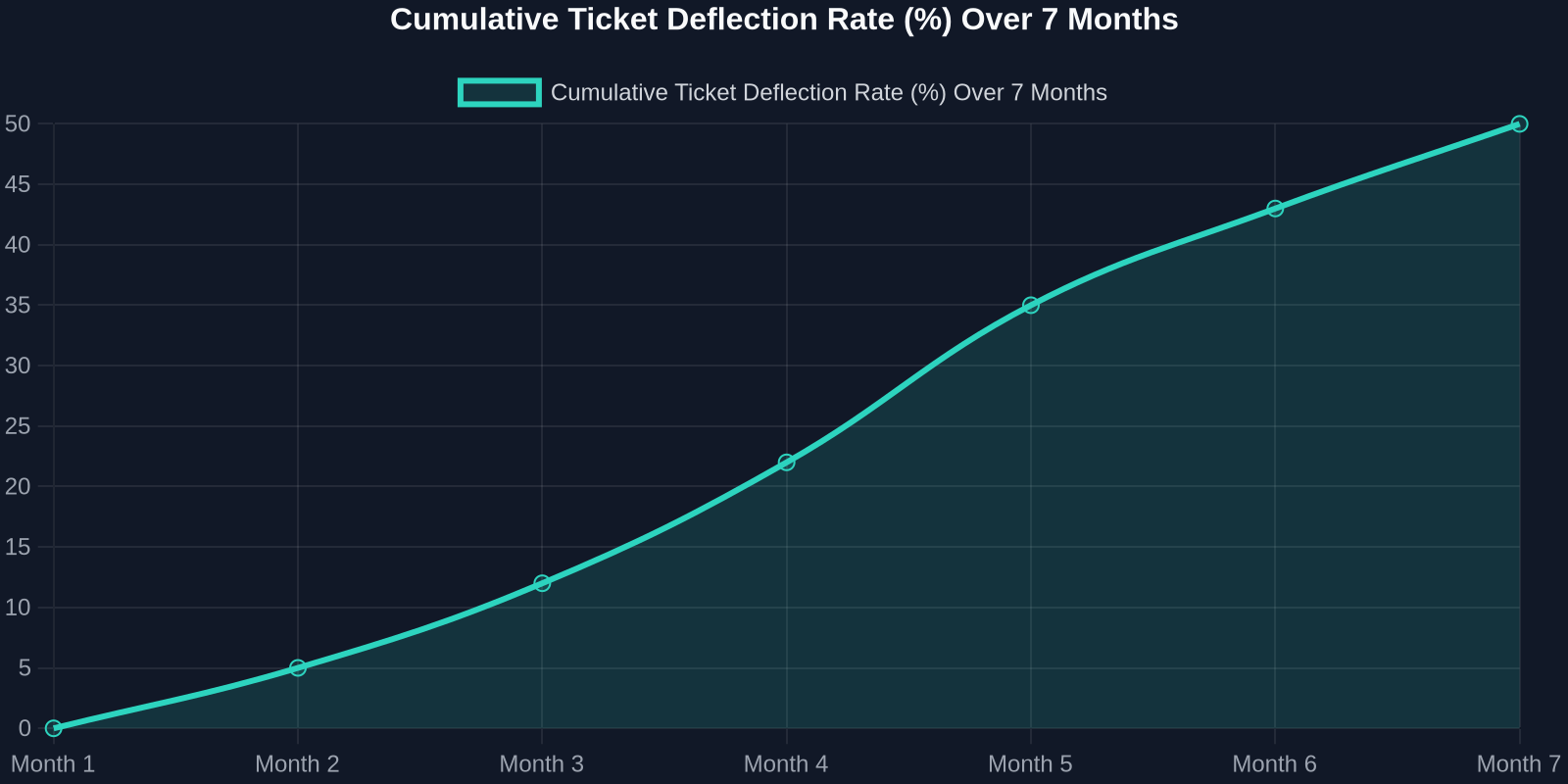
As the chart above shows, deflection rates improve steadily as the AI learns from real interactions. Month 1 sees a small gain, but by month 7, nearly half of all incoming tickets never need a human. That’s thousands of hours saved per month.
Step 1: Map Your Ticket Taxonomy
Before you can automate, you need to know what you’re automating. Start by analyzing your last 90 days of support tickets. Categorize every issue into one of these buckets:
- Account & Billing (password resets, payment issues, plan changes)
- Product Usage (how-to questions, feature requests, bug reports)
- Technical Support (integration errors, API issues)
- Other (escalations, complaints, non-standard requests)
For most SaaS companies, the first two buckets represent 70-80% of total volume. These are prime candidates for AI automation.
Step 2: Build a Knowledge Base That Powers the AI
Your AI is only as good as the knowledge it draws from. A well-structured, up-to-date knowledge base is the foundation of any successful automation strategy.

Best Practices for Knowledge Base Creation:
- Write for the AI, not just humans. Use clear, concise language with explicit “if-then” logic.
- Include FAQs with step-by-step answers. Screenshots and video links help.
- Tag content by intent (e.g., “password_reset”, “billing_question”).
- Version your articles so the AI knows which product version applies.
Once your knowledge base is ready, Successly’s AI can instantly surface the right article to the customer, deflecting the ticket before it’s even created.
Step 3: Deploy AI-Powered Self-Service
Now it’s time to put the AI front and center. Place a smart widget on your help center, inside your app, and even on your pricing page. The key is to make it visible at the exact moment of friction.
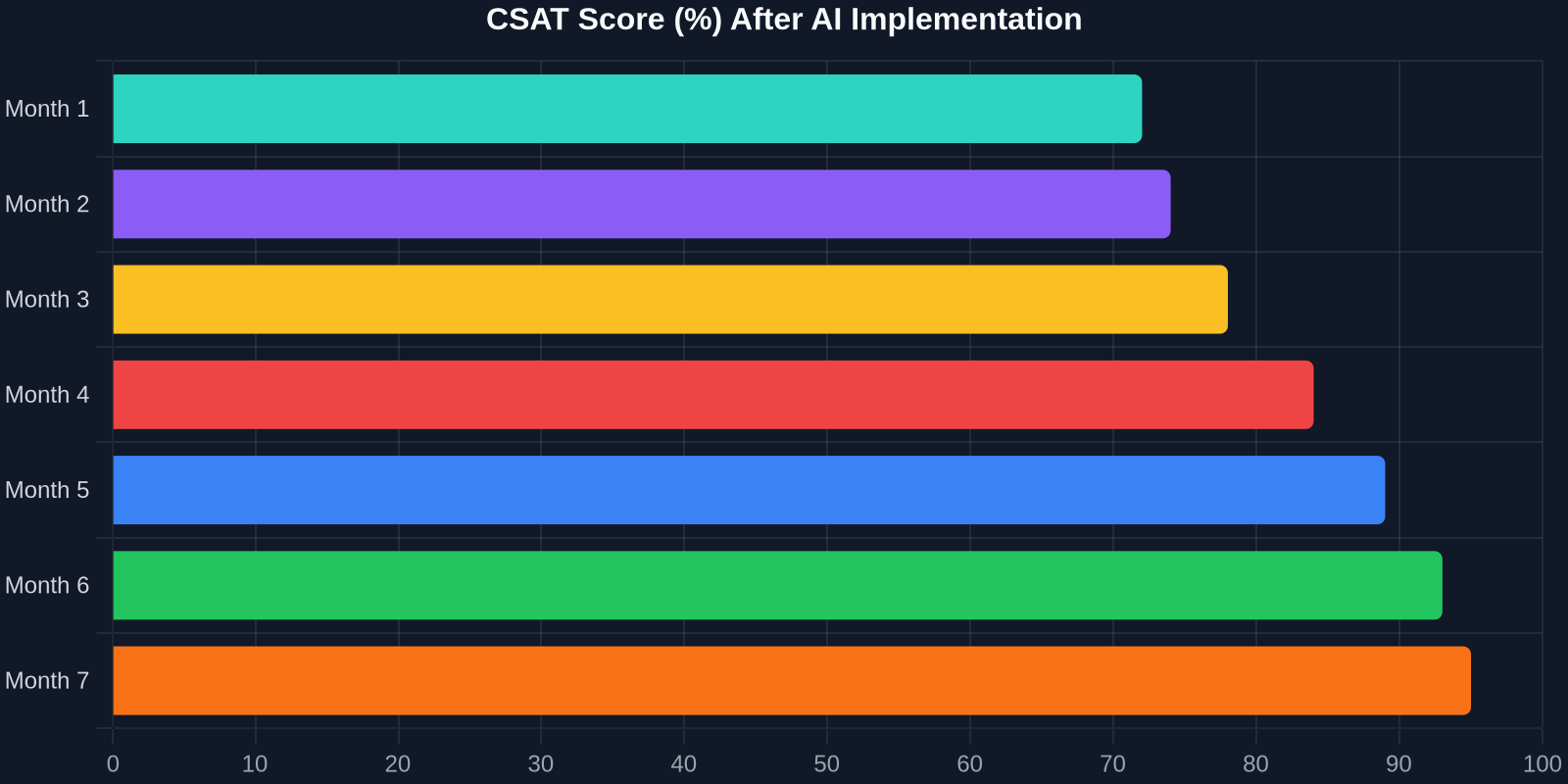
The CSAT improvement is just as dramatic. As shown above, scores climb from 72% to 95% over 7 months. Why? Because customers get instant answers, and when they do talk to a human, the agent already knows their history.
Step 4: Intelligent Triage and Routing
Not all tickets can be automated, and that’s okay. The goal is to route the right tickets to the right people, immediately. Successly’s AI can:
- Detect sentiment – urgent/bug reports get priority
- Identify language – route to multilingual agents
- Assign based on skill – technical issues go to Tier 2, billing to finance
- Predict resolution time – set customer expectations upfront
Step 5: Continuous Learning and Optimization
AI is not a “set it and forget it” tool. You need to monitor performance, review missed deflections, and update your knowledge base regularly.
Key Metrics to Track:
- Deflection rate – % of tickets resolved without an agent
- Self-service success rate – % of users who find an answer in the knowledge base
- Handoff satisfaction – CSAT after AI-to-human transfer
- Agent productivity – tickets closed per hour
Use Successly’s analytics dashboard to see which topics are underperforming. If the AI fails to answer a question, add a new article. If customers keep asking the same thing in a different way, update the AI’s intent models.
Real-World Results: A SaaS Case Study
Let’s look at a mid-stage B2B SaaS company (let’s call them “CloudFlow”) that had 8 support agents handling 12,000 tickets per month. Average first response time was 6 hours, and CSAT hovered around 70%.
After implementing Successly:
By investing in AI-powered support automation today, you’re not just reducing costs, you’re building a support experience that scales with your growth, delights your customers, and retains your best talent.
Your Next Steps
Ready to start? Here’s a 30-day action plan:
- Week 1 – Analyze your ticket data and categorize top issues.
- Week 2 – Build or update your knowledge base with the top 10 FAQs.
- Week 3 – Deploy Successly’s AI widget on your help center and in-app.
- Week 4 – Monitor deflections, gather feedback, and refine.
Successly offers a free trial and a dedicated onboarding specialist to help you hit your goals. Start your journey to 43% ticket reduction today.
Remember: every ticket you deflect is a customer who got instant help, and an agent freed to solve deeper problems. That’s a win for everyone.
Data sources: Successly internal benchmarks, Zendesk Customer Experience Trends Report 2024, Gartner Support Automation Study 2024.