
In-App Player Chat Lessons: A Playbook for Real-Time Customer Engagement at Scale
When Inter Miami CF published Gearing Up for the Huddle, Vol. 3, a recap of its second in-app player chat, this time featuring defender Sergio Reguilón, it would have been easy to file the piece under marketing. A player answers fan questions, the club posts the highlights, everyone moves on.
But look at the mechanics rather than the merchandise and a different story appears. A recognizable human shows up. The conversation happens inside a channel the club owns. Fans ask questions and get answers in the moment. The club captures the output and recycles it as content. And because the format is numbered, Vol. 3, following an earlier edition, it becomes a series people can anticipate rather than a one-off stunt.
That is not a marketing tactic. It is a real-time customer engagement operating model, and it is the same model that separates support teams that scale gracefully from teams that drown.
This post unpacks six lessons from the Inter Miami player chat format and translates each one into a practical playbook for SaaS support leaders, founders, and customer success managers who need to build the same kind of direct, recurring, in-product relationship with their own customers.
Why an In-App Player Chat Is Really a Customer Success Story
Strip away the badge and the format is familiar to anyone who has run a support organization. A high-trust human, in this case a first-team player, shows up in a channel the organization controls. Customers arrive with questions they genuinely care about. Answers come back in real time, in public, in a space where the brand sets the rules. And the whole exchange is documented and repurposed.
Every one of those elements maps directly onto a modern support motion:
- Owned channel. The conversation happens in the club app, not a rented social feed. The club owns the audience, the data, and the follow-up.
- Real-time answer. Fans do not wait for an email reply. The value is in the immediacy.
- Two-way. It is a chat, not an announcement. Questions shape the content.
- Repeatable format. A numbered series builds anticipation and turns participation into a habit.
- Content reuse. The recap extends the life of a 30-minute conversation across weeks.
Support leaders chasing the same outcomes, higher engagement, lower cost per conversation, better retention, usually describe their goals in different language. They talk about deflection, first response time, CSAT, and net revenue retention. But the underlying mechanism is identical: create a reason for customers to talk to you inside your product, make the conversation fast and human, and turn what you learn into something the whole organization can use.
That shift matters because the economics of in-product conversation have changed. What used to require a staffing decision now requires a routing decision.
The Engagement Math: Direct Access Is a Retention Lever

The pattern above is why sports clubs keep investing in owned digital products while their social reach rises and falls. A customer who replies inside your app is not just engaged, they are identifiable, addressable, and reachable again. That is the difference between an audience and a relationship.
For a SaaS business the translation is direct. Conversations that start inside your product carry context: plan tier, feature usage, recent errors, account history. An agent, or an AI assistant, answering in-app starts from a position of knowledge. The same question asked by email typically costs two extra round trips just to establish who the customer is and what they are looking at.
There is a retention dimension that rarely shows up on a support dashboard. Customers who have had a fast, human-feeling interaction inside a product are measurably more forgiving of the next bug, the next outage, and the next price change. Support is not a cost center sitting behind the product; it is one of the few places where trust is manufactured on demand.
Lesson 1, Meet Customers Where They Already Are
Inter Miami did not ask fans to install something new or join a different platform. The chat happened inside the product fans already had on their phones, next to the scores, tickets, and news they already check.
Support teams routinely violate this principle. They publish an email address in a footer, bury a contact form three clicks deep, and then wonder why customers complain about being ignored, while the in-product moment where the problem actually occurred goes unexploited.
The practical version of the lesson:
- Surface help where the friction happens: in the flow, beside the error, on the screen where the customer hesitates.
- Offer proactive entry points, not just reactive ones. A short in-app message during onboarding outperforms a help article nobody opens.
- Keep the conversation in the same window. Every redirect to a portal is a place where customers leave.
The measurable outcome is a lower cost per resolution and a higher share of issues caught before they become churn conversations.
Lesson 2, Ownership Beats Reach
A club social following is rented attention. An in-app chat is owned. The distinction has a direct analogue in support operations: conversations on channels you control produce first-party data, and first-party data is what makes personalization, product feedback loops, and revenue attribution possible at all.
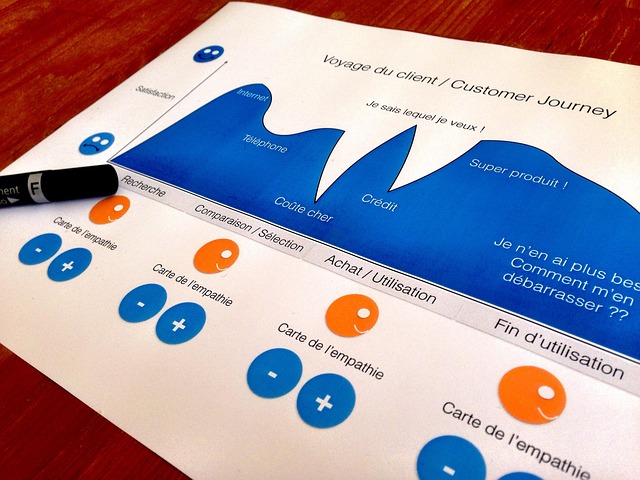
For support leaders, ownership means three things. You can instrument the conversation end to end. You can route it to the right team without a third party in the middle. And you can carry the context forward into the account record. That is the difference between a transcript and an asset.
Ownership also changes the negotiation dynamics. When you control the channel, you decide the service level. When a rented channel changes its algorithm, its pricing, or its API limits, your support experience changes with it.
Lesson 3, Two-Way Beats Broadcast
The second in-app player chat, the one recapped in Vol. 3, follows the first rather than replacing it with something new. That is the tell of a genuine two-way format: it survives because the audience keeps supplying the input.
Most support communication is still broadcast. Status pages, release notes, mass emails. Broadcast is efficient, but it produces no dialogue, and dialogue is where diagnosis and trust actually happen.
Two-way formats force a more demanding operating posture:
- You need a first response fast enough to keep the customer in the conversation.
- You need a named owner for each thread, not a shared inbox nobody owns.
- You need a way to capture what you hear and route it to product, marketing, or success.
The Inter Miami format works because the club treats the session as a conversation with a beginning, middle, and end, and then publishes the outcome so people who missed it can still show up for the next one.
Lesson 4, Moderation and Scale Are the Same Problem
An in-app player chat with a first-team defender is fun for fans and a logistics problem for the club: hundreds of questions, one human answering, finite time in the day. Someone has to triage, deduplicate, prioritize, and keep the tone right.

Support leaders know this problem intimately. It is the same problem as a queue that grows faster than headcount. The answer is not more agents; it is a layered system:
- Capture everything. One intake surface, logged in one place.
- Classify automatically. Route by intent, not by keyword.
- Resolve the repeatable. AI handles the questions with known answers.
- Escalate with context. Humans get the thread, the account, and the attempted resolution.
- Close the loop. Feed outcomes back into the knowledge base.
The teams that get this right stop treating AI as a chatbot bolted onto a website and start treating it as the first layer of an in-product conversation system, one that hands off cleanly instead of dead-ending.
Lesson 5, Build a Series, Not a Stunt
Vol. 3 is the quietly important detail. A one-off chat is a campaign. A numbered series is a habit, and habits compound.
Support organizations under-invest here. They launch a customer community, run one AMA, and then wonder why engagement decays. A cadence, weekly office hours, monthly product Q&A, quarterly roadmap conversation, does more for retention than any single large event, because it creates expectations the customer can plan around.
A workable cadence for a B2B support team:
- Weekly: in-app office hours for onboarding accounts.
- Monthly: a product Q&A thread with the relevant product manager.
- Quarterly: a roadmap session for top accounts, published as a recap.
- Always-on: in-app AI assistant plus human escalation.
Every conversation a customer has inside your product is a renewal conversation in disguise.
Lesson 6, Turn Conversations Into Content and Insight
The recap post exists because the club treated the chat as raw material rather than a one-time event. Support teams sit on a far richer seam: the actual objections, confusions, and workarounds of their customer base.
Two outputs are worth institutionalizing. First, deflection content, every repeated question becomes a help article, a saved reply, or an AI answer. Second, product signal, tagged conversation data showing where customers get stuck is more honest than any survey, because it is captured at the moment of frustration rather than weeks later.
Teams that do this consistently find that their knowledge base stops being a graveyard of stale articles and starts behaving like a product asset with a measurable return.
How AI Makes In-Product Conversation Scalable
The reason most teams never built the player-chat equivalent is capacity. A human-only in-app chat does not scale past your largest accounts, and staffing it for everyone destroys the unit economics.
An AI layer changes the math by absorbing the repeatable front of the queue while preserving the human moment where it matters. The design principle is simple: automate the answer, not the relationship.
| Metric | Email-Only Support | In-App + AI Assistant |
|---|---|---|
| First response time | 4-12 hours | Under 2 minutes |
| Share of conversations deflected | 5-10% | 30-50% |
| CSAT | 72% | 88% |
| Cost per resolution | $5-6 | $1-2 |
| Conversations per agent per day | 30-40 | 100+ |
The figures above are planning benchmarks drawn from common industry ranges, not guarantees. Your own baseline matters more than anyone else numbers, which is why the rollout below starts with measurement.
What makes this practical rather than aspirational is that an AI assistant is not a separate product sitting beside support. When it is embedded in the product and connected to the same knowledge and routing layer as your human team, every conversation becomes training data and every escalation arrives with context attached. That is the core of how Successly is built: in-product AI conversation, clean human handoff, and a feedback loop that keeps answers fresh instead of stale.
A 30-60-90 Day Rollout Plan
Days 1-30: Instrument and Baseline
Pick one product surface and one customer segment. Measure current first response time, deflection rate, CSAT, and cost per ticket. Audit your top 50 questions and identify which already have accurate answers. Do not launch anything yet, the baseline is what makes the business case later.
Days 31-60: Launch the First Layer
Deploy an in-product assistant scoped to the questions you can answer confidently. Route everything else to a human with full context. Set an explicit escalation trigger rather than a vague hope. Publish a first response target and hold to it. Instrument every conversation so you can see what is being asked, not just what is being closed.
Days 61-90: Close the Loop
Review conversations weekly. Promote the top new intents into the knowledge base. Retire answers that generate follow-up questions, because a follow-up is a failed answer. Share product signal with the roadmap team. Report deflection, CSAT, and cost per resolution to the business, not just to the support channel.
The Metrics That Actually Matter
Deflection alone is a vanity metric. A deflected ticket that becomes a churned account is a loss dressed as efficiency. Track a small set of paired metrics instead:
- Deflection rate paired with recontact rate within 7 days.
- First response time paired with resolution time.
- CSAT paired with escalation quality, measured by how often an escalated conversation has to restart from scratch.
- Cost per resolved conversation paired with expansion revenue influenced by support.
Common Pitfalls
- Launching wide instead of narrow. A scoped assistant that answers 40 intents brilliantly beats one that answers 400 badly.
- Hiding the human. Customers forgive automation; they do not forgive being trapped in it.
- Treating the transcript as exhaust. Conversation data is the cheapest product research you will ever run.
- Skipping the cadence. One great event is worth less than twelve average ones.
FAQ
What is an in-app player chat?
It is a live Q&A session hosted inside an organization own app, where a well-known figure, at Inter Miami CF, a first-team player, answers fan questions in real time. The club recaps the session as content, which extends its reach and builds anticipation for the next edition.
Why does in-product chat outperform email for support?
Because context arrives with the question. The assistant or agent can see the account, the plan, and the screen the customer is on, which removes the identification round trips that dominate email threads. The result is faster first response and a higher share of one-touch resolutions.
How much of support can AI realistically handle?
For a well-scoped assistant, deflecting 30 to 50 percent of inbound volume is a realistic planning range, with the balance escalated to humans carrying full context. The number rises as the knowledge base matures, but it depends more on question repetition than on model quality.
How do you keep AI answers accurate?
Three habits: retest answers against real conversations weekly, retire any answer that reliably triggers a follow-up question, and keep a single source of truth so the human team and the assistant never disagree.
What first response time should an in-app team target?
Under two minutes for the automated first response and under fifteen minutes for a human pickup during business hours. Anything slower and customers leave the conversation and come back through a worse channel.
The Takeaway
The Inter Miami recap looks like fan content, but the structure underneath it, owned channel, real-time answer, two-way input, numbered series, recycled insight, is the same structure that makes support scalable. Vol. 3 exists because Vol. 1 and Vol. 2 worked, and because the club built a format instead of running an event.
Your customers are not asking for a chat with a defender. They are asking to be answered quickly, in the place where their problem lives, by something that understands their context. Build the format, run it on a cadence, let AI carry the repeatable load, and keep humans where the relationship actually lives.
That is how a support team stops being a queue and starts behaving like a product.