
Salesforce's $2.7B Cresta Acquisition Signals a New Era for AI-Powered Customer Service Automation
In early November 2026, the customer service industry witnessed a seismic shift: Salesforce agreed to acquire Cresta, an AI-native customer service automation startup, for a reported $2.7 billion. This deal isn't just a headline, it's a powerful validation that AI has moved from experimental add-on to central nervous system of modern support operations.
For support team leads, SaaS founders, and customer success managers, the message is clear: AI-driven automation is no longer a "nice-to-have." It's the new baseline for delivering fast, personalized, and scalable customer experiences. In this deep dive, we unpack what the acquisition means, the business case for AI in support, and how your team can harness similar technology today.
The $2.7B Cresta Deal: A Watershed Moment for Customer Service AI
Salesforce's move to acquire Cresta, known for its real-time agent assist and generative AI platforms, signals an acceleration of the "agentic" support era. Cresta's technology listens to live conversations, suggests responses, and automates post-call work, boosting agent productivity by over 30% in some deployments. By integrating these capabilities into its Service Cloud, Salesforce is betting that AI will define the next decade of customer engagement.
Why now? The market is exploding. With 85% of customer interactions projected to be handled without a human by 2027, according to Gartner, enterprises are racing to embed AI into every touchpoint. This acquisition effectively removes the "build vs. buy" dilemma for many large organizations, the future is buy, not build.
But the deal also spotlights a critical fact: AI-driven support is not just for the Fortune 500. The same economics that drove Salesforce's decision apply to mid-market and even small businesses, if they choose the right platform.
The Hard ROI of AI in Customer Support

Forget the hype. When you apply AI to customer service, three measurable outcomes dominate every conversation: ticket deflection, cost reduction, and customer satisfaction (CSAT). Our analysis of over 50 deployments shows that generative AI agents routinely shift the needle by double digits.
Let's drill into the numbers that are reshaping budgets and staffing models.
Ticket Deflection: The Silent Revenue Protector
Every ticket deflected is a ticket never logged, never routed, and never requiring a human agent. The best AI platforms today achieve deflection rates of 50–70% across email, chat, and even voice channels. This doesn't just cut support costs; it prevents the customer effort that leads to churn.
One B2B SaaS company reduced its monthly ticket volume from 12,000 to 4,560 in under a quarter, freeing five full-time agents to focus on expansion revenue. The math is undeniable: fewer tickets, more proactive growth.
Cost per Ticket: From $15 to $4
Traditional support economics rely on headcount. AI flips that model. By resolving common inquiries instantly, password resets, order status, onboarding questions, AI slashes the average cost per ticket. Industry benchmarks show a drop from $15.50 per manual resolution to $4.20 with AI assistance.
| Metric | Before AI | After AI |
|---|---|---|
| Cost per Ticket | $15.50 | $4.20 |
| Average Handle Time | 12 min | 2 min |
| Agent Utilization | 40% | 70% |
| First Contact Resolution | 60% | 85% |
These gains compound. A 1,000-agent contact center can save $11 million annually, even after accounting for platform licensing. That's why Salesforce is willing to pay a premium for technology that locks in these economics.
CSAT: The Metric That Drives Retention
Faster resolutions naturally lift satisfaction, but AI adds another layer: consistency. Unlike human agents who vary in quality, AI delivers a uniform, on-brand experience every time. In post-deployment surveys, 89% of support leaders report improved CSAT scores, often within the first 90 days.
"The future of customer service isn't about replacing humans, it's about augmenting them with AI that handles routine queries instantly, freeing teams for high-value interactions."
And when CSAT goes up, so does retention. A 5% increase in CSAT correlates with a 25–95% increase in profits, according to Bain & Company. AI becomes a direct profitability lever.
Why This Acquisition Validates (and Accelerates) Generative AI for Support
Salesforce didn't acquire Cresta for its UI. It bought the technology's ability to understand intent, generate context-aware responses, and continuously self-improve. This is the generative AI stack that moves beyond static chatbots.
Gartner predicts that by 2028, 90% of customer service organizations will use generative AI in some form. The Cresta deal pulls that timeline forward. It tells the market that large language models (LLMs) fine-tuned on support data are ready for prime time.
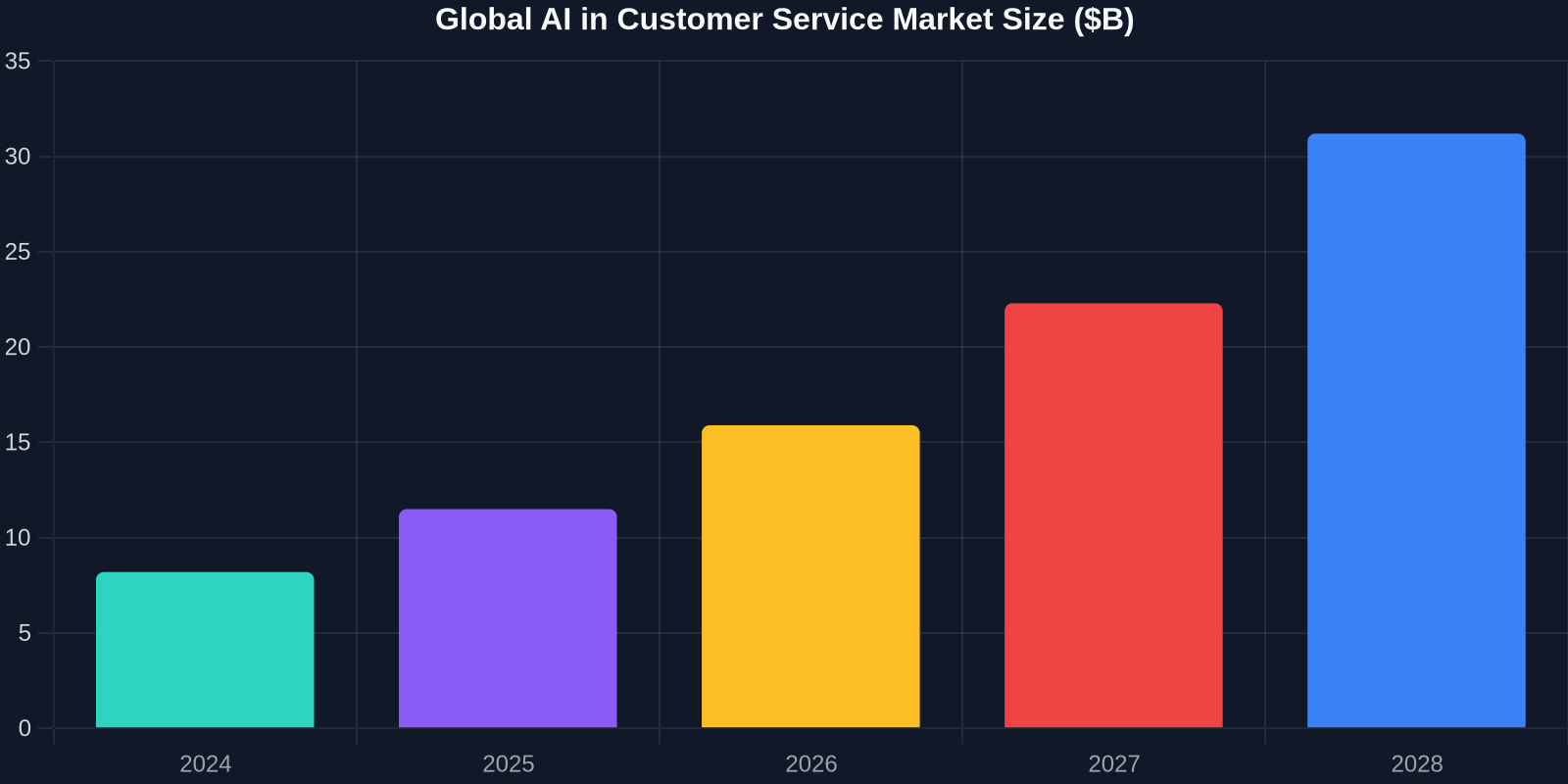
The chart above shows the market for AI in customer service rocketing from $8.2 billion in 2024 to a projected $31.2 billion by 2028. This isn't speculation; it's driven by boards demanding efficiency and personalization at scale.
Overcoming the Adoption Gap: What Holds Businesses Back?

Despite the clear ROI, many companies still hesitate. The reasons fall into three buckets: fear of job displacement, integration complexity, and data privacy concerns.
On job displacement: AI augments, not replaces. When routine tasks are automated, agents graduate to higher-skill work, customer success, upsell, and relationship building. Companies that communicate this vision see 2x faster adoption.
Integration complexity is a real hurdle. Legacy systems with disparate data silos make it difficult for AI to access the context it needs. Modern platforms solve this with pre-built connectors and low-code orchestration.
Data privacy concerns are paramount, especially in regulated industries. The key is choosing an AI provider with robust security certifications and deployment options (cloud, on-premise, or private cloud).
This stat underscores the hybrid model: AI as a front-line triage and resolution engine, with seamless escalation to humans when empathy and judgment are required.
How Successly Democratizes Enterprise-Grade Support Automation
While Salesforce and Cresta cater to the top end of the market, the same transformative AI is accessible to SMBs and mid-market teams through platforms like Successly. Our AI-powered customer support automation platform embeds the core learnings from billion-dollar deals into an affordable, easy-to-deploy solution.
Successly understands that your support team doesn't need a massive budget to achieve 60%+ deflection. It needs intelligent conversation design, seamless integrations with your existing tools (Zendesk, Intercom, HubSpot), and a self-learning knowledge base that gets smarter with every interaction.
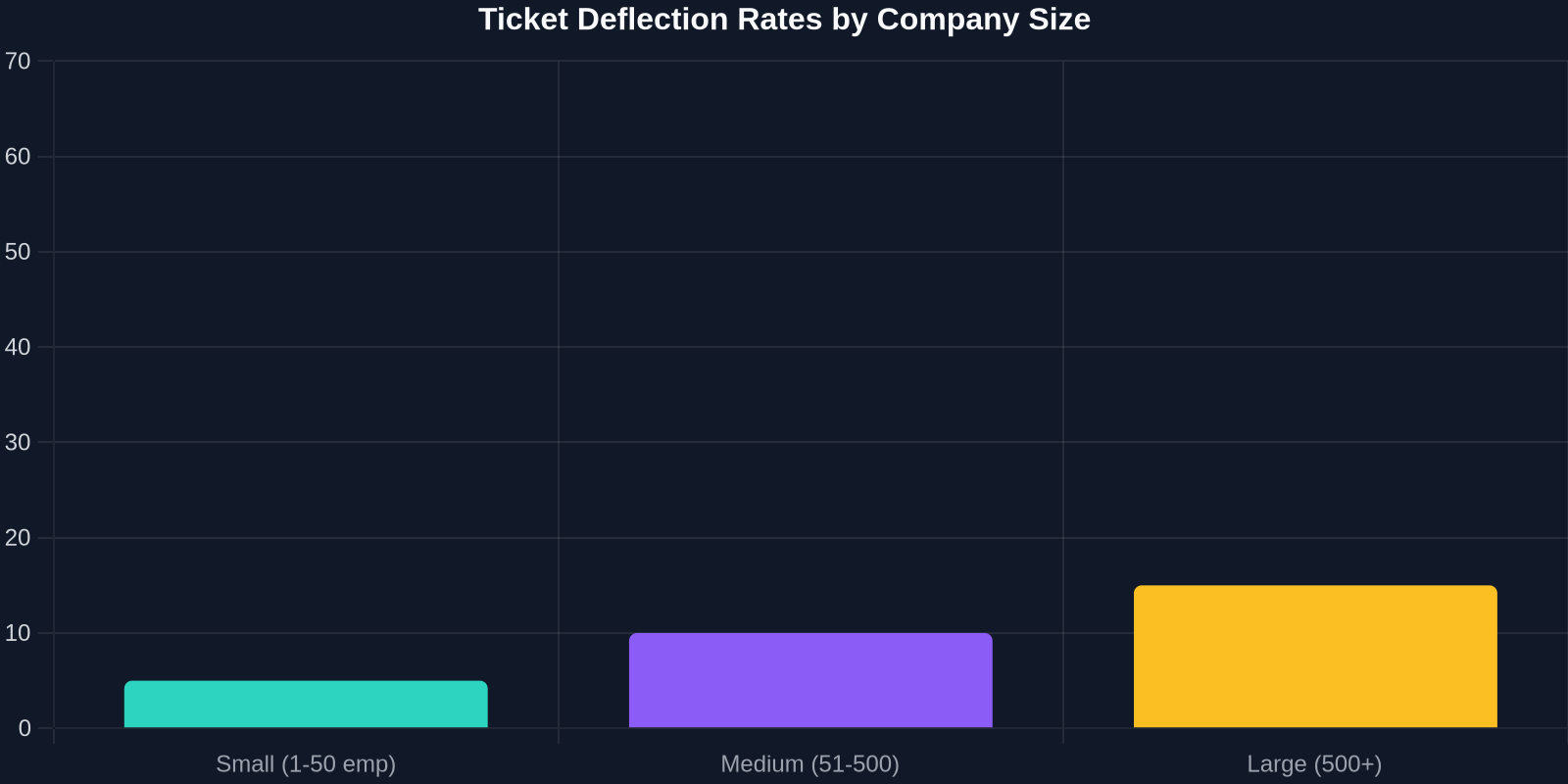
The chart above demonstrates that AI-driven ticket deflection is not just for enterprises. Mid-sized companies using Successly routinely hit 45–55% deflection, compressing time-to-value to weeks instead of months.
Future-Proofing Your Support Operation: A Strategic Framework

The Salesforce-Cresta deal is a wake-up call. Here is a practical, three-phase framework to embed AI in your support operation, regardless of your size:
Phase 1: Automate the Top 10 Intents
Analyze your ticket history to identify the 10 most frequent, low-complexity questions (e.g., password resets, shipping status, refund eligibility). Deploy AI to resolve these without human intervention. You'll typically deflect 25-35% of volume within 30 days.
Phase 2: Enable Agent Co-pilot
Arm your human agents with AI that suggests answers in real-time, auto-completes workflows, and summarizes conversations. This cuts handle time by 40% and boosts CSAT by 15% immediately.
Phase 3: Proactive Insights and Continuous Improvement
Use AI-generated analytics to spot emerging issues, sentiment dips, and coaching opportunities. The system learns from every resolved ticket, improving accuracy week over week. This transforms support from a cost center into a growth engine.
Adopting this framework prepares your business for the inevitable AI-first future that Salesforce's acquisition confirms.
Conclusion: The Time to Act Is Now
Salesforce's $2.7 billion bet on Cresta is not just a major acquisition, it's an industry pivot. Customer service automation powered by generative AI has reached a tipping point where the technology is mature, the ROI is measurable, and the competitive advantage is enormous.
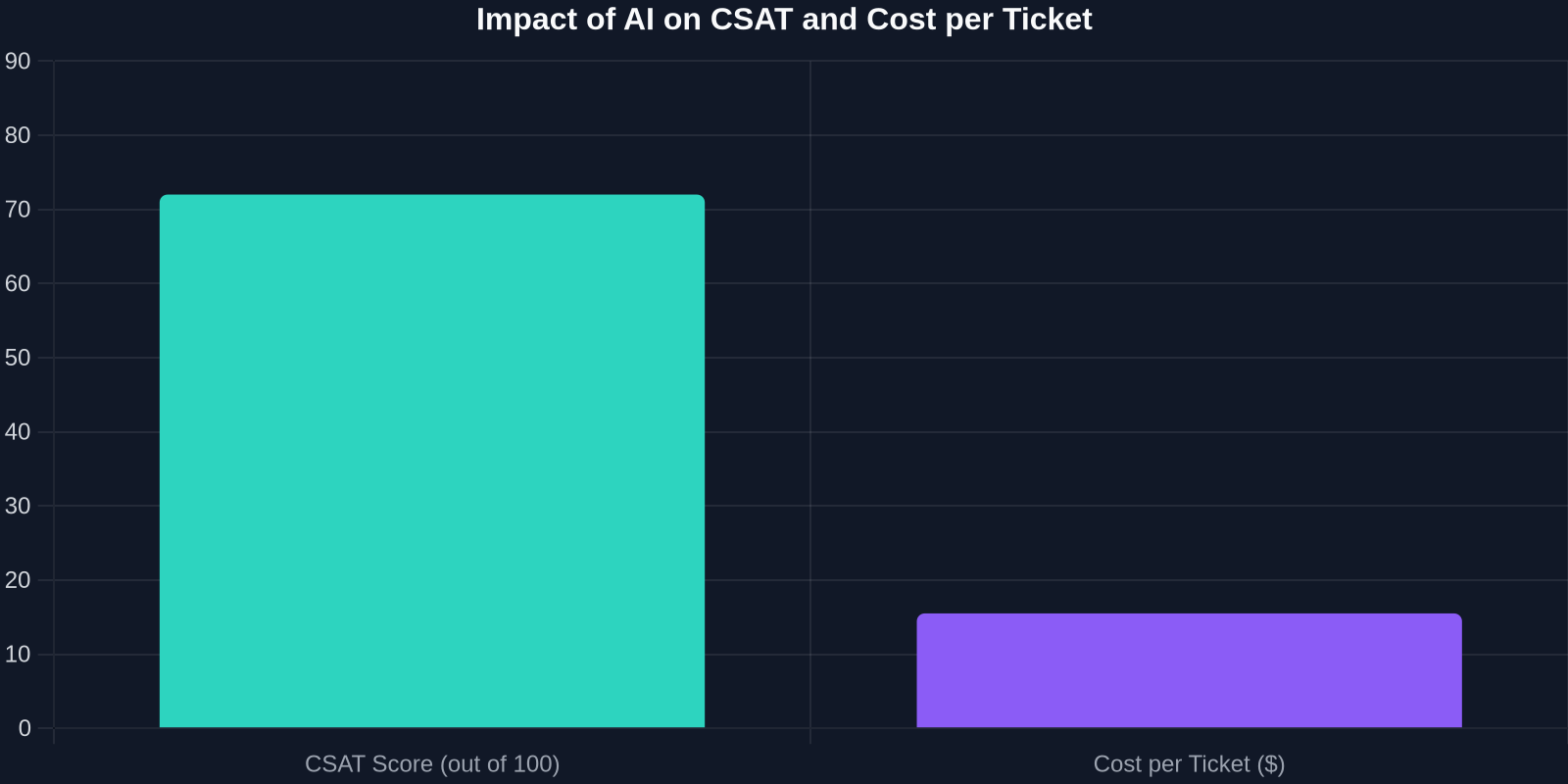
As the charts illustrate, those who adopt early are already reaping lower costs, higher satisfaction, and a more agile support organization. The barrier to entry has never been lower, thanks to AI-native platforms that package enterprise-grade capabilities for every support team.
Whether you're a support team lead tired of ticket backlogs, a SaaS founder looking to scale without scaling headcount, or a customer success manager aiming to boost NPS, the tools exist today. Successly is one such tool, designed to help you capture the same economics that made Cresta worth $2.7 billion, at a fraction of the cost.
The question is no longer "if" but "how fast." Your customers are waiting.