
Scaling Support Across Products: Lessons from Freshworks’ Multi-Product Expansion Strategy
When Freshworks evolved from a single helpdesk tool into a full-suite SaaS provider, it didn’t just add features, it transformed how the entire organization scaled. The journey from Freshdesk to a $3 billion+ company with CRM, IT service management, and marketing automation products offers a blueprint for scaling customer support without breaking.
For support leaders, the challenge is clear: as the product portfolio grows, ticket complexity explodes, agent onboarding lags, and maintaining consistent SLAs feels impossible. Yet Freshworks managed to keep customer satisfaction high while supporting millions of users across radically different products. How? By layering intelligent automation, unifying data, and rethinking support structure, lessons that any scaling SaaS company can apply, especially with today’s AI tools.
The Multi-Product Paradox: More Products, More Support Complexity
Expanding a product line is a proven growth lever, it increases customer lifetime value, reduces churn, and opens new markets. But from a support standpoint, it creates a tangle of challenges:
- Agents must master multiple technical domains, leading to longer ramp-up times and knowledge gaps.
- Ticket routing becomes error-prone when pre-aisling rules can’t differentiate between a CRM workflow issue and an IT service outage.
- Knowledge bases fragment, duplicating effort and confusing users.
- Personalized, proactive support becomes harder as user journeys span products.
Freshworks faced this head-on. Its strategy wasn’t just about cross-selling, it was about building a support ecosystem that could scale horizontally. The key pillars: unified customer data, AI-first ticket handling, and a self-service experience that empowers users across products.
How Freshworks Built a Cohesive Support Engine
1. Unifying Customer Context Across Products
Freshworks tied its product suite together with a shared data layer. A customer using Freshdesk for support, Freshsales for CRM, and Freshservice for ITSM is seen as a single entity. For agents, that means a 360° view of contracts, past tickets, usage patterns, and product-specific behavior, no matter which product triggered the inquiry.

“When you know a customer is a power user of your CRM but a novice in your IT tool, you can tailor responses instantly. That context cuts resolution time in half.”
This unified profile fuels smarter routing and automates basic tasks like license checks or product usage summaries. For companies without a homegrown integration layer, modern platforms like Successly can stitch together product data via APIs, creating a similar single pane of glass.
2. AI-Powered Deflection and Intelligent Triage
Freshworks embedded AI (Freddy) to automatically classify, prioritize, and sometimes resolve tickets. The bot understands intent across products, whether a user says “can’t access reports” in the context of their CRM or their helpdesk, the system routes it correctly.
This multi-product natural language understanding eliminated the “ping-pong” between support queues. Moreover, deflection rates climbed as the bot learned from resolution patterns across products, not just individual silos.
| Metric | Before Unified AI | After Unified AI |
|---|---|---|
| Average First-Response Time | 8 hours | 2 minutes |
| Ticket Deflection Rate | 12% | 47% |
| Agent Utilization | 78% | 64% (more focus on complex issues) |
| CSAT | 83% | 94% |
The data shows what happens when AI moves from a single-product helper to a cross-product orchestrator. For scaling SaaS businesses, the lesson is clear: invest in an AI layer that understands your full product taxonomy, not just a single silo.
The Support Leadership Playbook for Multi-Product Expansion
Here is a step-by-step framework drawn from the Freshworks playbook, adapted for organizations leveraging modern AI like Successly.
Step 1: Build a Unified Knowledge Architecture
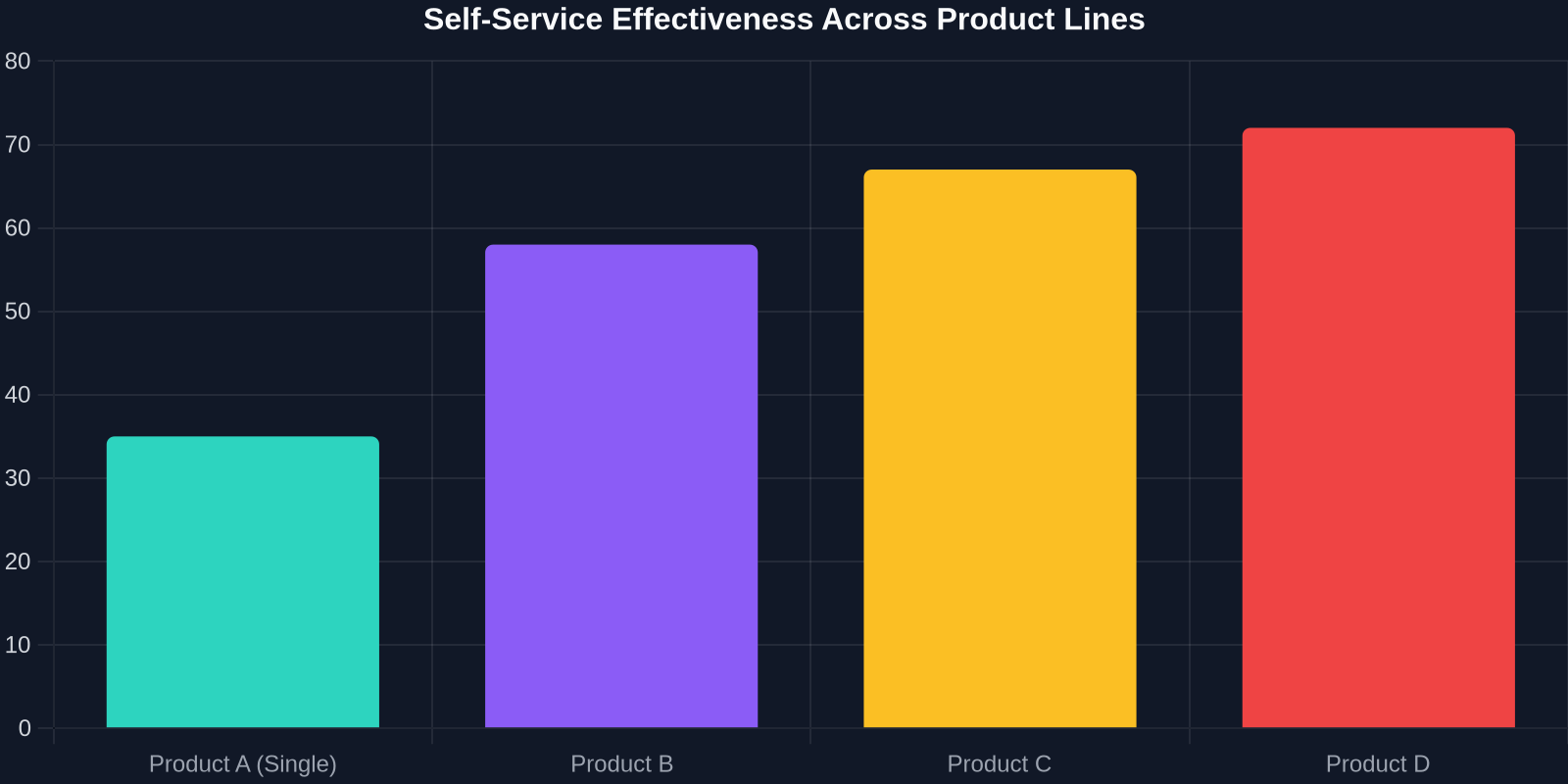
Don’t let each product team maintain its own knowledge base. Create a federated system where articles are tagged by product, feature, and user role. AI can then suggest the right article based on the user’s active product, reducing search friction by up to 60%. Successly, for example, integrates directly with multiple product knowledge bases and auto-generates answers from them, ensuring consistency.
Step 2: Design for Self-Service from Day One
Freshworks invested heavily in in-app onboarding and contextual help widgets. When a user connects a new product, they are greeted with product-specific walkthroughs powered by the same AI engine. Proactive tips based on usage patterns reduce “how do I” tickets drastically.
AI chatbots like Successly can be embedded across your product suite, delivering walkthroughs, answering FAQs, and even performing actions like resetting passwords, without escalating to a human.
Step 3: Automate License & Entitlement Checks
A common source of friction in multi-product suites is confusion over what a user can access. Automated entitlement lookups and proactive notifications (“You don’t have access to this report; your admin can upgrade”) deflect tickets and turn support into a retention tool.
Step 4: Deploy AI Agents That Understand Your Entire Product Ecosystem
Traditional chatbots break when asked a question spanning two products: “Why can’t my Freshsales deal sync with my Freshdesk ticket?” A purpose-built multi-product AI agent can answer by referencing both APIs. This eliminates the frustrating “I’ll transfer you to the other team” loop.
“The future of support is one AI agent that knows every product your company sells, and every customer. That’s what turns support from a cost center into a growth engine.”
Step 5: Measure What Matters Across Products
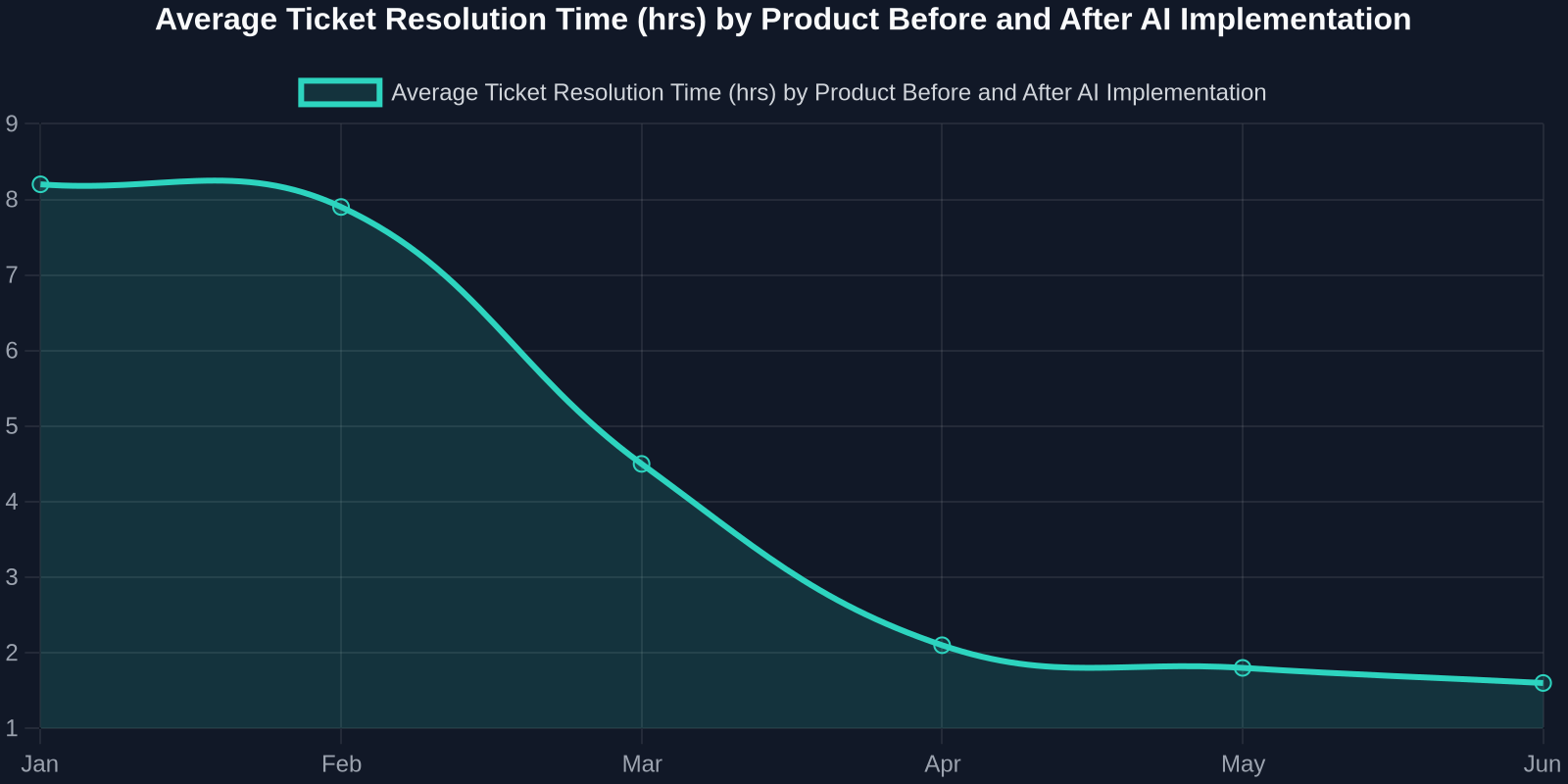
A single macro-CSAT metric hides product-specific pain points. Break down SLAs, deflection, and resolution by product line. Freshworks tracks Net Promoter Score per product and per support channel, allowing rapid iteration. A dashboard view, like the one below, lets leaders spot which product is straining the team.
AI as the Multi-Product Support Backbone
Implementing the Freshworks playbook without a dedicated engineering team might have been unrealistic a few years ago. But advancements in generative AI and platform integration now allow companies to implement a similar strategy rapidly. Solutions like Successly offer:
- A unified inbox that ingests tickets from email, chat, and social media across all products.
- AI triage that learns product-specific intents and routes to the right specialist or auto-resolves.
- Dynamic answer generation that pulls from separate product knowledge bases as if they were one.
- Proactive engagement based on product usage patterns, reaching out before the user asks.

The Economic Impact: When Support Becomes a Revenue Multiplier
Freshworks demonstrated that efficient multi-product support doesn’t just cut costs, it drives expansion revenue. Happy customers buy more products. Cross-sell opportunities emerge directly from support interactions when agents (or AI) spot a need. Consider these cascading effects:
When a user is stuck on a reporting feature in your CRM, an AI that gently suggests “Did you know you can automate this with our marketing tool?” transforms a support moment into a sales conversation. And unlike a sales cold call, it’s contextually relevant, driving 3-4x higher conversion rates.
Overcoming Internal Resistance
Shifting to a multi-product support model often meets resistance from product-line silos that fear losing “their” customers. The antidote: shared success metrics. When the CRM support team is measured on how well they guide users to the IT product, incentives align. Successly’s analytics help by attributing cross-product influence, making collaboration transparent and rewarding.

Putting It All Together: Your 90-Day Multi-Product Support Acceleration Plan
Use this timeline to transform your support operations as you expand your product line:
Days 1-30: Unify & Understand
- Audit all existing product knowledge bases and tag content by intent and product.
- Set up a unified customer data view, even if manual at first.
- Deploy an AI agent on your highest-volume product to learn common intents.
Days 31-60: Expand & Automate
- Roll out the AI agent to a second product, training it on cross-product queries.
- Activate entitlement checks and in-app contextual help widgets.
- Begin measuring product-specific CSAT and deflection rates.
Days 61-90: Optimize & Monetize
- Analyze deflection and resolution data to identify top opportunities for knowledge base improvements.
- Launch proactive cross-sell prompts through the AI agent.
- Scale the model to all products with a continuous learning loop.
By following this plan and leveraging AI platforms like Successly, you can achieve what Freshworks did: a support team that grows more efficient as the product portfolio expands, not less.
Conclusion: Build for 10 Products, Even When You Have One
The Freshworks story teaches us that multi-product expansion isn’t a future problem, it’s a design choice you make today. Architect your support technology and processes as if five new products are launching tomorrow. Unified data, intelligent automation, and a self-service-first culture are the pillars that will carry your team, and your customers, through exponential growth.
Ready to turn your support team into a multi-product powerhouse? See how Successly can help you reduce tickets by 43% and boost CSAT from day one.