
The AI Customer Service Balancing Act: Automate Resolution or Hand It to a Human?
For years, the promise of AI in customer service has been both tantalizing and underwhelming. As one industry observer put it, “Can an AI system actually resolve a customer's problem, or does it just sound like it's trying to? For years the honest answer was the second one.” But that is no longer true. Today’s AI platforms can genuinely fix issues – if they’re designed with a critical rule in mind: fix the problem or hand it to a human, without friction or pretense.
For support leaders and SaaS founders, the question is no longer whether to use AI, but how to design a system that knows when to automate and when to escalate. Getting this balance right is what separates a cost-effective support operation from one that hemorrhages customers.
Why the ‘Fix or Handover’ Principle Matters Now
Generative AI has flooded the market with chatbots that sound remarkably human. Yet sounding human is not the same as helping a human. A bot that confidently provides a wrong answer or spins in circles erodes trust faster than no bot at all. The real business risk? Customer loyalty. Businesses should weigh AI's cost savings against its impact on customer experience, loyalty, and the human connections, as a recent industry report stressed.
Over-automation can damage brand loyalty. One survey found 60% of consumers would not return to a brand after a single frustrating automated experience.
The New Support Calculus: Productivity AND Empathy
An NBER survey of 9,000 executives found AI has had zero net effect on firm employment over the last three years, and a majority predict little net impact over the near term. Why? Because the most successful implementations use AI to augment, not replace, human agents. The broader application of AI will remove many repetitive tasks from the daily workloads of human agents – but it will also change the work of their team, pushing them toward higher-value, complex problem-solving.

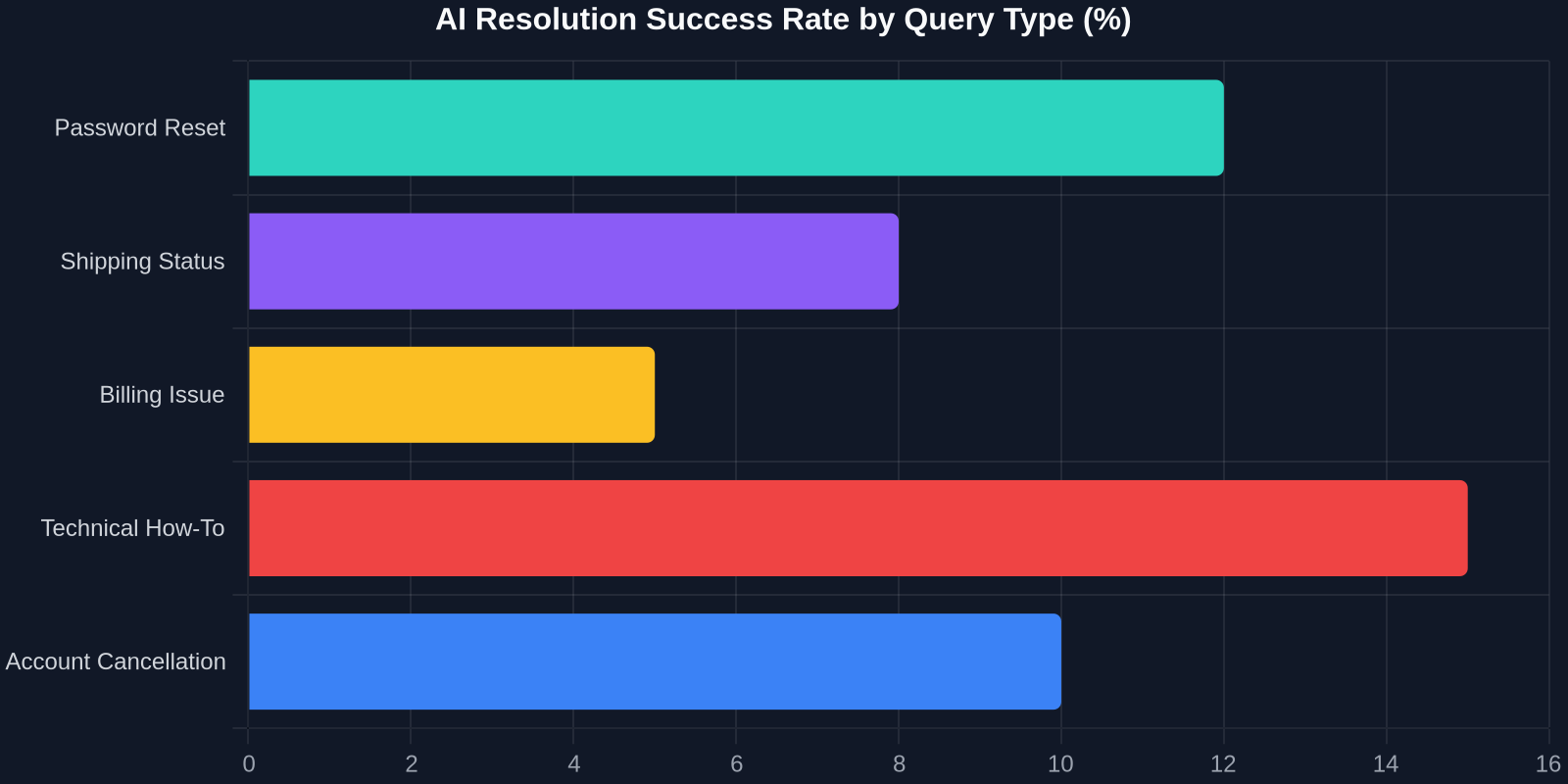
The Hidden Cost of Pseudo-Resolution
When an AI deflects a ticket without true resolution, the customer often returns – angrier. The ticket gets reopened, costs multiply, and agent morale dips. A true “fix or handover” architecture ensures that:
- Apology-free automation: The AI confidently resolves password resets, order lookups, and FAQ-driven queries.
- Seamless escalation: When sentiment drops or intent is unclear, the entire context is passed to a human agent – not a blank slate.
- Agent assist mode: The AI drafts responses and fetches knowledge base articles in real time, accelerating human resolution.
Designing an AI Escalation Framework
A practical framework is essential. Support leads should categorize incoming tickets into three buckets:
- Autonomous resolution: Queries that the AI can handle end-to-end with >95% confidence (e.g., “Where is my order?” when integrated with shipping APIs).
- Assisted resolution: The AI drafts a response that the agent verifies and sends with one click – ideal for partially structured topics.
- Human-only: Issues requiring empathy, legal nuance, or complex technical troubleshooting. The AI immediately routes these with full context.
Our rules are no substitute for legal requirements, professional duties, or ethical obligations that should influence how people use AI.
Real-World Impact: Metrics That Matter
When support teams implement an AI layer that respects the ‘hand it to a human’ cut-off, the results speak volumes. For example, forward-thinking SaaS companies have reported:

But the real win is strategic. Support teams evolve from cost centers into retention engines. They can focus on high-touch onboarding, proactive health checks, and expansion conversations – all activities that AI cannot fake.
The video aims to help business owners weigh the pros and cons of an AI versus a human hire to ensure they are properly managed – and the same careful thought must go into AI support workflows.
Measuring ROI Beyond Ticket Count
Traditional AI metrics – deflection rate, handle time reduction – are important but incomplete. You also need to track:
- Sentiment trajectory: Does the AI improve or worsen customer mood before a handover?
- Agent assistance impact: How much time does the AI save agents during human interactions?
- Resolution integrity: Are tickets that were transferred to a human resolved on first contact, or did the AI misdiagnose?
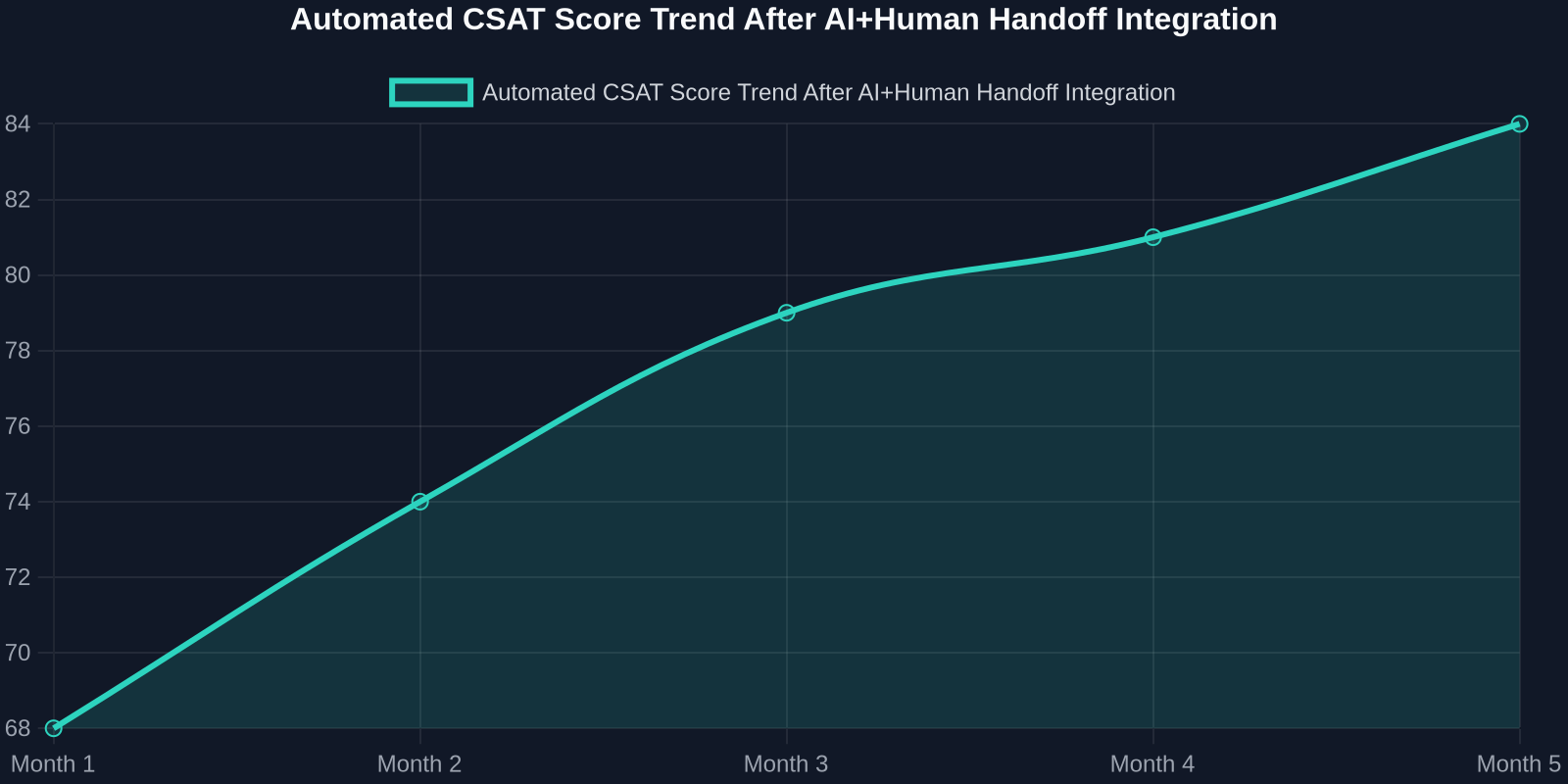
When these metrics are aligned, AI investment pays for itself rapidly. One Successly customer reduced manual ticket volume by 43% while improving CSAT by 17 points – simply by letting the AI handle what it does best and flagging the rest.
The Successly Approach: Intelligent Automation with Empathy
Successly was built on the premise that AI customer service should fix the problem or hand it to a human – with zero lag and full context. Unlike generic chatbot builders, Successly combines:
- Intent extraction: Understanding the real issue, not just keywords.
- Sentiment scoring: Detecting frustration and auto-escalating before the customer asks.
- Seamless handover: Agents see a complete transcript plus AI-suggested solutions, so they never start from scratch.

Evidence of harms from AI systems in general is still emerging: There are strong early warning signals for many of the challenges discussed in this briefing. Successly’s transparent escalation path mitigates the biggest risk: failing the customer.
AI in customer service shouldn’t be a wall between you and your users – it should be a bridge that makes human conversations richer when they need to happen.
Avoiding the “AI Island” Trap
Some companies deploy AI as a separate channel, walled off from human support. The result: siloed experiences, repeat information, and more effort for everyone. Instead, the AI should be embedded in the same platform your agents use – so automation and human support are two sides of the same coin.
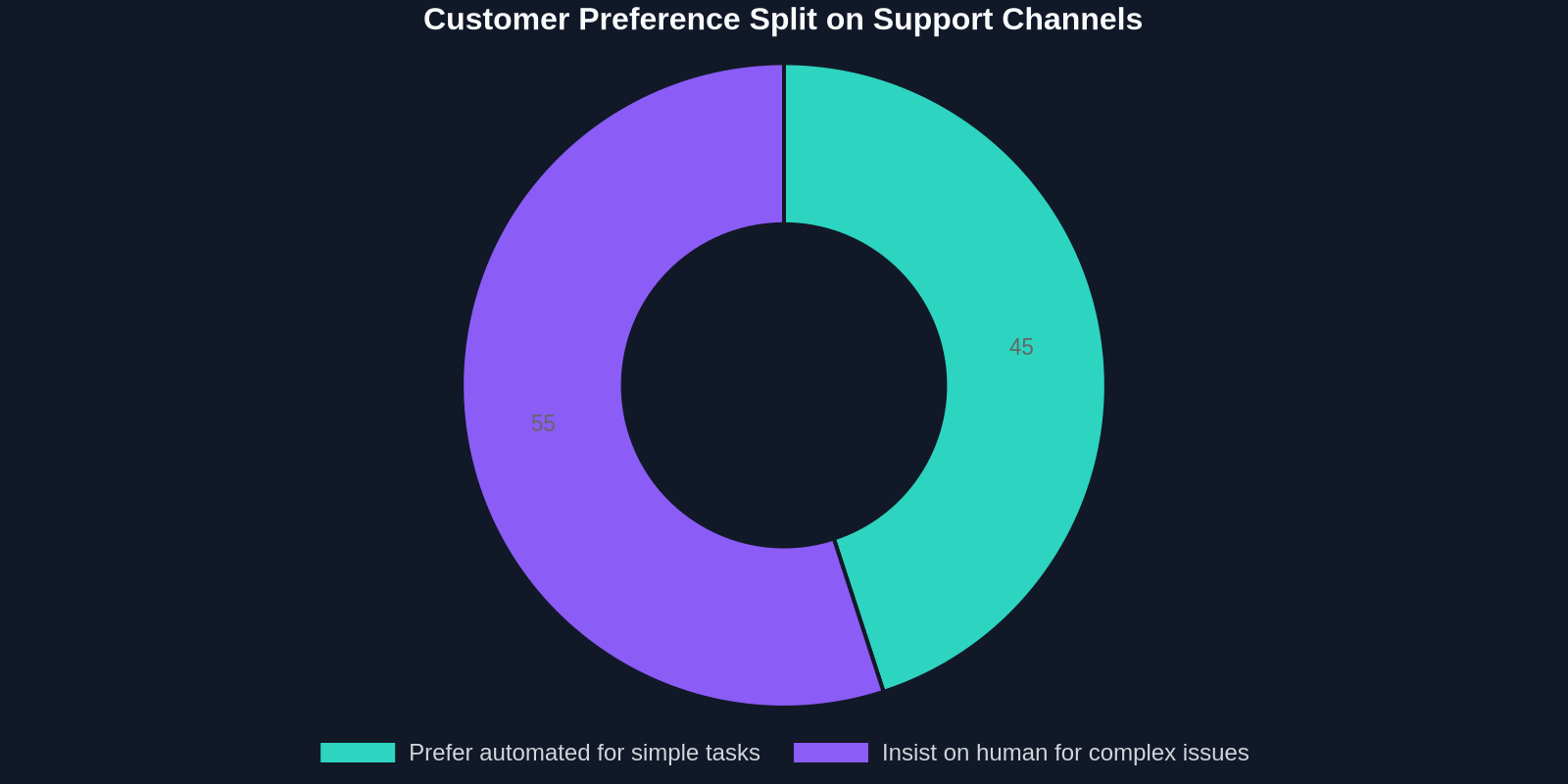
The data is clear: customers appreciate self-service for simple tasks, but they insist on human connection for urgent or sensitive issues. The businesses that win are those that offer both, seamlessly.
Conclusion: The Future Is Hybrid
The old debate – AI vs. humans – is obsolete. The future of customer support is a hybrid model where AI handles the predictable, and humans handle the personal. That doesn’t mean half the team is replaced; it means the team is upgraded. As the Cloud Security Alliance might put it, proper implementation is about best practices and secure, responsible scaling.
For support leaders ready to escape the chatbot hype and build a system that actually works, the message is simple: Don’t just automate – orchestrate. Give AI the reins when it can fix the problem, and when it can’t, make the handoff so smooth the customer never feels the switch.
Discover how Successly helps support teams scale without losing the human touch. Learn more at [Successly website].