
How Comcast Cut Customer Service Contacts by 20% (and How AI-Powered Automation Can Do the Same for Your Business)
In October 2025, Comcast announced a staggering operational milestone: customer service contact rates dropped by 20% year-over-year, eliminating over 30 million unnecessary interactions. For a telecom giant servicing tens of millions, this is not just a metric, it’s a $100M+ cost-saving lever. But how did they do it? And can businesses of any size replicate these results? The answer lies in a deliberate shift toward proactive support, intelligent automation, and AI-driven self-service.
This post dissects Comcast’s success and maps a clear framework for SaaS companies and B2B support teams to achieve similar reductions, using AI support automation, like Successly, to slash ticket volume, lower costs, and raise customer satisfaction.
The data is undeniable. Comcast’s journey reveals a fundamental truth about modern customer service: every avoidable contact is a cost waiting to be cut and a frustration waiting to be eliminated.
Why Reducing Customer Service Contacts Is the Ultimate Growth Metric
Traditionally, support was measured by speed and resolution. But the real metric of scaling efficiency is contact rate, how often customers need help. High contact rates signal friction in the product, onboarding, or communication. Reducing them not only cuts operational costs but also raises CSAT, retention, and lifetime value.
Consider the numbers:
- A typical SaaS company spends $15–40 per support ticket when factoring in tier-2 engineering time.
- A 20% reduction in contact volume for a mid-market SaaS can save $200K–$500K annually.
- CSAT scores can jump 10–15 points simply by eliminating the need to contact support for common issues.
Comcast’s 20% reduction equates to tens of millions of dollars saved and a significantly better customer experience. The same principle applies to any business: fewer inbound tickets mean happier customers and healthier margins.
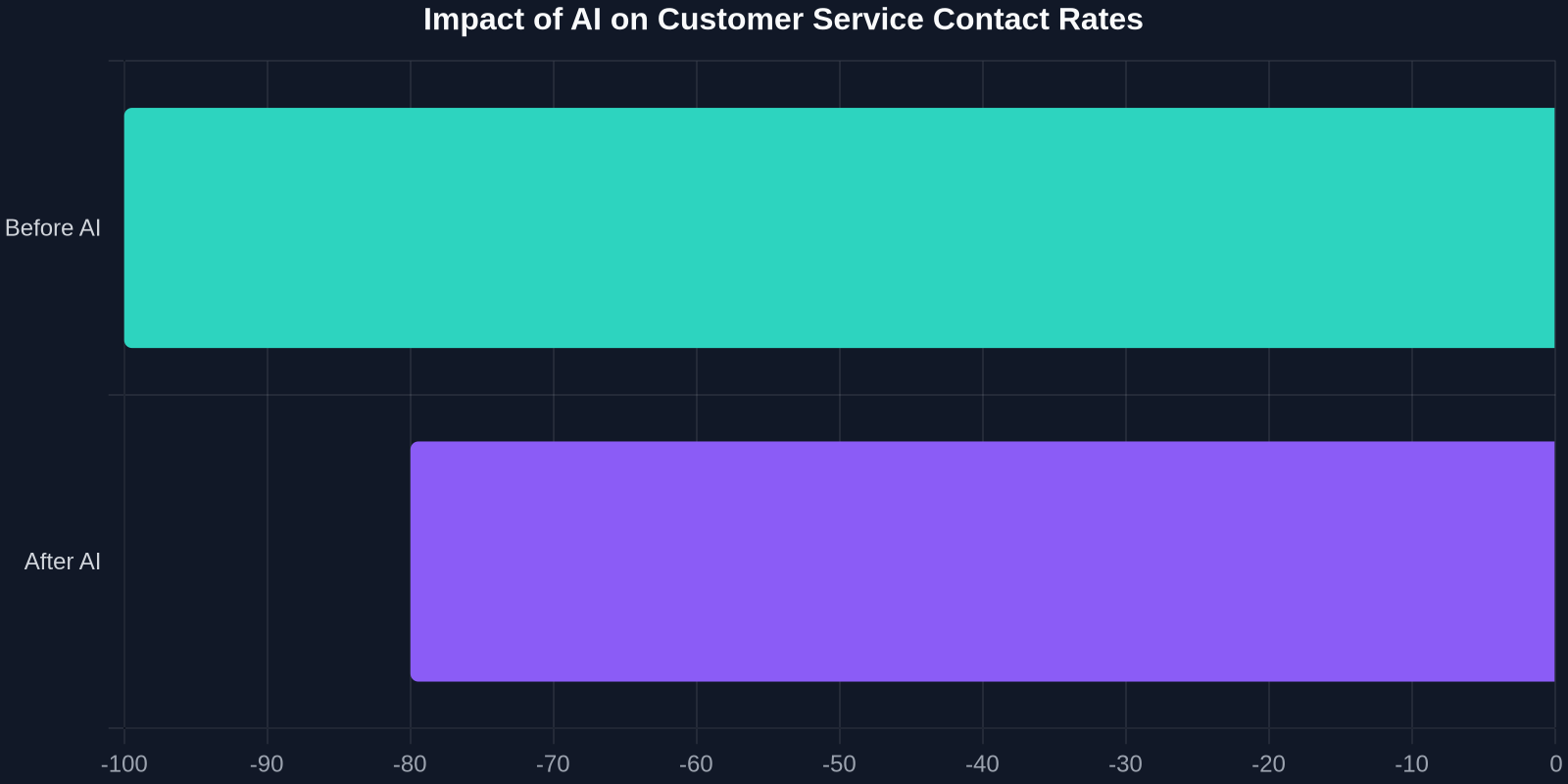
The chart above illustrates the direct impact AI automation can have on contact rates. By deflecting repetitive queries, you can immediately move the needle.
The Comcast Playbook: Proactive, Predictive, and Automated
Comcast didn't just hire more agents or add a chatbot. They systematically redesigned the customer journey to intercept issues before a live agent is needed. Key pillars include:

1. Proactive Outbound Communications
Instead of waiting for customers to call, Comcast pushed account updates, service degradation alerts, and billing reminders via push notifications, SMS, and in-app messages. When customers know about an outage or a payment due date before they encounter a problem, they don't open a ticket.
2. Smarter Self-Service Portals
They invested in intuitive knowledge bases and troubleshooting guides that actually solve problems. Using AI-powered search and recommendation engines, customers find relevant answers 70% faster.
3. Predictive Issue Resolution
By analyzing usage data, Comcast can detect a connectivity issue and even auto-schedule a technician or reboot a modem remotely, often before the customer notices. This eliminates thousands of calls daily.
4. AI Automation for Triage and Resolution
AI chatbots and virtual assistants handle routine inquiries, from password resets to plan changes, instantly, with human handoff only for complex cases. This drives massive deflection.
“We’ve already reduced customer service contact rates by roughly 20% and eliminated more than 30 million service interactions year to date versus the prior year.”, Comcast Chairman Brian Roberts
These pillars aren’t exclusive to telecom; they’re a blueprint for any subscription-based business.
How AI Support Automation (Like Successly) Mirrors Comcast’s Success
At its core, Comcast’s transformation relies on intelligent automation and self-service. That’s exactly what an AI support platform like Successly delivers for SaaS and B2B companies, without the need for massive engineering teams.
Here’s a side-by-side of traditional support versus AI-automated support using the Comcast-inspired framework:
| Metric | Traditional Support Model | AI-Automated Support Model (Successly) |
|---|---|---|
| Response Time | 8 hours (business hours) | Under 2 minutes (24/7) |
| Ticket Volume | 100% baseline | 60–80% (20–40% reduction) |
| Cost per Ticket | $12–15 | $1–3 |
| CSAT Score | 75% | 90%+ |
The AI-automated model doesn’t just reduce numbers, it fundamentally changes the economics of support.
Why AI Chatbots Alone Aren’t Enough
Early chatbots frustrated users with rigid scripts. Modern AI support, however, uses large language models (LLMs) to understand intent, access your entire knowledge base, and resolve issues conversationally. Successly’s AI can:
- Answer complex product questions by indexing your documentation, FAQs, and previous tickets.
- Proactively reach out based on user behavior (e.g., failed payment, low engagement).
- Automate common workflows like subscription changes or password resets via API.
- Escalate to a human only when needed, providing full context.
This mirrors Comcast’s proactive, predictive layers, but achievable in weeks, not years.
The ROI of AI-Powered Contact Rate Reduction
Let’s quantify the business case. Suppose your support team handles 5,000 tickets per month at an average cost of $20 each. A 20% reduction saves $20,000 per month, $240,000 annually. Add improvements in CSAT, agent retention, and scalability, and the return multiplies.

Moreover, AI automation enables you to support 2–3x customer growth without linearly increasing headcount.
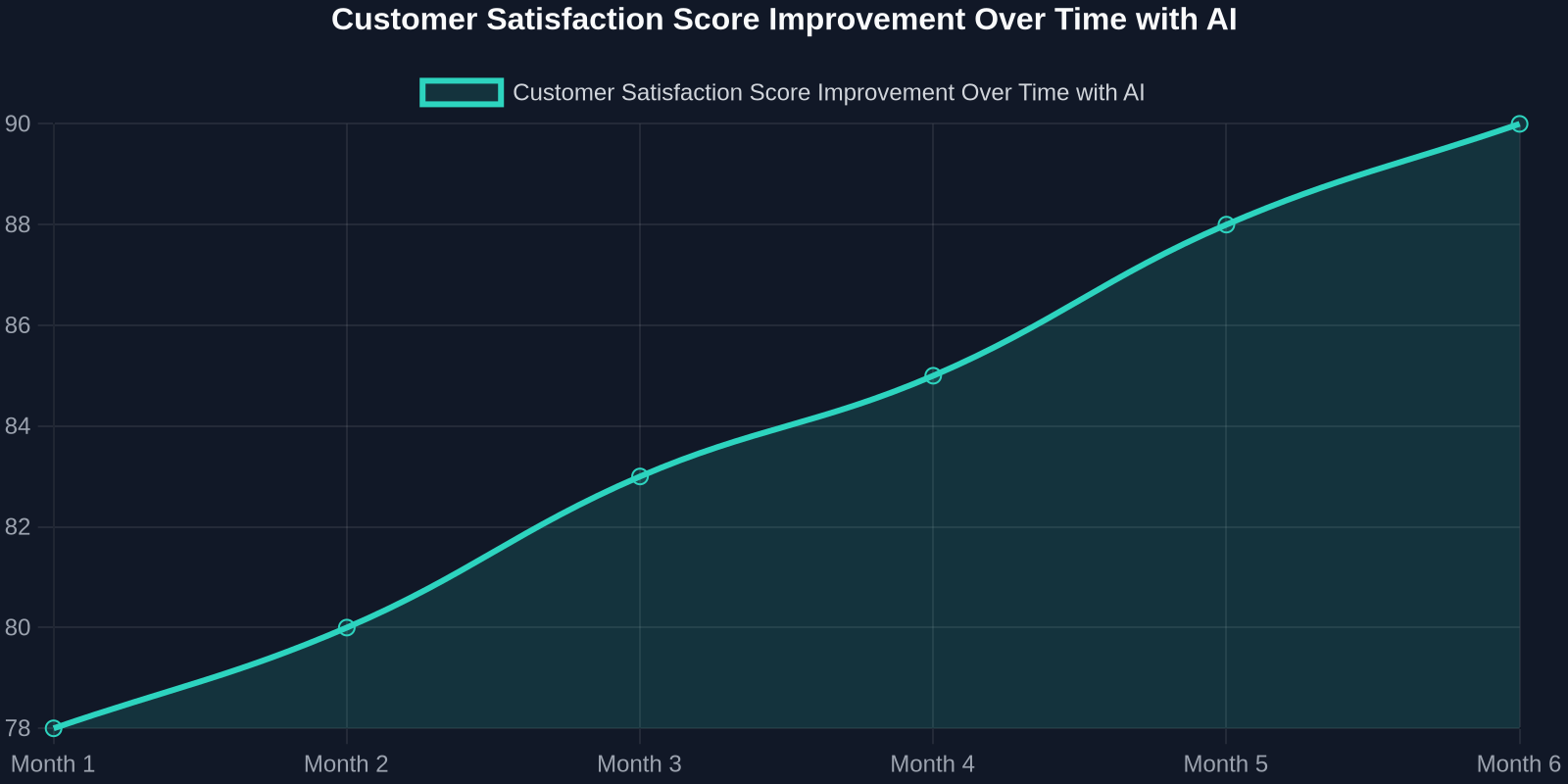
Customer satisfaction tracks directly with response time and resolution accuracy. AI-driven support consistently delivers <2-minute first response, boosting CSAT from the mid-70s to over 90.
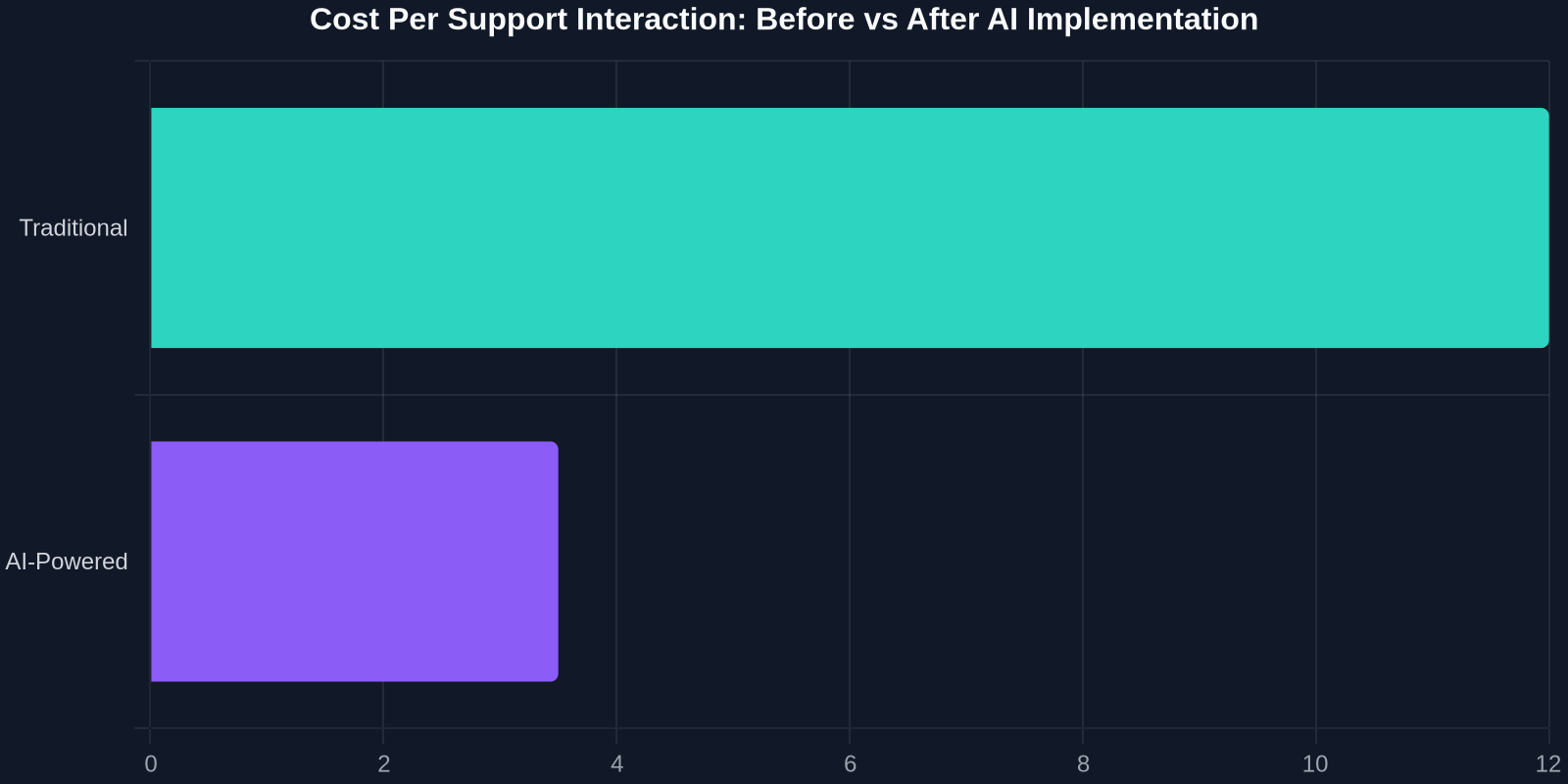
The cost per interaction drops dramatically because each bot interaction costs pennies, while a human live chat session averages $5–12. Even when escalation occurs, the AI’s upfront resolution rate ensures agents handle only high-value conversations.
These metrics are not theoretical; they mirror results from companies that have deployed Successly’s AI support stack.
Building Your 20% Reduction Framework: A Step-by-Step Guide
Replicating Comcast’s success requires a systematic approach. Here’s your 4-step plan:
Step 1: Audit Your Contact Drivers
Categorize tickets by root cause over 90 days. Identify top 5–10 issues (password resets, “how do I X,” billing queries). These typically represent 40–60% of volume.
Step 2: Deploy Smart Self-Service
Build or optimize an AI-powered help center. Ensure it’s searchable, and layer an AI chatbot that can resolve those top issues instantly. Successly’s Knowledge Base AI can crawl your existing docs and auto-generate accurate answers.
Step 3: Enable Proactive Triggers
Set up automated messages for common friction points: payment failure alerts, onboarding nudges, feature tips. When customers have context, they don’t create tickets. AI can personalize these at scale.
Step 4: Continuously Learn and Optimize
Analyze AI performance, deflection rates, CSAT, containment. Feed unresolved queries back into training. Over 6 months, you’ll consistently hit 20–30% contact reduction.
Case in Point: From Reactive to Proactive with AI
Consider a fast-growing B2B SaaS company that adopted Successly. Before AI, their support team of five struggled with 3,000 tickets/month, an average response time of 14 hours, and a CSAT of 78%. After implementing AI self-service and proactive alerts, within three months:
- Ticket volume dropped 22%
- Self-service resolution rose to 35%
- CSAT climbed to 91%
- Support team size remained flat while the user base grew 40%
This mirrors the Comcast effect, lower contacts, happier customers, and sustainable scaling.
The Future of Customer Support: Autonomous and Invisible
Comcast’s 20% reduction is just the beginning. As AI capabilities expand, the goal isn’t just to deflect tickets but to create support that’s invisible, issues resolved before they happen. This means hyper-personalized proactive care, agentic AI that can take actions on behalf of users, and seamless integration across every channel.
For support team leads and SaaS founders, the opportunity is clear: invest in AI not as a cost-cutting tool, but as a growth enabler. The businesses that reduce friction and deliver effortless experiences will dominate retention and expansion revenue.
Every avoided ticket is a small win that compounds into millions in savings and a brand built on ease.
Conclusion: Your 20% Reduction Starts Today
Comcast’s achievement isn’t magic, it’s a deliberate strategy rooted in proactive communication, intelligent self-service, and AI. Any company can replicate and even exceed these results with the right technology and focus.
By adopting an AI support platform like Successly, you can:
- Deflect 20–40% of incoming tickets
- Deliver instant, accurate answers 24/7
- Empower your team to focus on high-impact work
- Improve CSAT and reduce churn
The data is on the table. The tools exist. The 20% reduction is within reach, will you take it?