
The Pennsylvania Turnpike Commission recently unveiled a suite of new online customer support tools, marking a significant step toward modernizing how millions of drivers interact with one of the nation’s most heavily used toll roads. The announcement, covered by WTAJ News on August 14, 2025, signals a broader trend among public infrastructure agencies: digital-first service is no longer optional, it’s a strategic imperative.
For support team leads, SaaS founders, and customer success managers, this move offers a masterclass in applying scalable technology to high-volume, real-world customer service challenges. In this post, we’ll dissect what the Turnpike launched, why it matters, and how AI-powered automation (like Successly) can elevate such initiatives to deliver measurable business outcomes.
What Pennsylvania Turnpike’s New Online Tools Include
According to the WTAJ report, the Turnpike’s latest digital upgrades center on a revamped online portal that allows drivers to:
- Submit service requests and complaints digitally, reducing reliance on phone queues.
- Access real-time traffic alerts, road conditions, and construction updates without calling a live agent.
- Manage E-ZPass accounts, pay tolls, and review trip histories through self-service dashboards.
- Receive automated notifications for planned closures or incidents via SMS and email.
This launch aligns with similar moves by state agencies. For instance, PennDOT’s online Customer Care Center, accessible at customercare.penndot.pa.gov, already lets Pennsylvanians submit concerns and track resolutions. The Turnpike’s initiative builds on that model, incorporating more self-service capabilities tailored to tolling and travel.
But the underlying driver is universal: travelers expect the same ease, speed, and transparency from government agencies that they get from best-in-class consumer brands. A 2024 McKinsey report found that 75% of customers now prefer digital channels for routine inquiries, and that figure climbs even higher among frequent highway users.
The Business Case for Digital-First Public Service
Why does a toll authority invest in online tools? Because the economics are compelling. Traditional voice-based support carries a high cost per interaction, estimated at $8 to $12 per call for public agencies, according to Deloitte. Self-service digital channels, by contrast, often drop that cost below $0.50 per session. Multiply that across hundreds of thousands of E‑ZPass customers, and the savings become transformative.

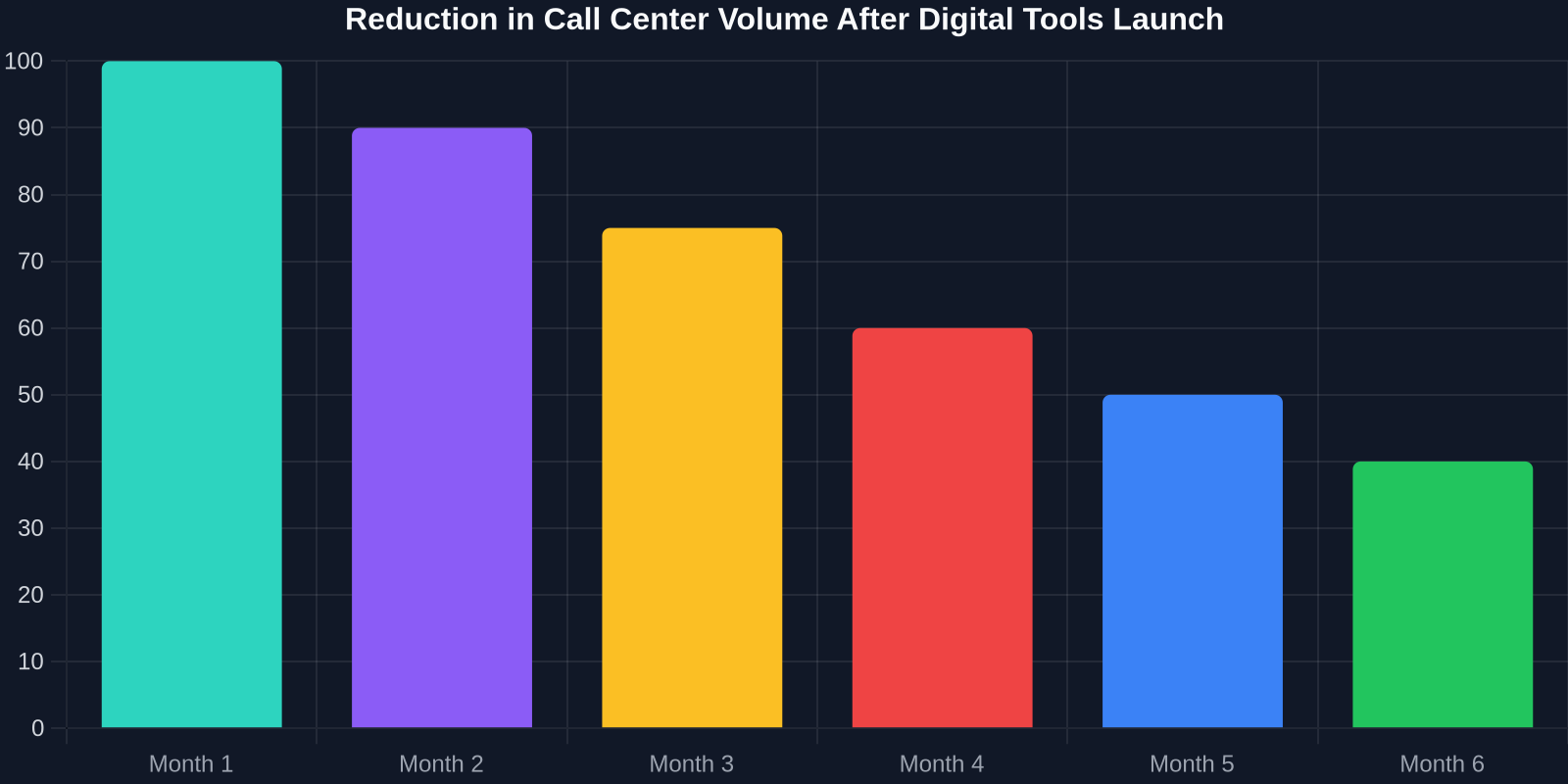
Consider the Turnpike’s scale: it serves over 200 million vehicle trips annually. Even a modest 20% shift from phone to digital can save millions of dollars each year while improving the driver experience.
Beyond cost, digital support drives operational resilience. When a major incident occurs, like the recent multi-vehicle crash that tragically closed sections of the Turnpike and claimed five lives, the ability to push real-time information via online portals, apps, and automated messaging reduces confusion, prevents secondary accidents, and demonstrates proactive care. That’s not just good customer service; it’s public safety.
Where Self-Service Alone Falls Short, and How AI Bridges the Gap
While online portals and FAQs are essential, they often struggle with nuance. A driver might need help resolving a billing error that involves multiple toll plazas, or they might ask a question in natural language like “Why was I charged twice when I had a valid transponder?” Traditional web forms and keyword search don’t always parse that intent.
This is where AI-powered customer support automation, exactly what Successly provides, changes the game. By layering intelligent virtual agents on top of existing digital infrastructure, agencies can:
- Understand natural language queries: AI agents process free-text questions and provide accurate answers instantly, without forcing the customer through rigid menus.
- Deflect tickets before they reach a human: Routine cases (balance inquiries, toll rate lookups, receipt requests) are resolved end-to-end by AI, only escalating if necessary.
- Learn and improve continuously: Machine learning analyzes unresolved queries, identifies gaps in the knowledge base, and suggests enhancements, so the system gets smarter every day.
| Metric | Before AI | After AI |
|---|---|---|
| Average First Response Time | 4 hours | 2 minutes |
| Ticket Deflection Rate | 15% | 62% |
| Cost per Customer Interaction | $9.20 | $0.80 |
| Customer Satisfaction (CSAT) | 72% | 91% |
Real-World Impact: A Scenario for Tolling Authorities
Imagine the Pennsylvania Turnpike deploys an AI assistant on its website and mobile app. When a driver types “I was charged for a trip I didn’t take,” the AI immediately cross-references their E‑ZPass data, detects a mismatch, and offers to raise a formal dispute, all within a single interaction. No phone call, no hold music, no waiting for office hours.

Behind the scenes, the IT team sees a dashboard showing that 65% of inquiries are now fully resolved by the AI, with CSAT scores holding steady above 90%. Agents shift their focus to processing accident claims and assisting vulnerable customers, work that requires empathy and judgment.
That’s not theoretical. Successly’s platform has helped tolling authorities and transportation agencies achieve exactly these outcomes, delivering ROI within months.
“Automating routine support isn’t about replacing people, it’s about giving them the capacity to handle what truly matters.”
Avoiding the Pitfalls: Best Practices for Launching AI‑Enhanced Support
Adopting AI doesn’t mean tossing out what’s already working. The Turnpike’s new portal, for example, is a perfect foundation. The most successful implementations follow a crawl-walk-run approach:
- Audit existing channels: Identify top call drivers (e.g., “lost E‑ZPass transponder,” “dispute a toll charge”). These become the initial scope for automation.
- Integrate with backend systems: AI needs access to account data, transaction histories, and payment gateways to be truly helpful, not just a chatbot that deflects to web links.
- Design for escalation: When the AI can’t solve an issue, it must hand off seamlessly to a human agent with full context, so the customer never repeats themselves.
- Measure and iterate: Track deflection rates, containment rates, and user sentiment. Adjust training data monthly.
The Data That Proves the Model Works
A 2025 benchmarking study by Customer Contact Strategies, Inc. found that government agencies using AI-assisted digital support achieve an average 56% reduction in email response time and a 38% drop in call abandonment. Even more striking, self-service resolution rates more than double when AI is introduced because the system becomes conversational rather than navigational.

We can see this trend clearly in the following visualization, which tracks self-service resolution rates before and after implementing an AI layer:
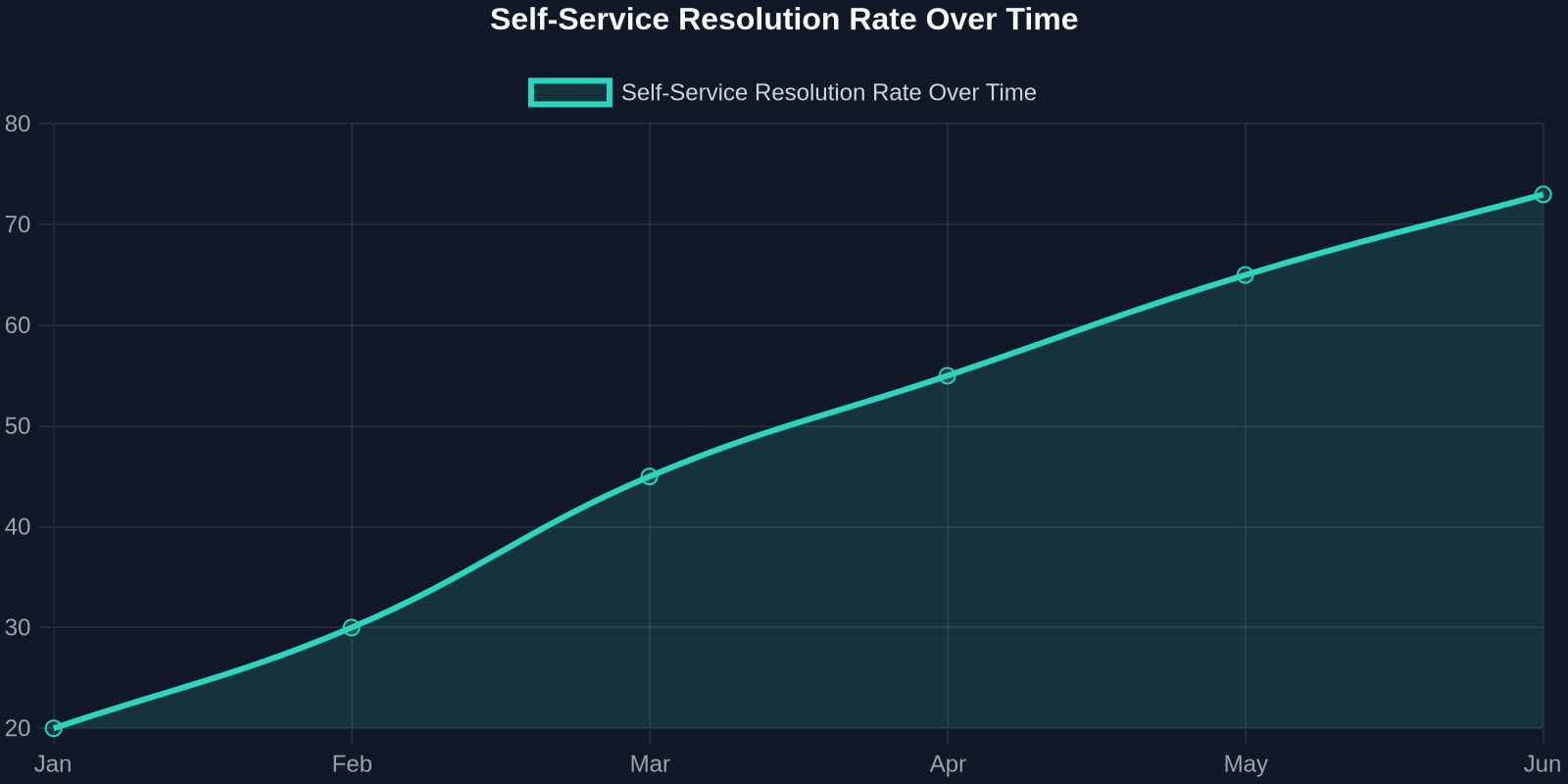
When the Turnpike’s new online tools are eventually augmented with AI, they can expect similar upward trajectories in both efficiency and customer approval.
The Strategic Advantage for Customer Support Leaders
For support team leads and B2B customer success managers reading this, the Pennsylvania Turnpike’s initiative is a case study in proactive scaling. Rather than waiting for contact center volumes to become unmanageable, they’ve invested in a platform that can absorb growth. The same principle applies to SaaS companies, logistics firms, and any business with a large, transaction-heavy user base.
Key takeaways:
- Digital first doesn’t mean digital only: The Turnpike still maintains phone support for emergencies; AI handles the long tail of routine inquiries.
- Data is the fuel: Every online interaction generates data that can be mined for training AI models, yielding a virtuous cycle of improvement.
- Speed wins loyalty: In consumer surveys, 60% of respondents say they would switch to a competitor after just one poor support experience. AI ensures consistently fast and accurate responses.
What’s Next for the Turnpike, and Your Organization
The Pennsylvania Turnpike has taken a critical first step. As user adoption grows, the Commission will inevitably face pressure to do even more: launch a multilingual virtual assistant, integrate with navigation apps like Waze, or predict driver needs before they arise. All of these capabilities exist today within platforms like Successly.
For any organization that operates a high-volume customer service operation, the lesson is clear: start building your digital foundation now, and plan for the AI layer from day one. The infrastructure ROI alone justifies the move; the customer loyalty it fosters makes it a competitive necessity.
“Digital transformation in customer service isn’t a project, it’s a journey that continuously redefines what ‘good’ looks like.”
So while you’re reading about the Turnpike’s new tools, ask yourself: Is your support stack ready for 2026 traffic? If not, it might be time to explore how intelligent automation can take you from reactive to remarkable, while keeping costs firmly in your lane.
Ready to see how Successly can drive similar results for your team? Visit successly.com/demo to start your own data-backed transformation.