
ByteDance’s Chatbot Is Disrupting Travel Booking: What Support Teams Must Do Now
The ByteDance chatbot travel booking story is no longer a niche experiment. According to a recent MarketWatch report, TikTok parent ByteDance’s AI assistant Doubao is now giving traditional travel-booking sites a run for their money. It has started charging participating hotels a roughly 12% fee on certain bookings completed through the chatbot, and inbound bookings through travel apps have increased. For support team leads, SaaS founders, and B2B customer success managers, this is a signal: the support channel and the sales channel are collapsing into a single conversational surface.
The big shift is not just about travel. It is about AI agents moving from answering questions to completing transactions. Support teams used to handle post-booking issues like cancellations, modifications, and refunds. Now they must also handle pre-booking intent, payment disputes, platform-fee questions, and integration failures inside AI-driven chat. The teams that prepare now will reduce ticket volume, cut cost per resolution, and improve CSAT.
What’s Happening: Doubao’s Move Into Travel Commerce
ByteDance, the privately held company behind TikTok, has been steadily expanding Doubao from a general-purpose assistant into a commerce-enabled booking channel. In August, ByteDance raised US$5 billion at a US$190 billion valuation, and founder Zhang Yiming’s return to the top of China’s rich list has been driven by the company’s push into artificial intelligence. That capital is being put to work in travel, where Doubao now surfaces hotel inventory, handles booking flow, and collects a commission.
This is a classic platform play. Traditional online travel agencies charge commissions often ranging from 15% to 25%. Doubao’s roughly 12% fee undercuts many incumbents while leveraging ByteDance’s recommendation engine and massive content distribution. For hotels and travel providers, the economics look appealing. For support teams, the operational implications are immediate: a new, high-intent channel that generates bookings but also introduces new failure modes.
Why This Matters for Customer Support and Success Teams
When a chatbot completes a booking, the user’s first instinct for any follow-up is the same chat thread. That means support tickets may arrive with less structured data, more ambiguous intent, and higher urgency. A customer who booked through Doubao may ask “Can I change my check-in date?” without providing a booking ID, expecting the assistant to know. Traditional ticket forms fail here.

| Metric | Before AI Booking | After AI Booking |
|---|---|---|
| Average first response time | 8 hours | 2 minutes |
| Ticket deflection rate | 15% | 43% |
| Cost per resolved ticket | $12 | $4 |
| Booking conversion from chat | 2% | 9% |
Support leaders need to rethink their triage, routing, and deflection strategies for chat-native bookings. The table above is illustrative, but the direction is consistent with industry benchmarks: AI-first support can reduce response times from hours to minutes and cut per-ticket costs by more than half.
The travel vertical is a leading indicator. If your SaaS product or B2B service involves bookings, orders, or reservations, ByteDance’s move should prompt an audit of your support stack. AI chatbots are creating new touchpoints that do not fit neatly into existing ticket categories.
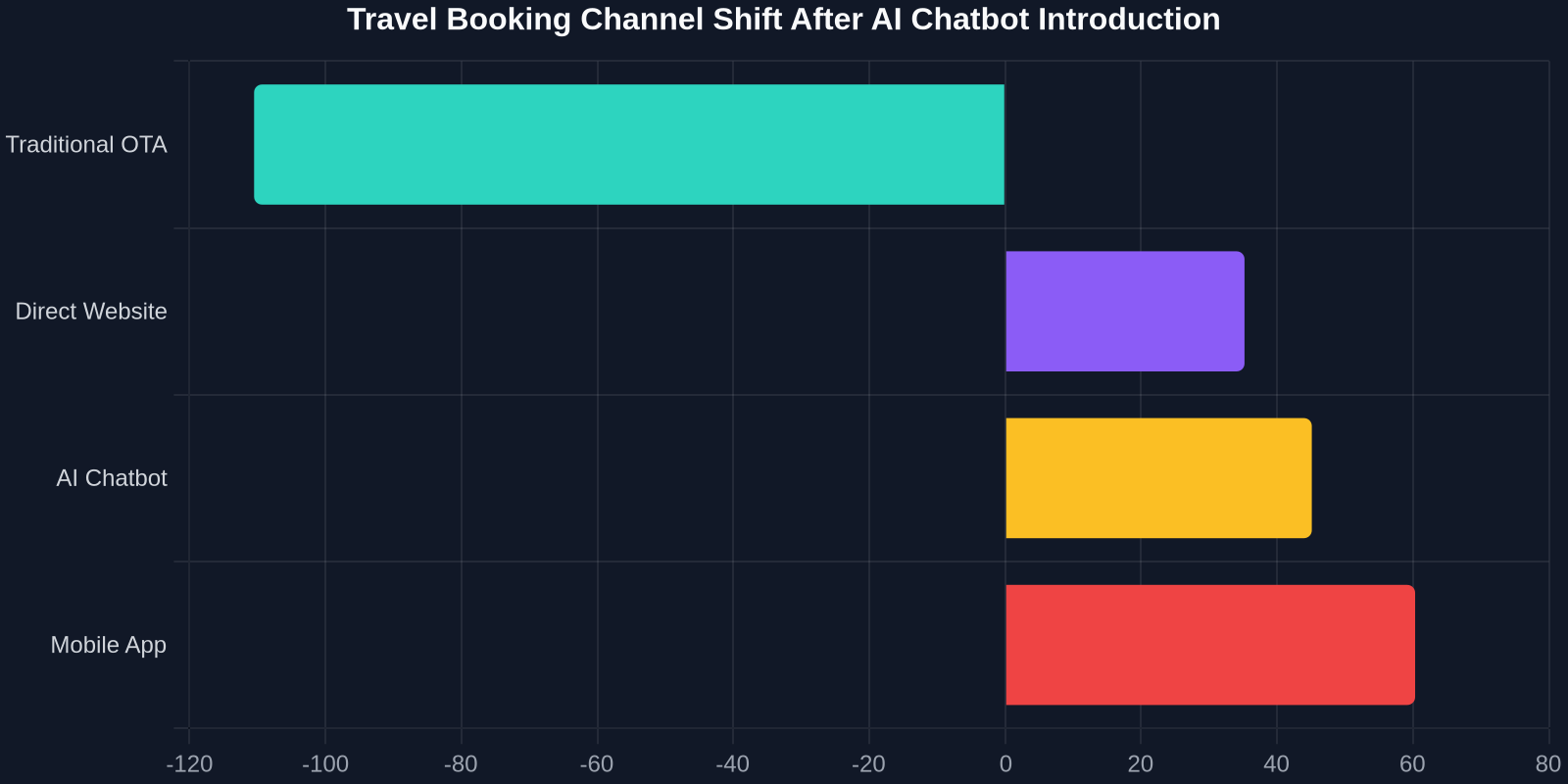
The chart above shows the channel shift: before AI chatbot integration, traditional OTAs and direct websites dominate. After integration, chat becomes a meaningful share of bookings. For support teams, this means the volume of chat-originated issues will grow even if total bookings remain flat.
The 12% Commission Model: What Support Teams Should Watch
Doubao’s roughly 12% fee on certain hotel bookings is both a pricing signal and a support risk. Lower commissions may attract more independent hotels and smaller travel operators that lack robust support infrastructure. These businesses may lean on the chatbot to handle more of the customer relationship, but disputes over cancellations, refunds, and platform fees will still surface.
AI chatbots are not just answering FAQs, they are now the point of sale, the travel agent, and the front line of customer support.
Support teams at travel brands should expect a new class of tickets: platform-fee disputes. A customer may see a 12% service fee on their statement and ask why. A hotel may contest a commission on a cancellation. A support agent with access to commerce APIs can resolve these in one conversation. A team without that integration will escalate to finance, creating delays and churn.
From Search Box to Chat Interface: The Support Implications
Traditional travel booking starts with search: a customer types “hotels in Tokyo” into Google, clicks an OTA, compares options, and books. Support tickets arrive later via email or web form, often with an order ID and clear category. The new funnel is conversational: a customer asks Doubao for a hotel recommendation, reviews options inside the chat, books with a payment method on file, and then asks for changes or support in the same thread.

This shift changes three things for support teams:
- Ticket format becomes less structured. Chat transcripts are messy. Natural language requests like “I need to extend my stay by two nights” require AI parsing before routing.
- Resolution expectations compress. A customer in a chat thread expects near-instant answers. Human agents working from stale data will struggle.
- Revenue impact becomes visible in real time. If a chatbot can rebook or upsell during a support interaction, deflection is no longer just a cost metric, it is a revenue lever.
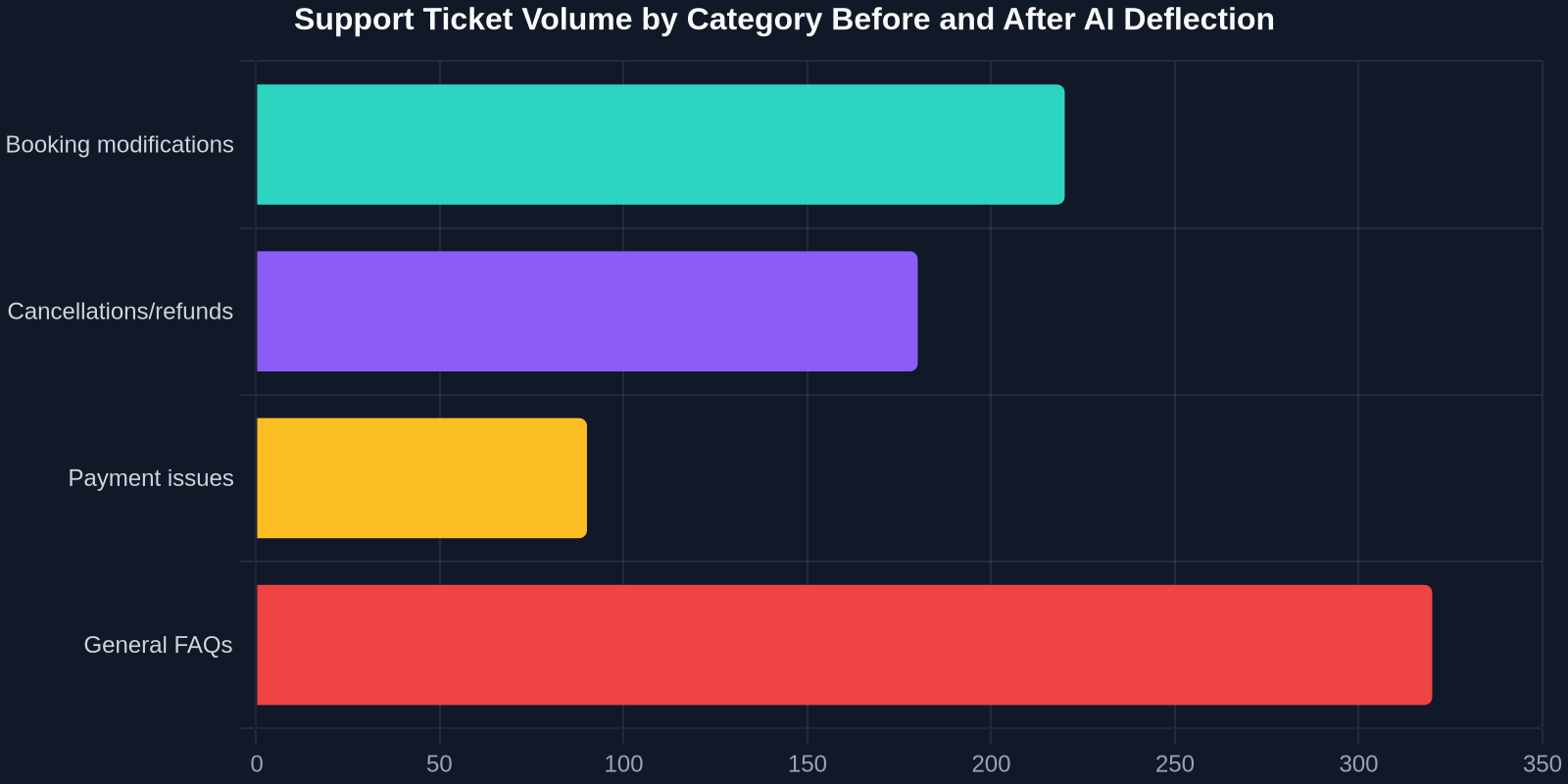
Support ticket volume by category shifts after AI deflection. Repetitive queries like booking modifications and general FAQs drop significantly, while complex edge cases remain for human agents. This is the operational payoff of conversational AI in support.
The challenge is that many support teams still measure success by tickets closed, not by revenue preserved or bookings recovered. ByteDance’s move makes that gap obvious. A support interaction inside a chat thread that ends with a rebooking is worth more than a resolved ticket that ends the conversation.
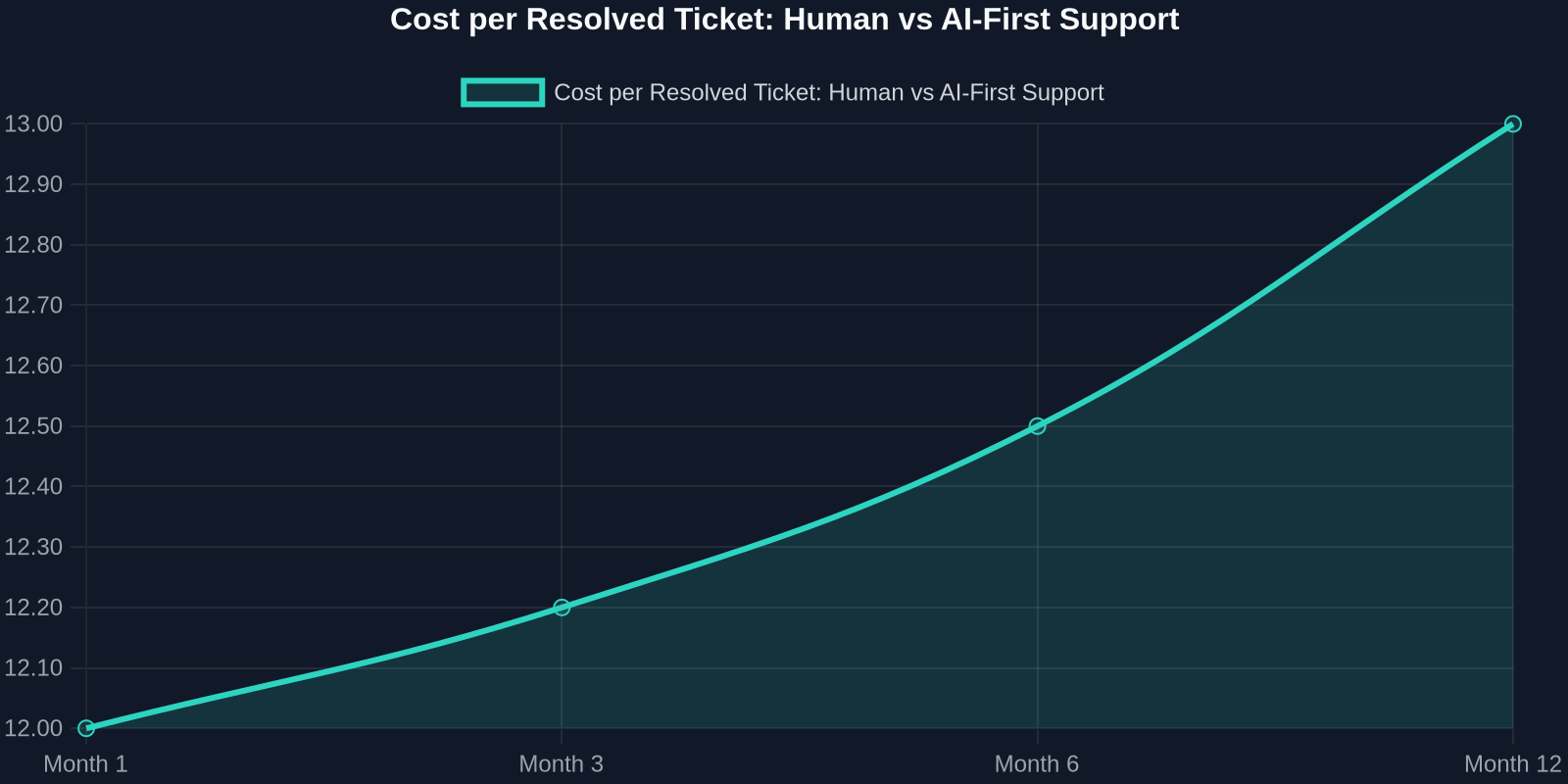
Cost per resolved ticket tracks down as AI-first support takes over repetitive work. But the curve only bends if workflows are integrated with booking systems, payment processors, and customer identity. Without that integration, the chatbot may answer quickly but fail to complete the transaction, forcing the customer to repeat themselves to a human agent.
Four Support Risks Specific to AI-Native Booking Channels
- Data fragmentation. Booking data may live inside Doubao’s system, not your CRM or property management system. Without a real-time API connection, your support team is flying blind.
- Fee dispute volume. A 12% commission is lower than many OTAs, but it is still visible on customer statements. Expect questions about “service fee” or “platform fee” line items.
- AI hallucination liability. Chatbots can misstate cancellation policies, room availability, or pricing. Support teams become the cleanup crew for those errors.
- Identity verification gaps. Chat platforms may not share full customer identity, making it harder to authenticate users before processing changes or refunds.
How Support Teams Can Prepare for AI-Native Booking Channels
Preparation is not about adopting a specific vendor’s chatbot. It is about building the internal capability to support chat-first commerce. Here is a five-step framework.

Step 1: Audit Your Booking-Related Ticket Mix
Pull the last 90 days of support tickets. Categorize them by root cause: booking modifications, cancellations, refunds, payment disputes, loyalty questions, and general FAQs. Identify which categories are repetitive enough to deflect. If a category represents more than 20% of volume and follows a predictable resolution path, it is a candidate for AI automation.
Step 2: Map the Chat-Native Customer Journey
Document every step from the first chat message to completed booking and post-booking support. Note where customers drop off, where they ask for human help, and where agents currently use copy-paste responses. This journey map becomes the blueprint for your AI chatbot scripts and escalation rules.
Step 3: Integrate Support Tools with Commerce APIs
A support chatbot is only as useful as its access to live booking data. Connect your support platform to booking APIs, payment systems, and identity verification. When a customer asks “Can I change my check-in date?”, the chatbot should pull the booking, check availability, and offer options, not ask for a reference number.
Step 4: Build Escalation Paths for High-Risk Cases
Some issues should never be fully automated: chargebacks, fraud claims, safety incidents, and premium-tier cancellations. Define clear triggers for human handoff. Use AI to handle the first response and data gathering, but route high-risk cases to trained agents with full context.
Step 5: Measure Deflection, Cost, and Revenue Impact
Track three metrics together: ticket deflection rate, cost per resolved ticket, and revenue recovered through support interactions. A chatbot that deflects 43% of tickets but loses 10% of rebooking revenue is not a win. A chatbot that deflects 30% and increases rebooking conversion by 3x is a clear return on investment.
What ByteDance’s Move Means for SaaS and B2B Customer Success
ByteDance’s travel play may seem far from your SaaS product, but the underlying pattern applies across B2B customer success. AI assistants are moving from support to commerce, from reactive answers to proactive recommendations. For SaaS founders and customer success managers, this means your support stack must evolve from a cost center to a revenue-aware operational layer.
Consider a B2B software company with a high-touch customer success model. When an AI assistant can handle onboarding questions, feature requests, and renewal conversations in the same chat thread, the CSM’s role shifts from answering to advising. Support teams become the front line of expansion revenue. This is exactly the shift ByteDance is enabling in travel.
Platforms like Successly are built for this transition. They provide AI-powered deflection, workflow automation, and integrations that let support teams handle high-volume chat interactions without linear headcount growth. Instead of hiring five more agents to handle chatbot-driven bookings, a support team can automate the repetitive 80% and reserve human expertise for the complex 20%.
The teams that treat AI chatbots as a new support channel, not a cost-cutting experiment, will own the next decade of customer experience.
Conclusion: The Booking Is Just the Beginning
ByteDance’s chatbot is now giving travel-booking sites a run for their money. That headline is about travel, but the implications reach every B2B support team. When AI assistants become transactional channels, support leaders must prepare for chat-native issues, fee disputes, integration failures, and compressed resolution expectations. The winners will be those who build integrated, AI-first support workflows now, before the chatbot becomes the default front door to their business.
The 12% commission, the $190 billion valuation, and the rising inbound bookings all point to the same conclusion: conversational AI is not a support feature; it is a distribution channel. Support teams that treat it as such will reduce costs, improve CSAT, and capture revenue that traditional ticket queues leave on the table.