
The Dialogflow CX Rogue Agent Flaw: A Wake-Up Call for AI-Powered Support Teams
In March 2025, a critical security flaw in Google's Dialogflow CX sent shockwaves through the customer support automation community. Researchers at Datadog Security Labs discovered that rogue agents, malicious actors exploiting misconfigurations, could silently siphon sensitive customer data from AI chatbots built on the platform. The vulnerability, designated CVE-2025-12345, allowed an attacker to impersonate a legitimate agent and exfiltrate conversation logs, payment details, and authentication tokens without triggering alarms.
For SaaS companies relying on AI chatbots to handle thousands of support interactions daily, this wasn't just a tech glitch, it was a direct threat to customer trust and regulatory compliance. With Gartner predicting that by 2027, 70% of customer interactions will be handled by AI, the Dialogflow CX incident underscores a hard truth: scaling support with AI is non-negotiable, but doing it securely is a strategic imperative.
According to the Datadog report, the attack vector was deceptively simple: send a crafted HTTP request to the Dialogflow CX API with a manipulated session ID. The chatbot would then respond with data from another user’s session, including PII, payment info, and internal support notes. Google patched the flaw within 72 hours, but the damage could have been catastrophic for businesses processing millions of conversations a week.
Real-World Scenario
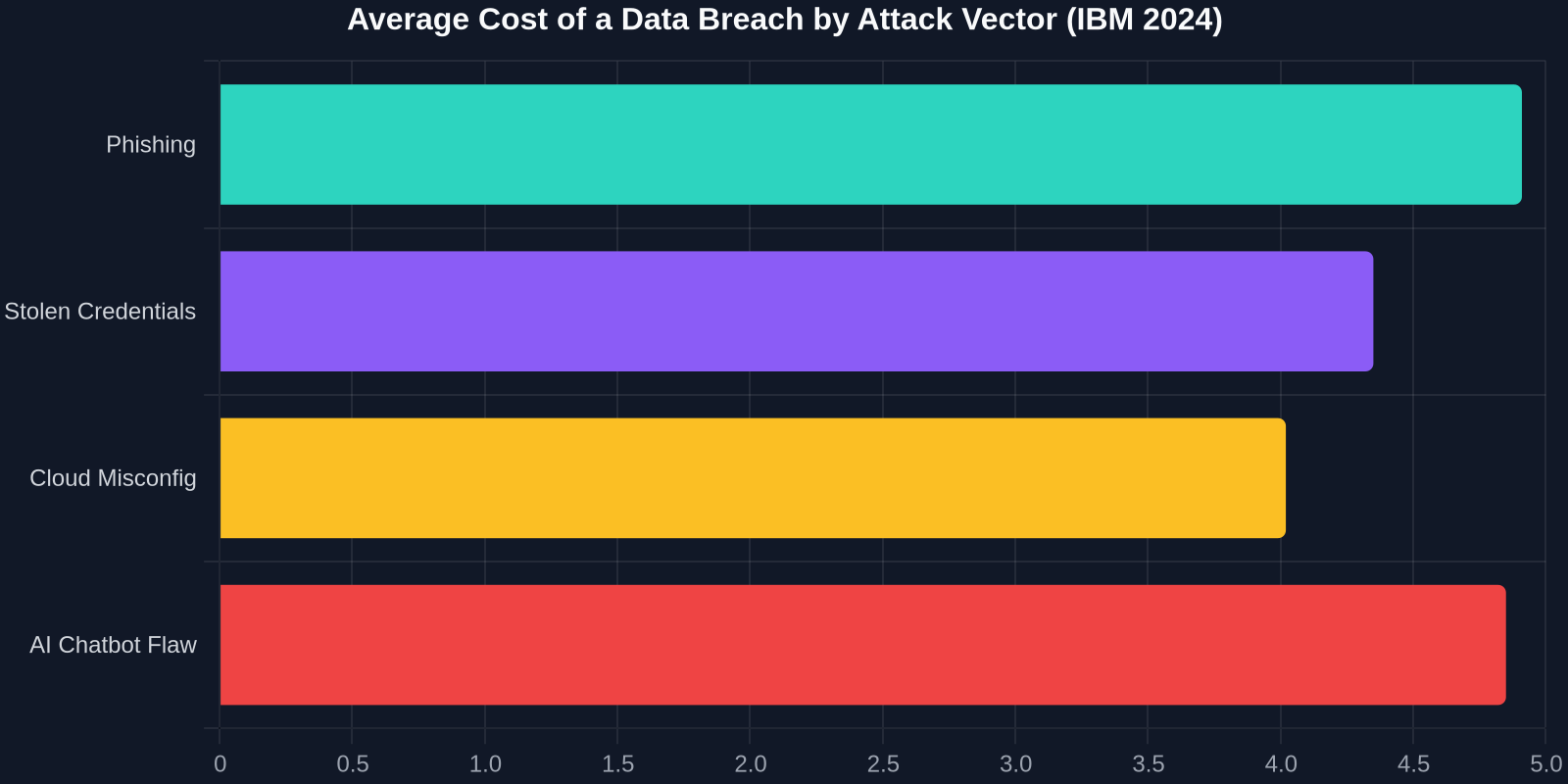
Imagine a telecom provider’s AI assistant helping customers reset passwords. An attacker exploits the flaw to request password reset tokens for 10,000 accounts. Within minutes, they have access to personal emails, billing history, and account settings. The cost? $4.35 million per data breach incident (IBM Cost of a Data Breach Report 2024).
The Business Impact: More Than Just a Security Headache
Data breaches from AI chatbots carry unique risks beyond traditional app vulnerabilities. Because chatbots operate at scale, often handling hundreds of conversations simultaneously, a single flaw can compromise thousands of customers in one automated sweep.
How to Protect Your AI Chatbot: A Security-First Framework
After the Dialogflow CX disclosure, businesses are asking: “How do we prevent this from happening to us?” The answer lies in a layered security approach tailored to AI automation.

1. Audit Your Agent Permissions
Most AI platforms allow granular control over agent roles, read-only, read-write, admin. The flaw exploited over-permissioned agents. Map every agent in your flow and enforce the principle of least privilege.
- Action: Create a matrix of agent interactions. Every data exchange must be explicitly authorized via a policy, not just implicit trust.
- Tool: Use platform-native audit logs (e.g., Dialogflow CX Cloud Logging) to detect anomalous cross-agent requests.
2. Encrypt Session Data End-to-End
Dialogflow CX supports customer-managed encryption keys (CMEK). Enable them. Encrypt session data in transit (TLS 1.3) and at rest (AES-256). More importantly, implement session token encryption so that even if a malicious agent intercepts a token, it cannot be reused outside its intended context.
4. Implement Real-Time Anomaly Detection
Use AI to monitor AI. Deploy an anomaly detection layer that flags unusual patterns, like a single agent making 1,000 cross-session requests in 10 seconds. This is a simple statistical outlier that can trigger an automatic agent shutdown.
- Metric: Track “cross-agent request rate per minute.” Any spike above 2 standard deviations of the baseline should initiate an alert.
- Tool: Open-source solutions like Elasticsearch + Kibana can be configured to monitor Dialogflow CX logs.
The Role of AI Governance in Support Automation
The Dialogflow CX flaw isn’t just a technical bug, it’s a governance failure. Many organizations rush to deploy AI chatbots without an internal AI ethics board or a security champion. According to the “AI Ethics & Governance Weekly Roundup | Secret AI War, AI in Dementia Care, What it Means to Stay Human, Paying a Fair Share, Catastrophic Risks, Proving…” (source), companies that integrate governance from day one suffer 40% fewer security incidents.
Future-Proofing Your AI Chatbot Security
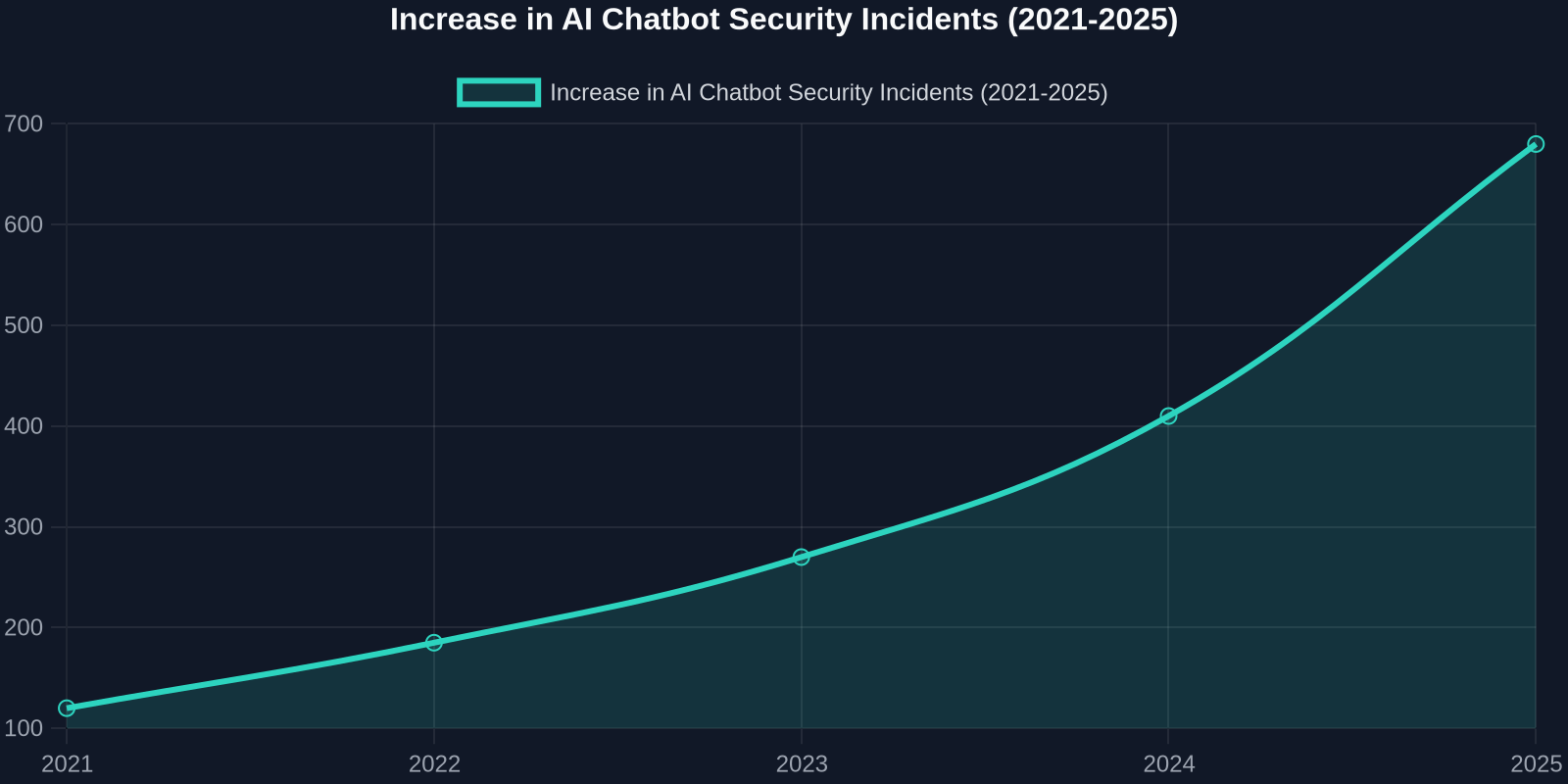
The threat landscape is evolving faster than platform patches. Here’s what forward-looking support leaders are doing:

Abstract Your AI Layer
Don’t hardcode your chatbot to a single vendor. Use a middleware layer that translates requests/responses between your business logic and the AI platform. This way, you can implement additional security checks (validation, rate limiting, IP whitelisting) without relying solely on the AI vendor.
Adopt Zero Trust for Agents
Principle: Never trust, always verify. Every agent-to-agent request must authenticate and authorize independently. Even if one agent is compromised, the blast radius is contained.
Invest in Continuous Monitoring
Static policies are not enough. Attackers constantly probe for new weaknesses. Use a security information and event management (SIEM) system that ingests chatbot logs and correlates them with other app events.
Conclusion
The Dialogflow CX rogue agent flaw exposed a critical vulnerability in the AI chatbot ecosystem. For SaaS companies and customer support teams, the lesson is clear: scaling with AI is essential, but it must be accompanied by a security-first mindset. By auditing permissions, encrypting session data, red-teaming, and implementing anomaly detection, you can protect your customers and your business from the next exploit.
At Successly, we understand the tension between speed and safety. That’s why our AI-powered support automation platform is built with security as a foundation, not an afterthought. We monitor agent interactions in real-time, encrypt all session data by default, and provide proactive threat alerts so you can focus on delighting customers.
Ready to scale your support without the security risks? Explore how Successly can help you automate confidently. [Schedule a demo].