
Salesforce Agentforce Contact Center: The Blueprint for AI-Powered Customer Support
The customer support landscape is undergoing its most significant transformation since the introduction of cloud-based help desks. Salesforce's recent unveiling of Agentforce Contact Center represents more than just another product launch, it signals a fundamental shift in how enterprises approach customer support operations. With a reported 396% three-year ROI and a 45% reduction in support workforce, the numbers demand attention from every support leader and SaaS founder.
But beneath the headlines lies a more nuanced story. The real lesson isn't about adopting one vendor's platform, it's about understanding the operational principles that make AI-powered support genuinely transformative. This post will dissect what Salesforce got right, what the data actually shows, and how your organization can apply these lessons regardless of which tools you ultimately choose.
The Numbers Behind the Headlines: Quantifying AI Support Impact
When Salesforce reports that it reduced its customer support workforce by 45%, from 9,000 to approximately 5,000 employees, following AI agent adoption, the immediate reaction from many support leaders is skepticism. After all, workforce reduction alone doesn't tell the full story of customer experience quality, response accuracy, or long-term satisfaction.
However, the Forrester Total Economic Impact study commissioned by Salesforce (November 2025) adds critical context. The study modeled a 396% three-year ROI for Agentforce customer service deployments, factoring in not just labor savings but also improved resolution times, reduced infrastructure costs from platform consolidation, and increased customer retention metrics.
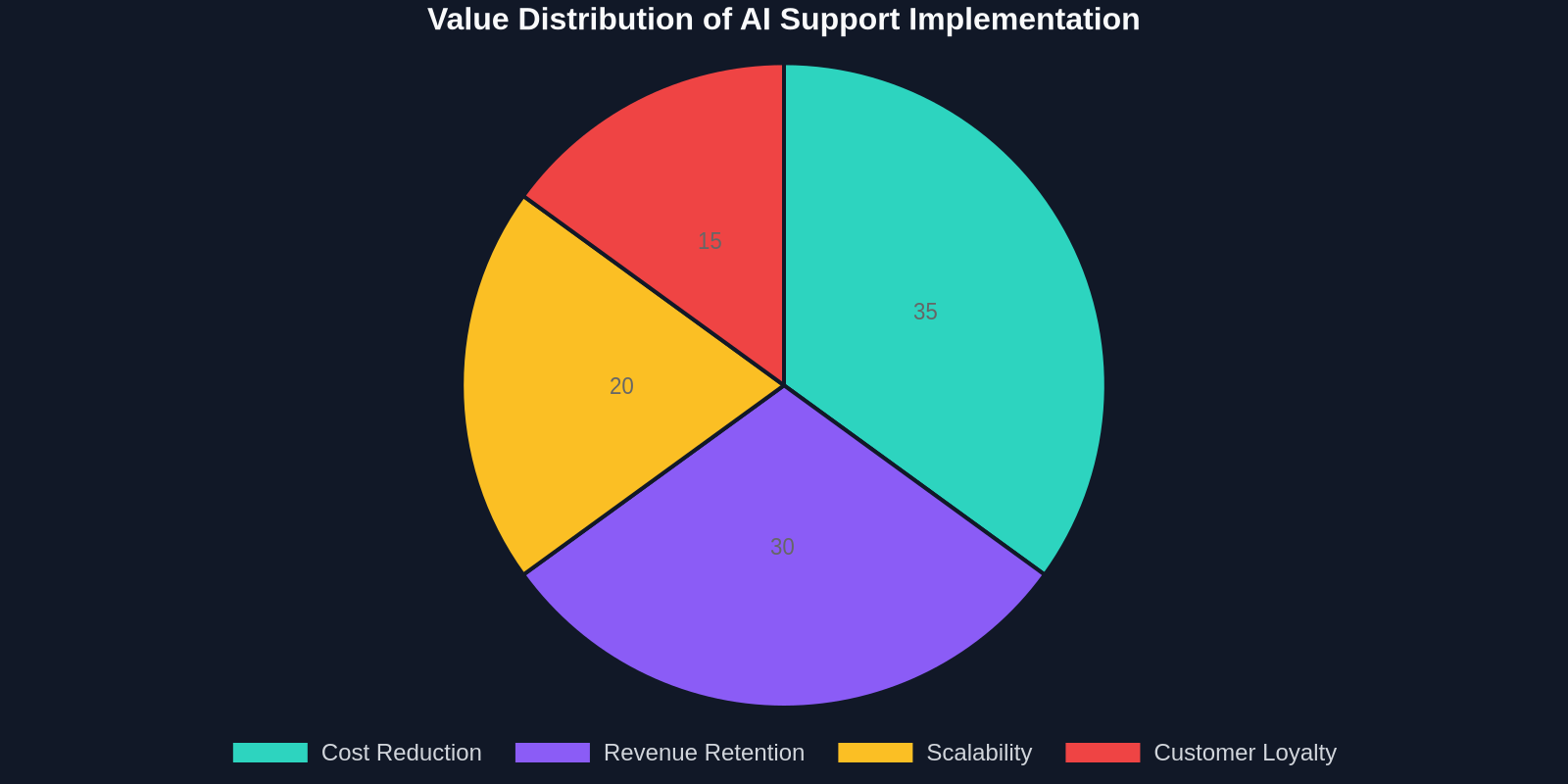
But what does this mean for your organization? The key insight is that AI-powered support creates value across multiple vectors simultaneously:
Cost Reduction: Automated case creation through Web to Case and Email to Case eliminates manual data entry. Assignment and escalation rules ensure tickets route correctly without human triage.
Revenue Protection: Faster response times reduce churn risk. When customers get answers in minutes instead of hours, they're less likely to explore competitors.
Scalability Without Linear Hiring: As ticket volumes grow, AI agents absorb the increase without proportional headcount additions, the classic challenge of traditional support operations.
| Support Metric | Traditional Support | AI-Augmented Support | Impact |
|---|---|---|---|
| Response Time | 8 hours (business days) | 2 minutes (24/7) | 99.6% faster |
| Ticket Deflection Rate | 5-10% | 40-60% | 5-6x improvement |
| Cost per Ticket | $15-25 | $3-8 | 60-70% reduction |
| Agent Capacity | 50-60 tickets/day | 80-120 tickets/day | 2x productivity |
| CSAT Score | 75-80% | 85-90% | 10-15 point gain |
Beyond Salesforce: The Universal Principles of Support Automation
You don't need to be a Salesforce customer to benefit from the lessons embedded in the Agentforce Contact Center announcement. The platform consolidates several capabilities that any support organization should consider:

1. Unified Customer Context Across Channels
One of the persistent pain points in customer support is the fragmented view of customer interactions. A customer might email about an issue, call about the same problem, and then chat with a different agent, each time starting from zero.
Salesforce's approach emphasizes unified customer context: every interaction, regardless of channel, feeds into a single customer profile. AI agents access this context instantly, eliminating the "Can you repeat your issue?" frustration that plagues traditional support.
2. Automated Case Creation and Intelligent Routing
The announcement highlights automated case creation with Web to Case, Email to Case, and assignment/escalation rules. This is the foundational layer of support automation that many organizations still haven't fully implemented.
Web to Case: Converting website form submissions directly into support tickets eliminates the copy-paste workflow that wastes agent time.
Email to Case: Automatically parsing customer emails into structured tickets ensures nothing falls through the cracks.
Assignment and Escalation Rules: Intelligent routing based on issue type, customer tier, agent expertise, and workload distribution ensures each ticket reaches the right person at the right time.
3. The Agentforce and Einstein AI Partnership Model
Perhaps the most interesting strategic element is how Salesforce is positioning Agentforce alongside Einstein AI. Rather than treating AI as a replacement for human agents, the architecture treats AI as a complementary capability that handles routine inquiries while escalating complex issues to human specialists.
This partnership model, popularized by SIA's adoption for personalized travel experiences, represents the most sustainable approach to AI support. Full automation without human oversight leads to customer frustration when edge cases arise. Pure human support fails to scale economically. The hybrid model captures the best of both.
AI agents should handle the predictable. Human agents should handle the exceptional. Together, they create support experiences that neither could achieve alone.
The Customer Zero Strategy: Why Internal Adoption Matters
Salesforce's decision to deploy Agentforce internally, particularly within its philanthropy team for grantmaking processes, offers a crucial lesson for any organization considering AI support tools. This "Customer Zero" approach means Salesforce experiences the same implementation challenges, workflow disruptions, and change management hurdles that its customers will face.
The philanthropy use case is particularly instructive. Grantmaking involves complex workflows with multiple approval stages, documentation requirements, and compliance considerations, not unlike many B2B customer support scenarios. By proving that AI agents could handle administrative overhead in this demanding environment, Salesforce created credibility for the broader platform.
How Support Leaders Can Apply These Lessons
Whether you're evaluating Salesforce, considering alternative AI support platforms, or building internal capabilities, the Agentforce Contact Center announcement provides a framework for thinking about support automation strategically.

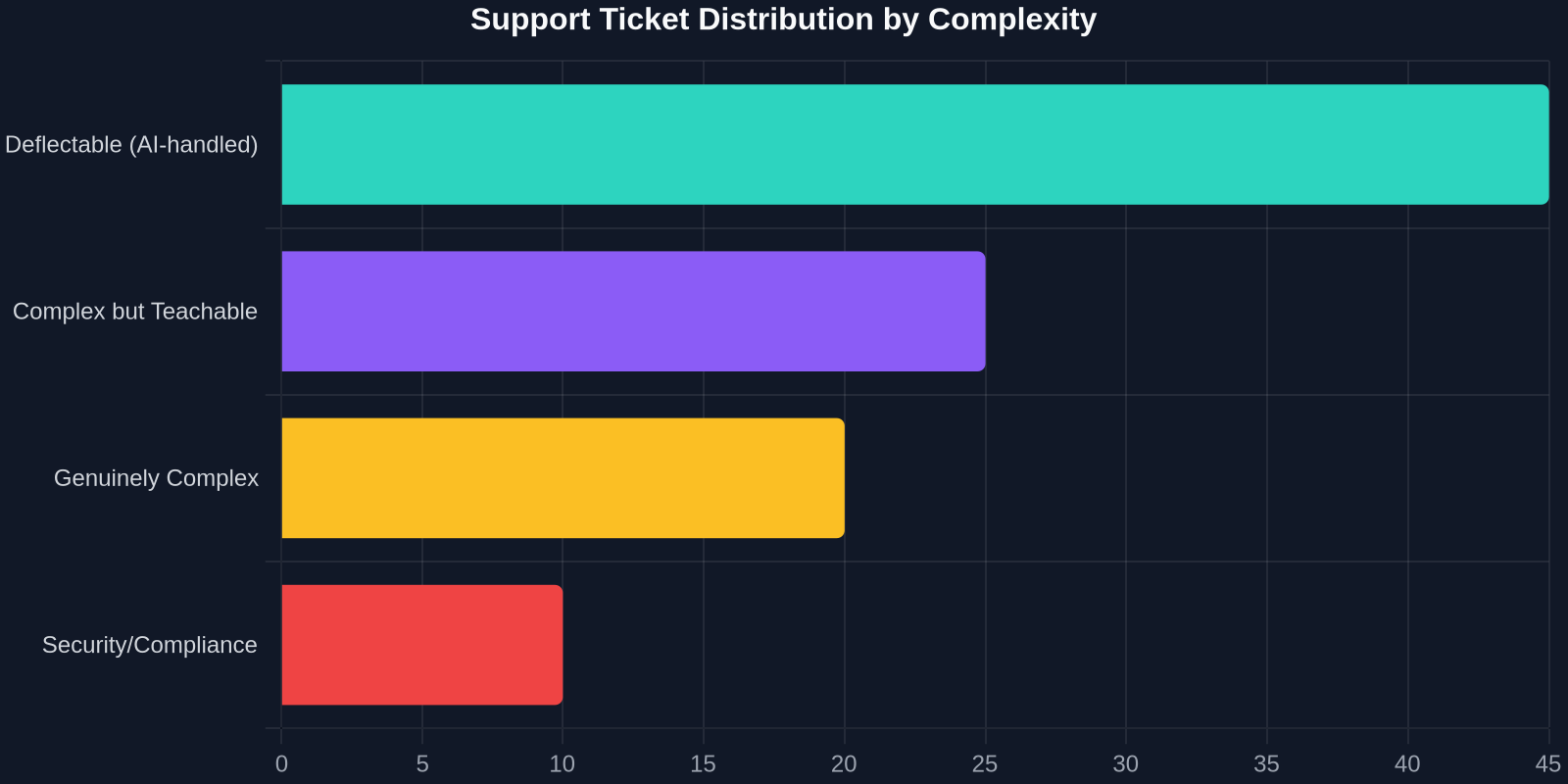
Step 1: Audit Your Ticket Mix
Before investing in any AI support solution, understand what your support team actually handles. Categorize tickets by:
Deflectable: Routine inquiries with clear answers (password resets, order status, billing questions)
Complex but Teachable: Issues requiring multiple steps or specific expertise but following predictable patterns
Genuinely Complex: Edge cases requiring human judgment, escalation, or exception handling
Most organizations find that 40-60% of tickets fall into the deflectable category, immediately addressable by well-configured AI agents.
Step 2: Build Your Knowledge Foundation
AI agents are only as good as the knowledge they can access. Invest in:
- Comprehensive documentation of common issues and solutions
- Structured FAQs organized by product area and customer segment
- Historical ticket data tagged with resolutions
- Clear escalation paths for issues that exceed AI capabilities
Step 3: Implement Automated Case Creation
Start with the basics: Web to Case and Email to Case automation. Eliminate manual ticket creation first, then layer in AI-powered triage and routing. This creates immediate efficiency gains while building the data foundation for more sophisticated AI deployments.
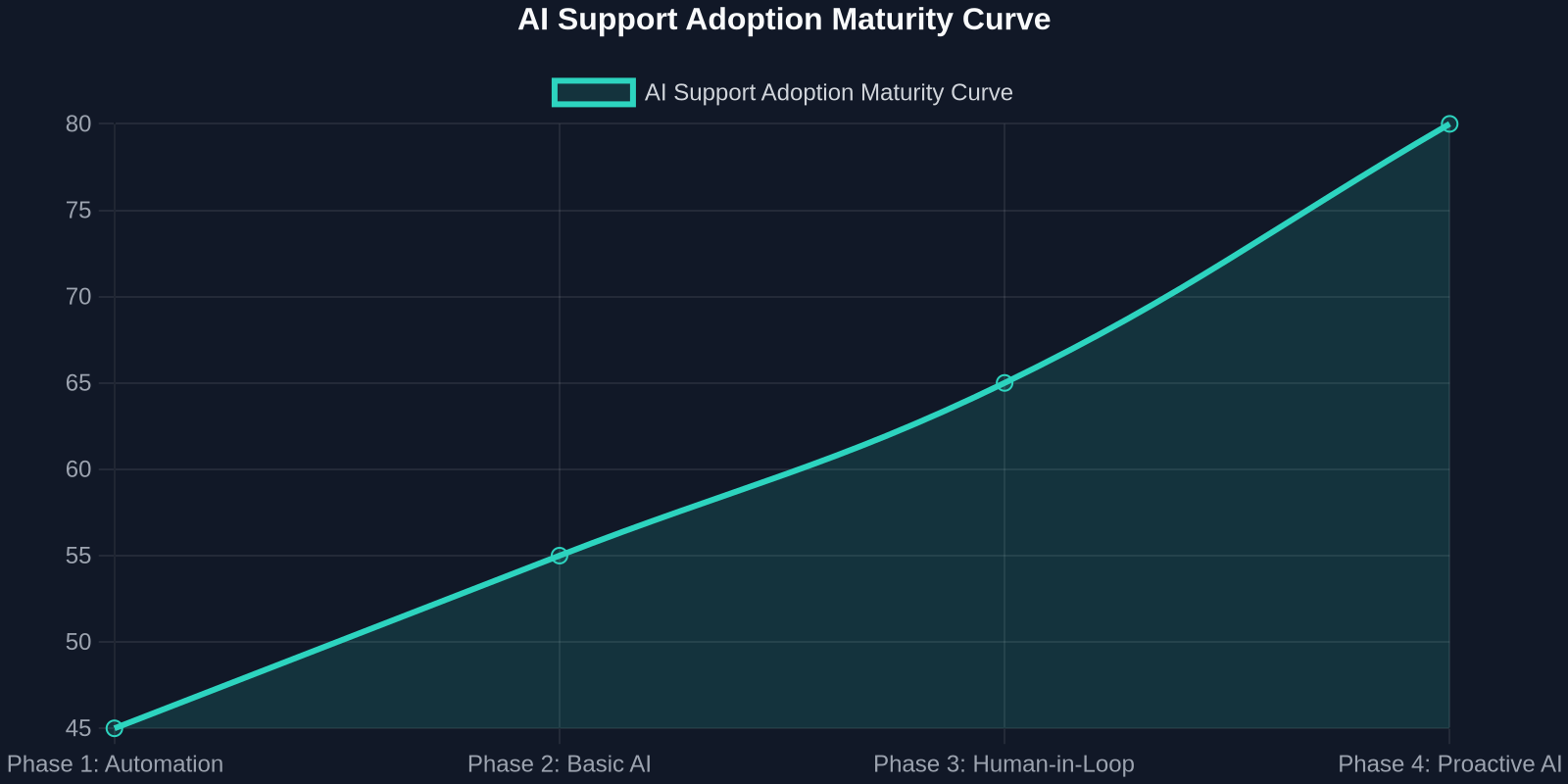
Step 4: Deploy AI in Staged Phases
Resist the temptation to automate everything at once. A staged approach reduces risk and builds organizational confidence:
Phase 1: Automated case creation and basic routing Phase 2: AI-powered responses for top 10 deflectable ticket categories Phase 3: Expanded AI coverage with human-in-the-loop escalation Phase 4: Proactive support, AI identifies and resolves issues before customers report them
Step 5: Measure What Matters
The Forrester study measured ROI comprehensively, but your organization needs specific, actionable metrics. Track:
- Deflection Rate: Percentage of tickets resolved without human agent involvement
- Time to First Response: How quickly customers receive any response
- Time to Resolution: Total time from ticket creation to closure
- CSAT Score: Customer satisfaction with AI-handled vs. human-handled interactions
- Cost per Ticket: Fully loaded cost including technology, labor, and infrastructure
- Agent Attrition: AI should reduce burnout by handling repetitive tasks
The Hidden Cost: What Workforce Reduction Really Means
The 45% workforce reduction statistic is attention-grabbing, but responsible analysis requires examining what this means operationally. Salesforce didn't simply eliminate 4,000 jobs, it redeployed talent toward higher-value activities while AI absorbed routine workloads.
For support leaders, this distinction is critical. The goal isn't headcount reduction for its own sake. The goal is:
Higher-Value Work: Agents spend time on complex problem-solving, customer relationship building, and proactive outreach, activities that drive retention and revenue.
Reduced Burnout: Eliminating repetitive ticket handling reduces the cognitive load that drives support agent turnover.
Career Progression: When AI handles the routine, support roles evolve toward technical specialists, customer success managers, and AI trainers, more fulfilling career paths.
The organizations that succeed with AI support aren't the ones that cut most aggressively, they're the ones that reinvest human talent into activities that create customer loyalty and revenue growth.
Platform Consolidation: The Automation Multiplier Effect
The Agentforce announcement highlights platform consolidation as a key value driver. When case management, AI agents, knowledge bases, and customer data live in the same ecosystem, automation becomes exponentially more powerful.

Consider the alternative: a support stack with separate tools for email ticketing, chat, knowledge management, customer data, and AI agents. Each integration point becomes a potential failure. Data gets siloed. AI agents lack the complete context needed for accurate responses.
Consolidation eliminates these integration costs and enables what Salesforce calls "unified governance", the ability to manage AI behavior, access controls, and compliance requirements from a single interface.
The AI Consulting Angle: Do You Need Expert Help?
The Agentforce announcement implicitly raises a question many support leaders are asking: should we implement AI support internally or engage AI consulting expertise?
When to Consider AI Consulting:
- Your organization lacks internal AI/ML expertise
- You're deploying across multiple business units with complex requirements
- You need help deciding which AI tools to use and how to introduce them
- Governance, compliance, or security requirements are complex
- You need to move quickly and can't afford a lengthy learning curve
When Internal Implementation Makes Sense:
- Your team has experience with automation platforms
- Your ticket mix is well-understood and documented
- You're starting small with clear, contained use cases
- Budget constraints favor a gradual, learning-by-doing approach
Real-World Implementation: The Managed Services Perspective
The Mastek approach mentioned in the Agentforce announcement, "agentic automation, domain-led delivery, and unified governance", illustrates how mature organizations are transforming managed services into strategic capabilities. This framework applies beyond IT services:
Agentic Automation: AI agents that can take action, not just respond. They create cases, trigger workflows, update records, and escalate intelligently without human intervention for routine tasks.
Domain-Led Delivery: Understanding the specific context, terminology, and requirements of your industry, whether it's travel (like SIA), financial services, healthcare, or SaaS.
Unified Governance: Centralized control over AI behavior, compliance, security, and performance, ensuring AI operates within organizational boundaries.
The Future of Customer Support: Proactive, Predictive, Personalized
The Agentforce Contact Center announcement points toward a support future that's fundamentally different from today's reactive model. The trajectory is clear:
Today: Customers report issues → AI or human agents resolve them Emerging: AI identifies potential issues → proactively reaches out to customers before problems escalate Future: AI predicts customer needs → prevents issues from occurring entirely
This proactive support model transforms customer support from a cost center into a retention and loyalty driver. When customers feel that a company anticipates their needs and prevents problems rather than just fixing them, loyalty deepens significantly.
Building Your AI Support Roadmap: A Practical Framework
Let's translate these insights into actionable next steps for your organization:
Month 1-2: Foundation
- Audit ticket mix and identify deflectable categories
- Implement or optimize Web to Case and Email to Case automation
- Consolidate customer interaction data into a unified view
- Document resolution workflows for top 10 ticket categories
Month 3-4: Pilot AI Agents
- Deploy AI agents for 2-3 highest-volume deflectable categories
- Implement human-in-the-loop escalation for edge cases
- Monitor deflection rate, CSAT, and escalation accuracy
- Gather agent feedback on AI-handled interactions
Month 5-6: Expansion and Optimization
- Expand AI coverage based on pilot learnings
- Implement intelligent routing based on customer tier and issue complexity
- Refine knowledge base based on AI-agent missteps
- Begin measuring cost per ticket and agent productivity gains
Month 7-12: Proactive Support
- Identify patterns where AI can predict customer issues
- Deploy proactive outreach for known product issues or upcoming changes
- Build feedback loops between AI insights and product/engineering teams
- Evaluate platform consolidation opportunities
Conclusion: The Real Lesson from Salesforce's AI Support Success
The Salesforce Agentforce Contact Center announcement is significant not because it introduces revolutionary technology, AI support agents have existed in various forms for years, but because it demonstrates enterprise-scale adoption with measurable ROI and provides a blueprint for others to follow.
The lessons for support leaders are clear:
- Start with automation fundamentals, case creation, routing, and deflection, before pursuing sophisticated AI
- Pursue the hybrid model where AI handles the predictable and humans handle the exceptional
- Prioritize customer experience metrics alongside cost reduction, the two are not mutually exclusive
- Invest in knowledge foundations because AI agents are only as good as the information they can access
- Think in terms of ROI across cost reduction, scalability, and customer retention, not just any single metric
Whether you adopt Salesforce directly, work with platforms like Successly that bring AI-powered support automation to businesses of all sizes, or build internal capabilities, the strategic principles remain the same. The organizations that thrive in the AI support era will be those that combine technology investment with operational discipline and a genuine commitment to customer experience.
The question isn't whether AI will transform customer support, it already is. The question is whether your organization will lead that transformation or be forced to follow it.