
Oracle's $1B Partner Support Investment: Why AI-Powered Customer Support Is Now a Board-Level Priority
Oracle just made a statement that should be on every B2B support leader's radar. At its annual CloudWorld conference, the company announced a $1 billion commitment to partner support, a massive investment aimed at accelerating AI adoption across its partner ecosystem. The announcement includes integrating OpenAI's ChatGPT and Codex directly into Oracle's application stack, expanding Oracle Cloud Infrastructure (OCI) with Google TPUs, OpenAI's next-generation "Jalapeño" chip, and Cerebras hardware.
This isn't just another vendor spending announcement. It's a leading indicator of a structural shift in how enterprise software companies think about support. For years, support has been treated as a cost center, a necessary but unglamorous function. Oracle's $1 billion bet tells a different story: support is now the primary engine for partner enablement, ecosystem growth, and revenue retention.
The message for support team leads, SaaS founders, and customer success managers is clear: if a company as large as Oracle sees AI-powered partner support as a billion-dollar priority, the competitive pressure is now on every B2B organization to rethink its own support infrastructure.
The Economics Behind Oracle's $1B Bet on Partner Support
To understand why Oracle is putting a billion dollars behind partner support, you need to follow the money. In the enterprise software world, partners, system integrators, value-added resellers, managed service providers, and independent software vendors, are the distribution channel. They influence purchase decisions, own customer relationships, and drive implementation revenue.
But there's a catch: partners won't invest their time and resources in a platform that's hard to support, difficult to integrate, or costly to maintain. This is where support becomes the linchpin. When a partner hits an integration issue, a configuration problem, or an API limitation, the speed and quality of support determine whether they double down on the platform or walk away to a competitor.
Oracle's $1 billion commitment is essentially saying: we will make it easier, faster, and cheaper for partners to succeed on our platform. And the most scalable way to do that, the only way to do it at the scale Oracle needs, is through AI-powered support automation.
The economics are straightforward. For every $1 a partner invests in building on a platform, they expect a return of $3 to $5 in services revenue. If support friction delays time-to-value by even a few weeks, that ROI equation begins to break down. AI-powered support changes the math by:
- Reducing resolution time from days to minutes for common integration and configuration issues
- Deflecting up to 50% of tier-1 tickets before they ever reach a human agent
- Enabling 24/7 support across time zones without doubling headcount
- Providing partners with self-service knowledge in their native language through AI translation
This is the playbook Oracle is following, and it's the same playbook any support organization can adopt. The math is compelling: when you reduce cost-per-ticket by 60% while simultaneously improving response times by 90%, support transforms from a cost center into a strategic asset.
What's Inside Oracle's AI-Powered Partner Vision
The Oracle announcement isn't just about money. It's about the specific AI capabilities being made available to partners. By integrating ChatGPT and Codex into its application stack, Oracle is giving partners the ability to:

- Generate code and configurations using natural language prompts, dramatically reducing implementation time
- Automate migration tasks that previously required manual intervention
- Build custom integrations with less specialized technical knowledge
- Troubleshoot issues using AI-assisted diagnostics rather than trial and error
Oracle is also expanding its infrastructure offerings with Google TPUs, OpenAI's Jalapeño chip (expected to deliver up to 3x inference performance for AI workloads), and Cerebras hardware, known for industry-leading training speeds. These investments signal that Oracle is betting on a future where AI capabilities are embedded directly into the support and enablement experience, not bolted on as an afterthought.
The TCS (Tata Consultancy Services) partnership further underscores this direction. TCS said the lab will leverage Oracle AI to drive enterprise AI scaling, a clear signal that the services ecosystem is gearing up to deploy AI-powered solutions at massive scale. For support organizations, this means the partners they work with will increasingly expect AI-native support experiences.
The Current State of AI in Customer Support: Key Benchmarks
Before diving into the framework, let's ground ourselves in data. AI-powered support has moved from experimental to mainstream. Here's where the industry stands:
But adoption hasn't been uniform. Companies fall into three categories:
- Leaders (25%): Have deployed AI support across multiple channels, showing double-digit improvements in CSAT and cost per ticket
- Experimenters (45%): Have piloted AI support in one or two channels but haven't scaled
- Laggards (30%): Still relying primarily on manual support workflows, with response times measured in hours not minutes
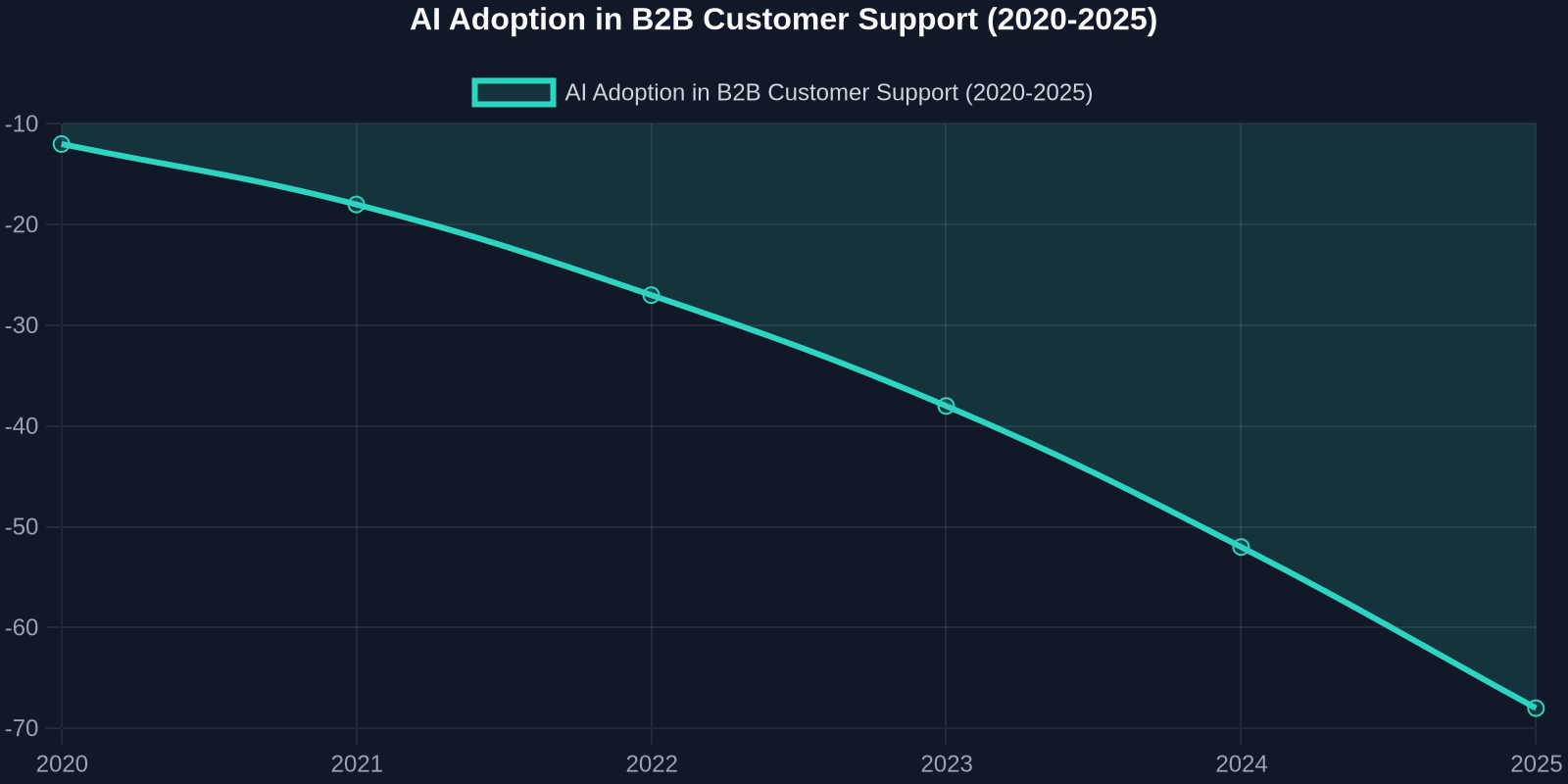
The data tells a consistent story across industries: AI-powered support delivers measurable results when implemented strategically. Organizations that treat AI as a bolt-on tool see marginal improvements. Those that redesign their support workflows around AI see transformative results, typically reducing ticket volume by 40-50%, cutting cost per ticket by 60-70%, and improving CSAT by 15-25 points.
A 5-Step Framework for Building AI-Augmented Support
Here's a practical step-by-step framework that support leaders can use to apply the lessons from Oracle's investment to their own organizations:

Step 1: Segment Your Ticket Volume (Week 1)
Before you automate anything, you need to know what you're automating. Analyze your ticket data and categorize by:
- Frequency: Which issues recur most often?
- Complexity: Which issues follow predictable, rule-based patterns?
- Resolution path: Which issues can be resolved without escalation?
You'll typically find that 30-40% of your ticket volume falls into the "high-frequency, low-complexity" category, the ideal target for AI-powered automation. This is where you'll see the fastest wins.
Step 2: Define Your Deflection Targets (Week 2)
Set specific, measurable targets for your AI support initiative:
- Deflection rate: What percentage of tier-1 tickets should be resolved without human intervention?
- First response time: How fast should partners or customers receive an initial response?
- CSAT floor: What's the minimum acceptable customer satisfaction score for AI-handled interactions?
A realistic starting point: aim for a 25-30% deflection rate in the first 90 days, targeting 50% within 12 months. Aggressive but achievable benchmarks exist, industry leaders are already exceeding 55% deflection on tier-1 tickets.
Step 3: Build Your Knowledge Foundation (Weeks 3-4)
AI support is only as good as the knowledge it's trained on. Invest time in:
- Creating comprehensive FAQ documentation
- Building step-by-step troubleshooting guides
- Recording common issue-resolution patterns
- Tagging and categorizing your historical ticket data
- Documenting edge cases and known limitations
This is the step most organizations rush, and it shows in poor AI performance. A well-structured knowledge base is the difference between an AI that resolves 60% of tickets accurately and one that frustrates every customer it touches.
Step 4: Deploy in Phases (Weeks 5-8)
Start with a single channel, email or chat, and a narrow set of issue types. Monitor performance for two to three weeks before expanding. Key metrics to track:
- Resolution rate for AI-handled tickets
- Customer satisfaction scores for AI interactions
- Escalation rate to human agents
- Time saved per ticket
- Deflection rate against baseline
Resist the temptation to roll out AI support across all channels simultaneously. Phased deployment allows you to catch issues early, refine your knowledge base, and build confidence before scaling.
Step 5: Implement Human-in-the-Loop Escalations (Ongoing)
AI should handle the routine; humans should handle the exceptional. Design your escalation path so that:
- Complex or high-stakes issues route to senior agents
- AI provides context and suggested next steps to human agents for faster resolution
- Every human-handled escalation feeds back into the AI's knowledge base for continuous learning
- Regular reviews identify patterns that can be added to the automated playbook
This human-in-the-loop approach ensures that AI automation doesn't come at the cost of quality. It creates a virtuous cycle where AI becomes smarter with every interaction, and human agents become more productive with every escalation.
Before and After: What AI Support Automation Delivers
| Metric | Manual Support | AI-Powered Support |
|---|---|---|
| First Response Time | 8 hours | 2 minutes |
| Ticket Deflection Rate | 5-10% | 40-55% |
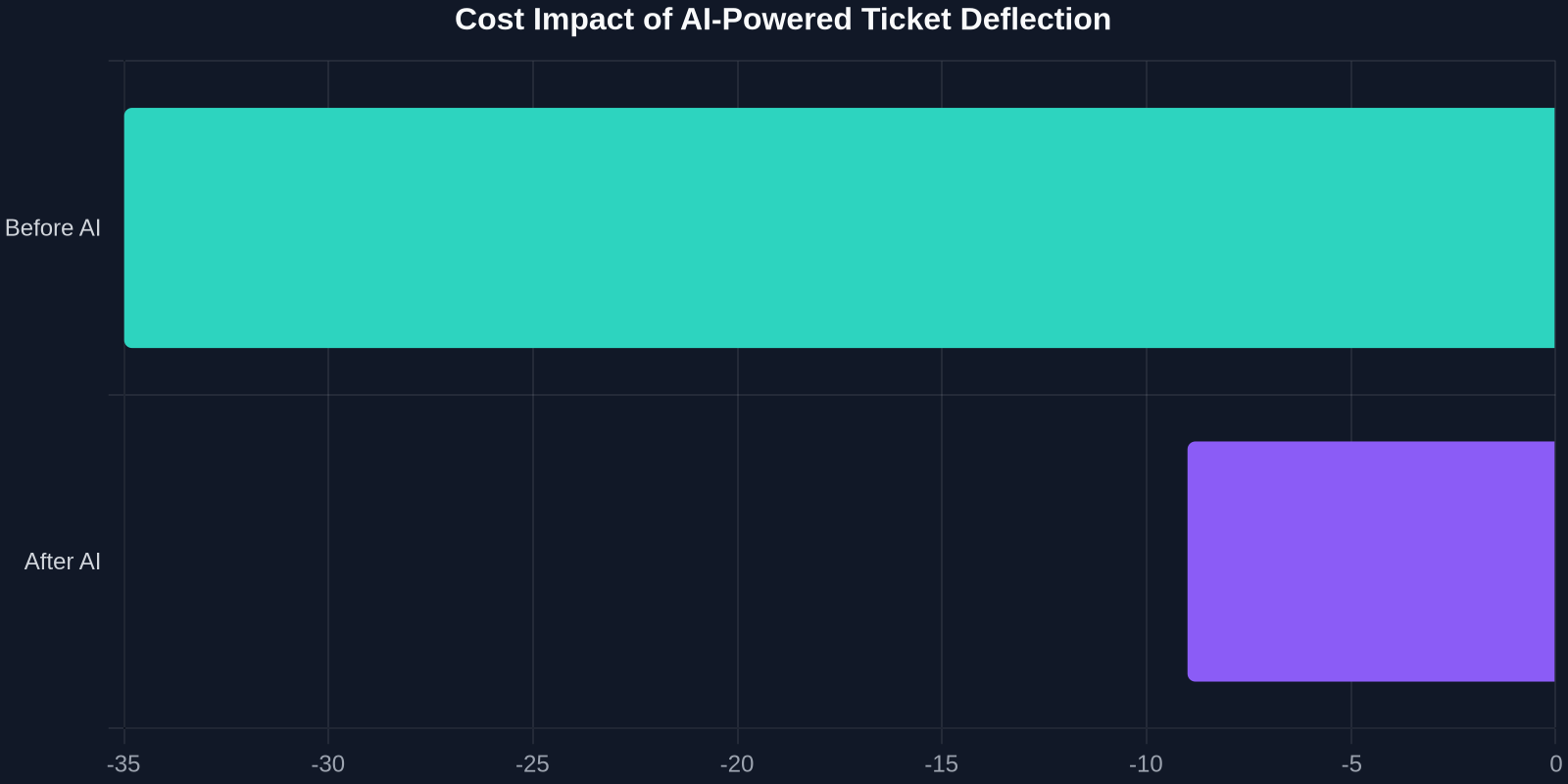
| Cost per Resolved Ticket | $25-40 | $6-12 |
| Partner Onboarding Time | 6-8 weeks | 2 weeks |
The numbers tell a compelling story, but it's the qualitative impact that matters most to support leaders. When response times drop from hours to minutes, partner satisfaction improves dramatically. When partners can self-serve for common issues, they invest more heavily in the platform. When support costs drop by 50-60%, those savings can be reinvested in higher-value activities like proactive support and strategic account management.
How Successly Helps Support Teams Scale with AI
Oracle's $1 billion investment validates what many support leaders already know: AI-powered support is no longer a competitive advantage. It's table stakes. The question is no longer whether to adopt AI support automation, but how quickly and effectively you can deploy it.

This is where Successly comes in. Successly is an AI-powered customer support automation platform designed specifically for B2B SaaS companies and support operations teams. It automates tier-1 support, reduces ticket volumes, and improves response times, without requiring a team of data scientists or a massive implementation budget.
"The $1B Oracle is investing in partner support is a leading indicator: support is no longer a cost center. It's the primary revenue retention engine."
Successly's platform uses a combination of natural language processing, machine learning, and workflow automation to:
- Automatically resolve common support requests without human intervention
- Provide real-time suggested responses to human agents for complex issues
- Integrate with existing help desk tools (Zendesk, Intercom, Freshdesk, ServiceNow)
- Continuously learn from every interaction to improve accuracy over time
- Generate analytics dashboards that track deflection rates, CSAT, and cost savings
For B2B support leaders, the value proposition is straightforward: reduce costs, improve response times, and free up your team to focus on high-value activities, the same goals Oracle is pursuing with its $1 billion partner support investment. The difference is that Successly makes this achievable for organizations of any size, not just Fortune 500 companies with nine-figure budgets.
Key Takeaways for Support Operations in 2025 and Beyond
As the dust settles on Oracle's announcement, here are the strategic implications for support leaders:
1. Support is now a revenue driver, not a cost center. Oracle's investment makes it clear that support quality directly influences partner retention, partner investment, and ultimately revenue. Support leaders should reframe their metrics accordingly, focusing on revenue-influenced outcomes, not just cost containment.
2. AI is the only scalable answer. You cannot hire your way out of ticket volume growth at Oracle's scale, or at any scale, for that matter. The only sustainable path is AI-powered automation combined with well-designed human escalation paths. Manual support simply doesn't scale.
3. Knowledge management is the foundation. Your AI is only as smart as your documentation. Invest in your knowledge base before you invest in AI tools. The quality of your documentation will determine the success or failure of your automation initiatives.
4. Speed of execution matters, more than you think. The gap between AI support leaders and laggards is widening every quarter. Within 18-24 months, companies that haven't adopted AI support automation will face a CSAT gap they cannot close. The compounding effect of early adoption is real: every ticket resolved by AI generates data that makes the AI smarter, creating a moat that late adopters will struggle to cross.
5. Partner enablement is a support function. Oracle's investment underscores how support and partner enablement are converging. The organizations that win will be those that treat partner support as a strategic priority with dedicated AI-powered automation, not an afterthought.
"Support leaders who treat AI adoption as an option, not an imperative, will be managing a cost center while their competitors run a revenue engine."
The Bottom Line
Oracle's $1 billion commitment to partner support is more than a headline. It's a signal that the enterprise software industry has fundamentally changed its view of support. Support is no longer an afterthought, it's the connective tissue that binds partners, customers, and platform providers together. And in an era of AI, the only way to deliver support at the speed and scale that partners and customers expect is through intelligent automation.
For B2B support leaders, the path forward is clear: understand your ticket mix, invest in knowledge management, deploy AI automation in phases, and build a human-in-the-loop escalation path that handles the exceptions while AI handles the routine.
The window of opportunity is open now. The companies that move fastest will compound their advantages. The companies that wait will find themselves facing a competitive gap that's increasingly difficult to close.
That's a lesson Oracle just spent $1 billion to teach. The good news? You don't need a billion dollars to apply it.