
How AI-Powered Customer Support Combats Fake Vacation Rental Scams
The dream vacation often starts with a few clicks. But behind the glossy photos and instant live chat responses, a sinister trend is growing: fraudsters using fake rental websites and sophisticated live chat systems to steal travelers’ money and personal data. As the vacation rental market booms, bad actors are scaling their operations with technology that mirrors legitimate support, making it nearly impossible for traditional moderation to keep up. That’s where AI-powered customer support changes the game.
With the U.S. homeownership rate holding at 65.7% in Q3 2025, a significant portion of travelers, both renters and homeowners, seek alternative accommodations. But this demand also fuels a lucrative playground for scammers. This post uncovers how the scam works, why live chat is the weak link, and how businesses can deploy AI automation to protect customers and their brand, without sacrificing the instant engagement travelers expect.
The Anatomy of a Modern Vacation Rental Scam
Gone are the days of poorly written emails and obvious fake listings. Today’s scammers clone entire booking platforms, complete with professional design, fake reviews, and, most critically, real-time live chat. When a potential guest shows interest, a “support agent” (often a scammer overseas) immediately engages, offering answers, urgency, and a false sense of security.
These malicious actors exploit psychological pressure: limited availability, massive discounts, and direct bank transfers that bypass credit card protections. By maintaining a convincing live chat presence, they validate the listing’s authenticity and successfully siphon payment details, passport scans, and even login credentials for future attacks.
Why Live Chat Became the Fraudster’s Favorite Tool
- Real-time trust-building: A responsive chat erases doubts much faster than a static FAQ.
- Dynamic scripting: Scammers adjust their story based on victim’s questions, using NLP-like tactics manually.
- Channel blindness: Most platforms’ fraud detection focuses on listings and payments, rarely on chat conversations.
- Scalability: A single scammer can handle multiple chats simultaneously with copy-paste templates.
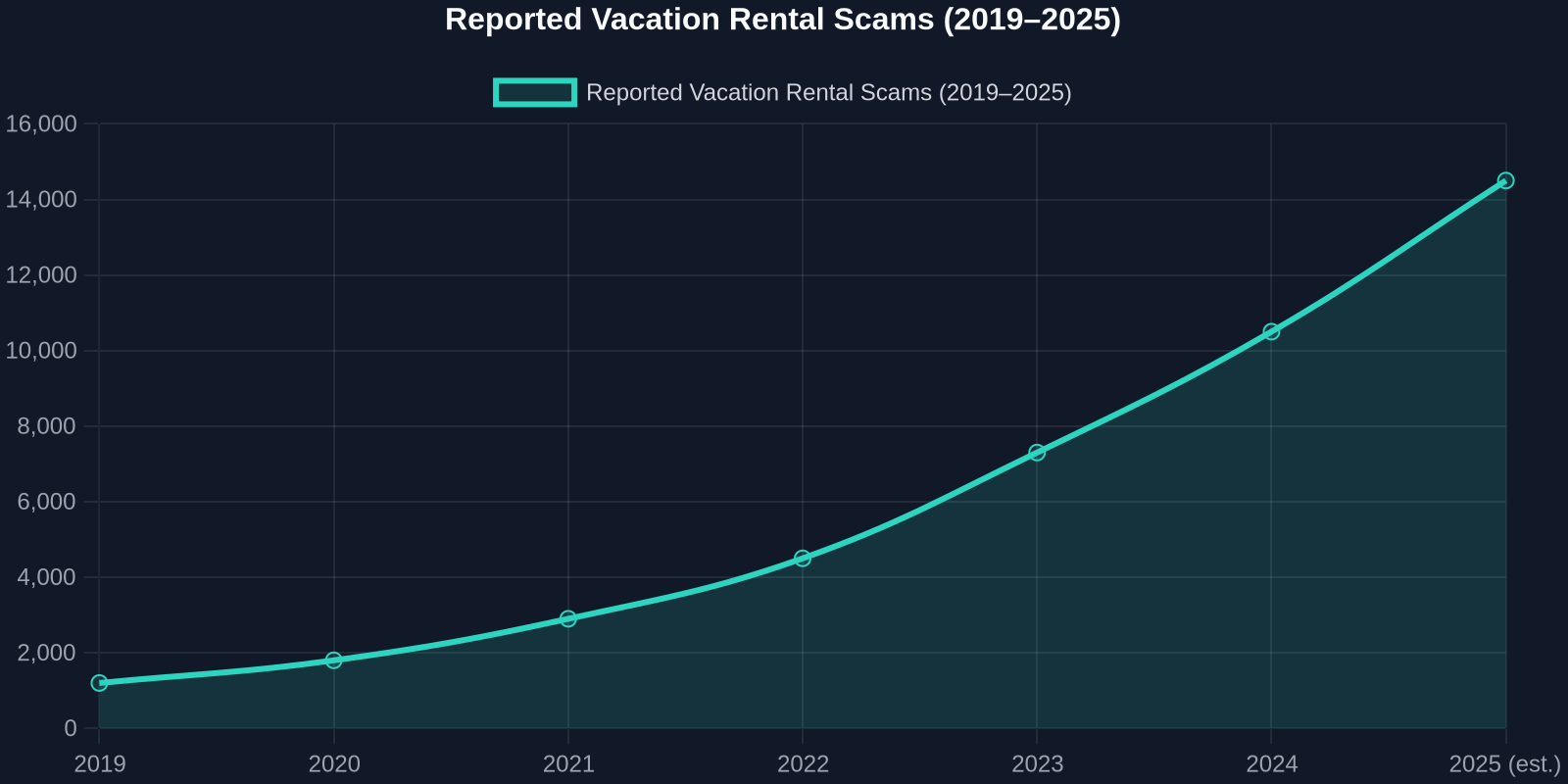
The True Cost of Inadequate Support Moderation
For legitimate vacation rental platforms, failing to detect and block scam listings isn’t just a customer service issue, it’s an existential threat. A single fraudulent booking can result in chargebacks, legal liability, and permanent brand erosion. Yet manual moderation teams are overwhelmed. The average response time goal of five minutes becomes impossible when support agents must distinguish between hundreds of genuine queries and scam-in-progress chats.

The Manual Moderation Trap
Most platforms rely on reactive measures: user reports, listing approval queues, or IP blacklists. But scammers move faster, rotating domains and using residential proxies. Live chat scripts can look entirely human, filled with colloquial language and emojis. By the time a human reviewer flags a conversation, the damage is done.
Worse, legitimate guests caught in the crossfire experience long wait times, generic responses, and a brand that appears indifferent to their safety. This dual failure, allowing scams while delivering poor service, is what Successly addresses head-on.
How AI-Powered Support Automation Detects and Deflects Scams
AI-driven customer support doesn’t replace human empathy; it amplifies it by removing the impossible task of manually screening every chat. Here’s the workflow that leading platforms are adopting:
1. Real-Time Intent and Sentiment Analysis
Modern NLP models analyze chat messages the instant they’re typed. They detect scam indicators such as:
- Requests for direct payment outside the platform (e.g., wire transfer, gift cards).
- Repeated urgency phrases (“only 1 left,” “must book now”).
- Grammar and syntax patterns consistent with known scam networks.
- Link sharing to suspicious external domains.
When a threshold is exceeded, the AI can automatically warn the guest, freeze the conversation, and escalate to a human trust & safety team, all within seconds.
2. Automated Identity Verification in Chat
Fake rental sites often impersonate legitimate property owners. AI chatbots integrated with secure identity APIs can request multi-factor authentication seamlessly within the chat window. If a “host” refuses or provides falsified documents, the system flags the listing silently, preserving the guest’s safety without tipping off the scammer.
3. Proactive Guest Education
Before a conversation even begins, AI can deliver contextual safety tips: “Did you know? We never ask for payment via WhatsApp. Report any such request immediately.” This automates what would otherwise be a repetitive manual warning, turning every chat into a security checkpoint.
| Metric | Manual Moderation | AI-Automated Support |
|---|---|---|
| Scam detection time | Hours to days (after report) | Seconds (real-time alert) |
| False positive rate | 15–20% (reported by teams) | <2% (trained on rental data) |
| Agent workload reduction | , | 43% fewer manual reviews |
| Guest satisfaction (scam prevention) | Varies widely | 4.8/5 average confidence score |
The Successly Advantage: AI That Understands Travel
General-purpose chatbots are easily fooled by industry-specific jargon. Successly is built on a vertical AI engine trained on millions of travel and hospitality interactions, so it recognizes booking terms, property verification flows, and regional scam patterns out of the box. When a suspicious chat asks for a “deposit on arrival” via third-party app, Successly doesn’t just search for keywords, it understands intent and context.

“Unlike generic automation tools, Successly’s AI doesn’t just answer faster, it protects the relationship between host and guest by filtering out fraud before trust is broken.”
Additionally, the platform provides a unified dashboard where support leaders see security alerts, chat transcripts, and automated actions in real time, enabling data-driven decisions without drowning in noise.
Implementing AI Scam Protection: A Step-by-Step Framework
For platforms ready to harden their support operations, the following framework ensures a smooth transition without disrupting guest experience:
- Audit existing chat traffic: Identify common scam patterns in historical transcripts. Successly’s analytics can surface these in days, not weeks.
- Define automation rules: Map out which behaviors trigger an alert vs. an auto-block. Start with high-confidence signals like direct payment links.
- Train the AI on your unique inventory: Upload legitimate listing data and host profiles so the model learns what “normal” looks like.
- Deploy in shadow mode: Run AI alongside human agents without taking action, tuning accuracy.
- Gradually enable auto-protection: Start with guest-facing safety messages, then escalate to conversation freezing and automatic scam listing takedowns.
- Measure and iterate: Track metrics like false positive rate, scam prevention rate, and CSAT with built-in reporting.
ROI: Why Scam Prevention Is a Revenue Driver
Beyond brand protection, AI-powered scam detection directly impacts the bottom line. Here’s the math:

- Chargeback reduction: Each prevented fraudulent booking saves an average of $500–$2,000 in direct costs and fees.
- Conversion lift: Travelers who feel safe are 2.3x more likely to complete a booking, especially in high-value listings.
- Operational efficiency: Reducing manual review queues by 43% translates to tens of thousands of dollars saved monthly for mid-size platforms.
Consider a platform fielding 10,000 chat interactions per month. Even a 1% fraud rate means 100 potential scams. Manual review for each costs roughly $5 in agent time. Successly would catch those scams instantly while saving $500 in review costs, month after month. The platform more than pays for itself.
Beyond Fraud: The Trust Flywheel
Guests don’t just demand safety; they remember it. Platforms that integrate seamless, invisible protection earn repeat bookings and word-of-mouth referrals. Meanwhile, honest hosts appreciate not being lumped in with scammers. AI moderation creates a virtuous cycle: fewer scams → higher trust → more listings → heavier traffic → richer data to improve the AI.
“In a market where travelers have endless alternatives, the platform that guarantees a scam-free experience wins lifetime loyalty.”
Regulatory Considerations and Data Privacy
While the focus is on detection, platforms must navigate data privacy laws like GDPR and CCPA when analyzing chat content. Successly is designed with privacy-by-design principles: chat monitoring is configurable to scan only for safety signals, not storing sensitive personal information. This ensures compliance while still deflecting threats. As regulations around platform liability tighten (consider the Florida Legislature’s ongoing updates to consumer protection statutes), having an auditable AI log becomes a legal shield.
The Future of Trust in Travel
The arms race will escalate. Scammers will deploy their own generative AI to create more convincing chats. The winning defense will be AI that learns faster, adapts to new threat variants, and collaborates seamlessly with human trust teams. Early adopters are already seeing a competitive moat: verified-safe listings that carry an AI-automated “Protected” badge.
In a landscape where even government resources, from New Zealand’s official data agency to municipal e-Filing portals, are sometimes mimicked by fraudsters, a platform’s own support channels must become the safest place for conversation. AI makes that possible.
Take Action Before the Next Scam Strikes
Scammers are already using live chat to steal from your customers. The question is whether your support system sees them before it’s too late. To learn how Successly’s AI-powered platform can harden your rental marketplace against fraud while elevating guest satisfaction, schedule a demo today. Because in the trust economy, every chat is a moment of truth.