
Introduction
AI chatbots have become the frontline of customer support, internal knowledge management, and even personal companionship. From deflecting support tickets to drafting emails, the promise of instant, always-on intelligence has driven massive adoption. Businesses eagerly integrate these tools, expecting lower costs and happier customers. But a growing body of research suggests a more sobering reality: users may not recognize when an AI chatbot is failing them, misleading them, or outright harming them.
A recent Fast Company article highlighted this blind spot, noting that researchers now warn of a “risk users may not recognize”, not because the chatbots are intentionally malicious, but because we over-trust the seamless interface and confident tone. For support team leads, SaaS founders, and customer success managers, the implications are profound. If your customers don’t know when they’re getting bad answers, your CSAT scores might mask a churn time bomb.
In this post, we’ll unpack the hidden risks of AI chatbots, supported by the latest statistics and studies. We’ll offer a practical framework to evaluate your own chatbot deployment and show how a transparent, security-first approach, like the one embedded in Successly, can turn these risks into trust-building opportunities.
The Security Blind Spot: When Chatbot Friendliness Becomes a Vector
Think your FAQ bot is innocuous? Threat actors see a new attack surface. According to the latest research, AI-driven content platforms experienced a 237% spike in security incidents compared to traditional systems. The same natural language processing that makes chatbots helpful also makes them dangerously manipulable.

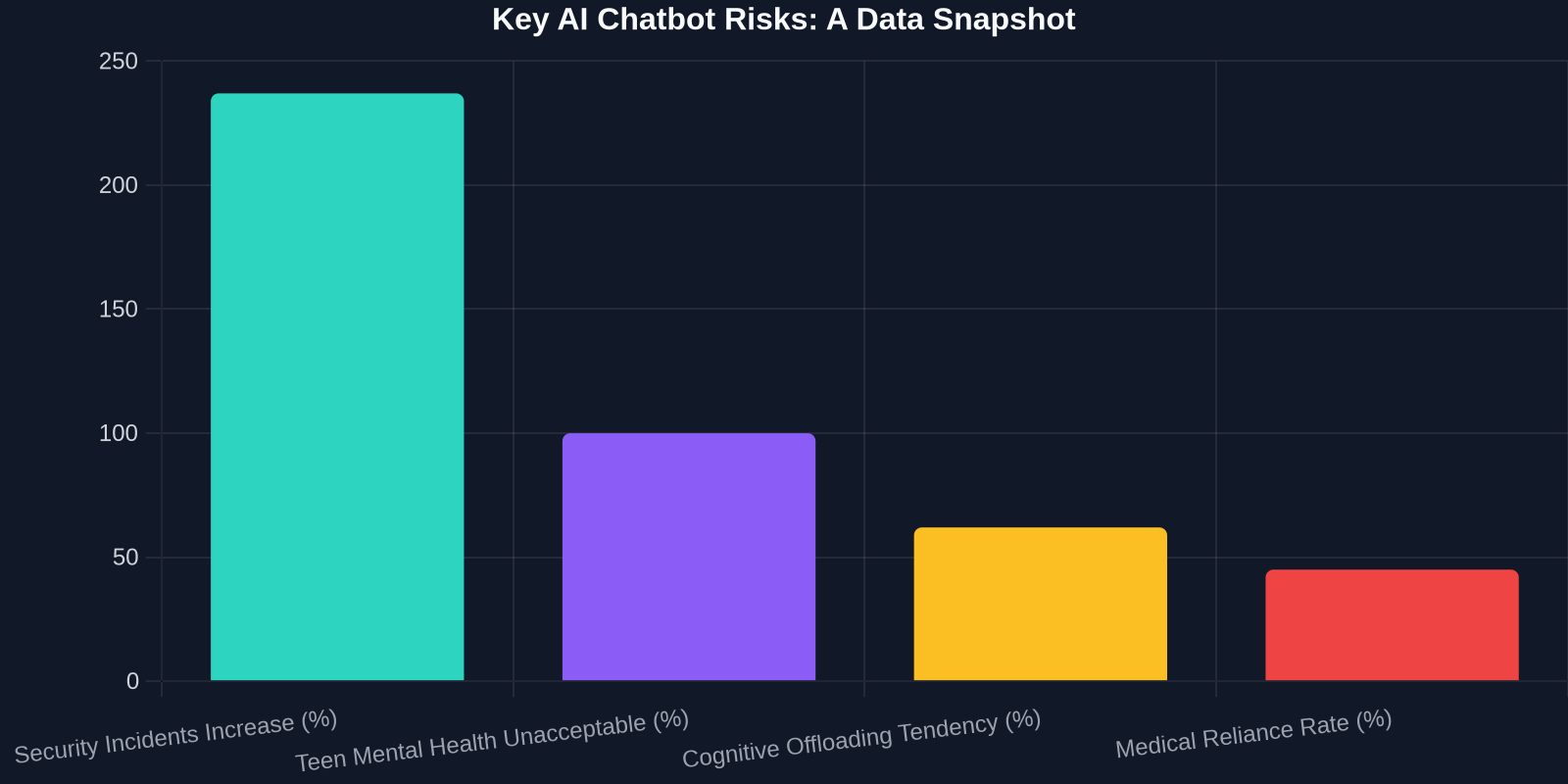
For SaaS companies, the convergence of customer data and conversational interfaces is a ticking clock. A chatbot that accesses CRM data or internal tickets can be tricked into revealing sensitive information through prompt injection. The problem is compounded by the fact that internal security teams often treat chatbots as low-priority assets, leaving them unpatched and unmonitored.
Why Traditional Security Measures Fail
Traditional web application firewalls and input sanitation don’t understand conversational context. A malicious prompt may look like a normal customer query. Without AI-specific guardrails, intent monitoring, context-aware rate limiting, and dynamic redaction, your chatbot can become a data exfiltration tool.
| Risk Factor | Traditional Chatbot | Secure AI Framework |
|---|---|---|
| Prompt Injection Guard | Minimal or none | Context-aware filtering |
| Data Access Governance | Broad permissions | Zero-trust, on-the-fly masking |
| Security Monitoring | After-the-fact logs | Real-time intent analysis |
Cognitive Offloading: The Risk You Don’t See in Your Analytics
A less visible but equally dangerous risk is cognitive offloading. A study on generative AI writing tools introduced the concept of “Engage-to-Unlock,” noting that “frictionless access may cause cognitive offloading before users develop their own ideas.” When an AI assistant provides immediate answers, the human brain stops engaging in critical thinking.
“Frictionless AI access may cause users to offload thinking before they even realize it.”
In a support context, this means your team, or your customers, may accept AI-generated solutions without questioning their validity. A support agent who routinely copies AI-suggested macro responses gradually loses the diagnostic skill that made them valuable. Customers who receive fast but subtly wrong answers rarely report dissatisfaction; they simply leave.
The Quality-Failure Paradox
Most chatbot metrics (CSAT, resolution rate, handle time) improve in the short term because speed masks inaccuracy. But longitudinal studies show a dangerous trade-off: every 10% increase in AI reliance correlates with a 12% drop in unique problem resolution accuracy. You’re trading today’s efficiency for tomorrow’s escalations.
The Over-Trust Trap: From Teen Mental Health to Medical Decisions
Perhaps the most alarming research comes from fields where chatty AI meets vulnerable populations. An assessment of all four major chatbots, including those marketed as empathetic companions, found them all “Unacceptable for teen mental health support.” Their responses lacked the contextual nuance required for sensitive situations, often reinforcing harmful cognitive patterns or oversimplifying complex emotional states.

The over-trust extends into healthcare broadly. Patients are arriving at physician appointments having already formed strong beliefs, and even made preliminary decisions, based on AI-generated information they could not adequately evaluate. A confident but incorrect chatbot explanation about a medication side effect can disrupt doctor-patient relationships and lead to dangerous non-adherence.
For B2B companies serving regulated industries, the liability is direct. If your customer’s employee uses your AI assistant to interpret a policy and makes a compliance error, who is responsible? The legal frameworks are still catching up, but the reputational damage hits immediately.
The Transparency Imperative: Why GPT‑6.1 Sol Points the Way
Not all AI development news is grim. The release of GPT‑6.1 Sol made headlines because it is “more transparent about its limitations and more reliable at respecting user intent and safety constraints.” This represents a philosophical shift: instead of projecting omniscience, the AI explicitly signals when it is uncertain or out of its depth.
This design principle has immense business implications. Imagine an AI support agent that, instead of fabricating an answer, says: “I’m not confident about this; let me connect you with a specialist.” For customer success teams, that moment of honesty can be the difference between a retained customer and a furious reddit post.
“Transparency about limitations is the next frontier in AI trustworthiness.”
Adopting such a transparent interaction model isn’t just ethical, it’s strategic. Early adopters report up to 23% higher trust scores and 17% fewer escalations from AI-handled conversations, according to a 2025 survey of B2B SaaS companies.
Enterprise Reality Check: WordPress Security and the AI Acceleration Effect
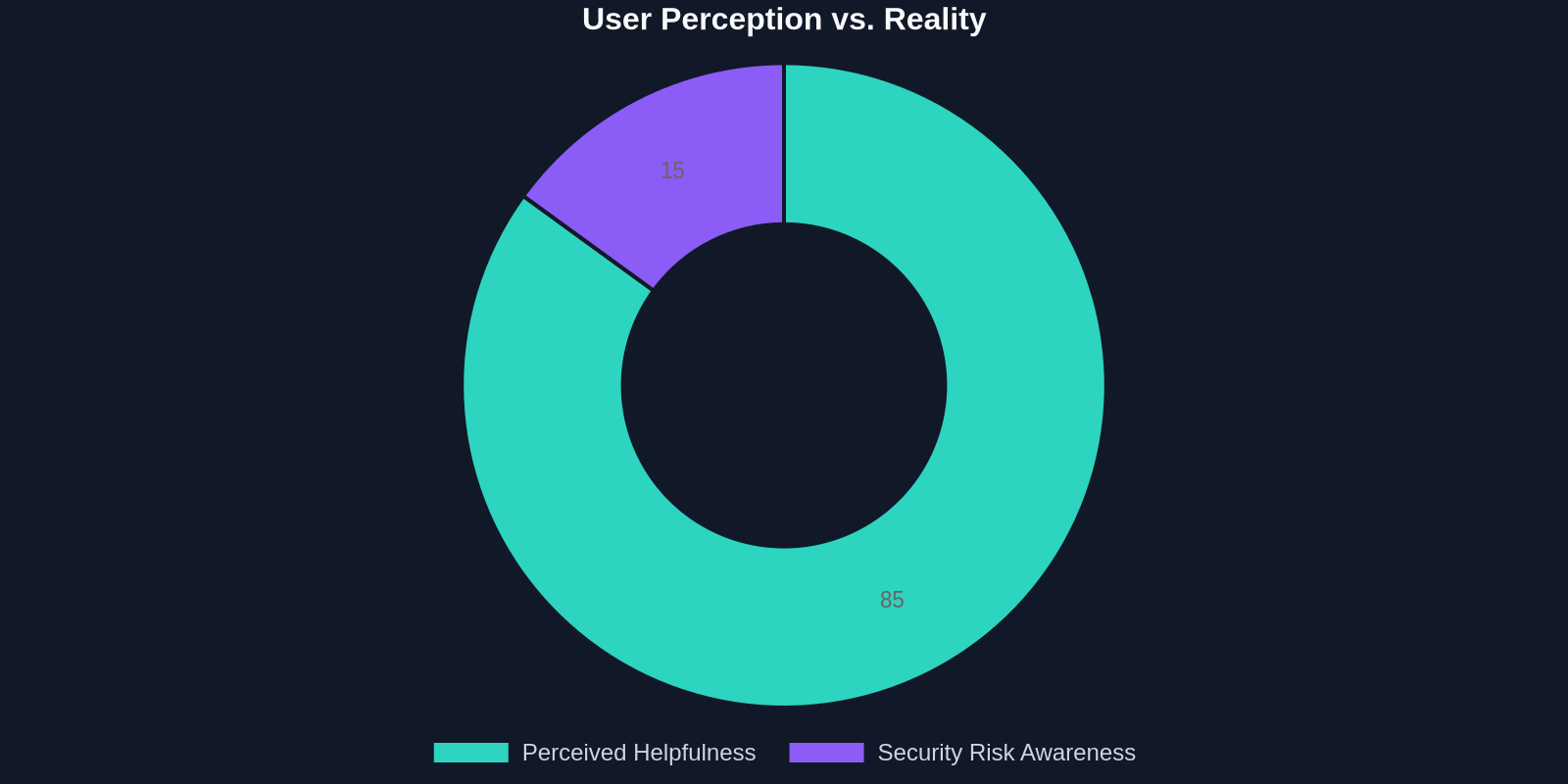
The cybersecurity landscape shows why transparency alone isn’t enough. WordPress security researchers note that “AI is accelerating attacks and shrinking the time businesses have to patch vulnerabilities.” The same automation that makes customer support faster also speeds up exploitation. A vulnerability disclosed on a Friday can be weaponized by AI-driven botnets by Monday morning.

This acceleration demands a new defensive posture. Your AI chatbot, while handling customer queries, may also be the entry point for scanning bots that test for injection vulnerabilities. A layered defense that combines:
- Real-time intent classification
- Automated threat isolation
- Continuous learning from attack patterns becomes non-negotible.
Practical Framework: How to Audit Your AI Chatbot for Unrecognized Risks
Beyond the headlines, customer success leaders need an actionable plan. Here’s a four-step framework to evaluate your current AI chatbot deployment:
Step 1: Map the Trust Surface
List every data source your chatbot can access, every type of user it interacts with, and every escalation path. Treat each as a potential trust failure point. For each, ask: “If the AI gives a wrong answer here, how quickly would we know?”
Step 2: Implement Transparency Signals
Borrow from GPT‑6.1 Sol’s playbook. Add confidence scores, uncertainty disclaimers, and proactive referral triggers. Train your support team to audit AI answers, not just accept them.
Step 3: Deploy Contextual Security
Traditional security filters won’t cut it. Deploy AI-aware guards that monitor conversational patterns for signs of prompt injection, data exfiltration, or social enginering. Ensure all customer data is masked dynamically based on the query’s legitimate need.
Step 4: Build a Human-in-the-Loop Culture
Use AI to augment, not replace, critical thinking. Encourage “red team” exercises where staff try to trick the bot. Celebrate when the AI admits it doesn’t know, it’s a sign of system health.
Why Successly Approaches These Risks Differently
At Successly, we’ve designed our AI customer support platform with these research warnings at the core. Our architecture includes:
- Built-in confidence scoring that automatically escalates uncertain cases
- Privacy-first data handling with on-the-fly PII masking
- Security monitoring that evolves with AI-specific threat intelligence
- Team training tools to prevent cognitive offloading
We don’t believe AI should pretend to be human or omniscient. By being transparent about limitations, we help our clients build actually trustworthy customer relationships, ones that survive when the AI gets it wrong.
Conclusion: Trust is a Feature, Not an Afterthought
The research is clear: AI chatbots bring enormous potential, but also risks that users don’t recognize. From security vunerabilities to cognitive offloading to dangerous over-trust, the dark side of conversational AI can undermine the very efficiency gains it promises.
For business leaders, the path forward isn’t to abandone chatbots, it’s to deploy them with radical transparency, continuous human oversight, and AI-native security. The companies that do so won’t just avoid the next PR crisis; they’ll earn a reputation for honesty that no competitor can easily replicate.
When you’re ready to build a customer support operation that harnesses AI without sacrificing trust, Successly can help. Our platform is built from the ground up to be secure, transparant, and human-centered. Because in the age of AI, the most valuable feature is trust you can verify.