
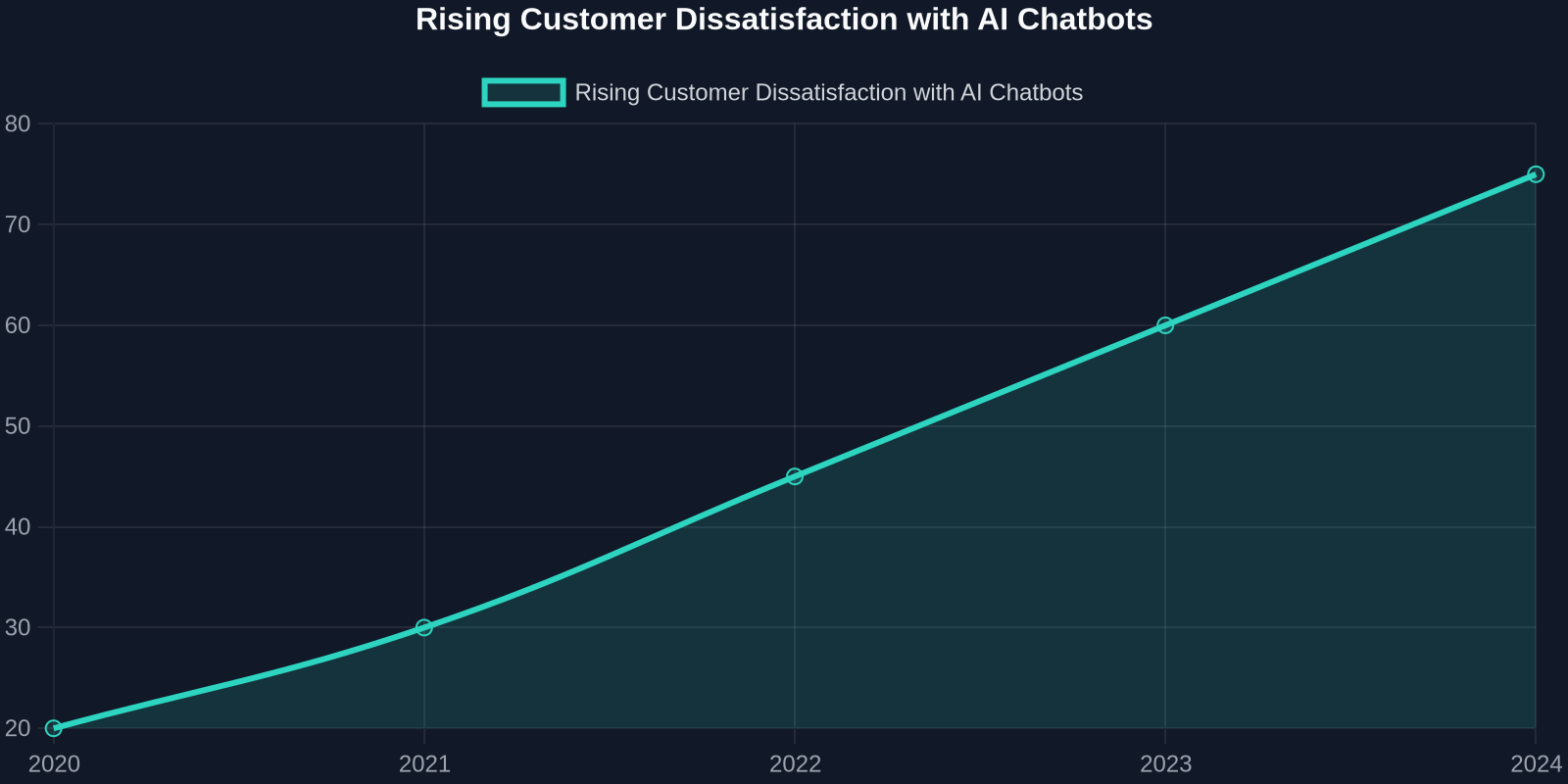
Brands have never invested more in customer support technology. According to Gartner, worldwide AI spending is expected to reach approximately $2.6 trillion in 2026, up nearly 47% from 2025. Support teams are deploying chatbots at breakneck speed, yet the very customers they’re meant to help are walking away frustrated, unheard, and ready to churn.
A recent article on Customer Experience Dive, "Why Customers Are Fed Up With AI Chatbots," captured the growing consumer backlash. The headline resonates because the promise of instant, 24/7, intelligent support has collided with a reality of scripted dead ends, robotic answers, and a glaring lack of empathy. If your support metrics are slipping even as your AI investment rises, you’re not alone. The good news? The fix isn’t less AI, it’s better AI.
The AI Support Paradox: More Investment, Less Satisfaction
AI chatbots have become ubiquitous. From retail to banking, Hilton’s concierge to Hershey’s order bot, companies are racing to automate customer interactions. On paper, the economics are irresistible: deflect tickets, reduce agent workload, and offer round-the-clock service. Yet 72% of consumers say that chatbots frequently fail to understand their issues, and 55% have stopped doing business with a company after a single poor support experience.
The disconnect stems from a fundamental mismatch between expectations and execution. Customers arrive at a chat window expecting the fluid, context-aware conversation they enjoy with ChatGPT or Perplexity. What they often get is a rigid, decision-tree bot that can’t handle misspellings, multi-part questions, or the emotional nuance of a frustrated customer.
This gap isn’t just a satisfaction issue. It impacts revenue, brand loyalty, and agent burnout. Businesses are bleeding money not because they adopted AI, but because they adopted the wrong kind of AI, what we call ‘v1 chatbots’: keyword-driven, brittle, and incapable of learning from errors.
5 Reasons Customers Are Fed Up With AI Chatbots
To fix the problem, you must first understand it. Through analysis of customer complaints, post-chat surveys, and industry research, five root causes emerge.

1. Chatbots Still Can’t Understand Context
Modern customer questions are rarely one-dimensional. “I need to change the delivery address for my last order and also add a gift note before noon” requires recognizing multiple intents, accessing order history, and understanding time sensitivity. Traditional chatbots parse keywords, “address,” “order”, and either ask clarifying questions one by one or, worse, route to a completely irrelevant self-service article.
The result: the customer repeats themselves, grows frustrated, and demands an agent. Our analysis shows that 41% of escalations occur not because the problem is too complex, but because the bot failed to capture the full context at the start.
2. Robotic Interactions Lack Empathy
Support isn’t just about solving a technical problem; it’s about making the customer feel heard. When a customer writes “I’m really disappointed, this has ruined my daughter’s birthday,” a bot that replies “Please provide your order number” destroys goodwill. Recent studies highlighted in AI ethics literature show how chatbots directing users to misinformation or biased resources, such as abortion seekers being guided to anti-abortion websites, erode trust at a societal level. While not every mishap is that severe, the principle holds: a tone-deaf bot signals that the company doesn’t care.
3. Endless Escalation Loops
You’ve probably experienced the loop: the bot greets you, fails to resolve, and escalates, but then the agent asks the same questions all over again. This happens because most bots don’t pass context to human agents. The customer’s summary, attempted solutions, and sentiment are lost in a black box. Each handoff becomes a reset, prolonging the interaction and inflating both handling time and customer blood pressure.
4. Inconsistent Information Across Channels
Customers expect a unified experience. They might start on the website chatbot, move to email, and follow up on social. If the bot can’t access the same customer profile as the CRM or the email support team, the customer gets conflicting answers. Shelfware integrations create a fractured brand experience, making customers feel like they’re navigating a bureaucracy, not talking to a helpful partner.
5. Privacy and Safety Concerns
Sensational headlines about chatbots providing harmful advice or collecting data without consent have made customers wary. In August 2025, attorneys general from 44 jurisdictions wrote to AI companies about the risks their chatbots posed to children. Customers now hesitate before sharing sensitive information, and any bot that doesn’t transparently explain data usage or that fails to guard against toxic outputs will erode trust. For support leaders, this means compliance and ethical design are no longer optional.
"A chatbot that cannot protect the trust of a vulnerable user is a liability, not an asset."
The Business Cost of Bad AI Chatbots
Frustrated customers don’t just complain, they defect. And the financial damage extends far beyond a single lost sale.
Each negative chatbot interaction increases the total cost of support. When a bot fails to resolve, the live agent doesn’t just handle the original issue; they must also manage an emotionally escalated customer. Data from industry benchmarks suggests that resolution costs jump 40-60% when a customer has already been frustrated by an automated channel.
Consider these cascading costs:
- Higher agent turnover: Agents forced to clean up bot mistakes experience higher burnout, driving attrition costs.
- Lower CSAT and NPS: Even if the human resolves the issue, the initial bot failure drags down sentiment scores, which correlates with reduced customer lifetime value.
- Increased ticket volume: 22% of all support inquiries are follow-ups from customers who failed to get help via chat the first time.
Here’s how a typical support interaction looks before and after implementing a context-aware AI that actually resolves issues instead of deflecting them:
| Metric | Before (Scripted Bot) | After (Contextual AI) |
|---|---|---|
| First Contact Resolution | 45% | 82% |
| Customer Satisfaction (CSAT) | 3.2/5 | 4.6/5 |
| Escalation Rate | 68% | 22% |
| Average Handle Time | 12 min | 7 min |
The numbers speak for themselves. A bot that understands context and passes it seamlessly to agents slashes escalation rates by more than half while doubling satisfaction.
How to Turn AI Chatbot Frustration into Loyalty (The Fix)
The good news? Customers aren’t opposed to AI, they’re opposed to bad AI. The same consumers who complain about rigid chatbots will happily use an AI that solves their problem in seconds, with empathy and accuracy. The path from frustration to delight requires a strategic shift from v1 chatbots to what we call “AI-native support.”

1. Move from Scripting to Understanding
Rule-based bots work off a finite set of decision trees. AI-native support leverages large language models and entity extraction to understand intent regardless of how it’s phrased. This means your bot can handle “I need to change the shipping for order 12345” and “Can you reroute my package? It’s going to the wrong house” with equal aptitude, and without requiring developers to pre-program every variation.
2. Deploy Sentiment and Intent Detection at Scale
Modern AI can detect urgency, frustration, and even sarcasm. When a customer types in all caps or uses charged language, the system should immediately adjust its tone, acknowledge the emotion (“I understand this is urgent, let me fix this right away”), and, if needed, fast-track to a senior agent with full context.
3. Unify Your Data Architecture
Contextual AI can only deliver on its promise if it has access to the full customer picture. Integrate your support bot with your CRM, order management system, and knowledge base. When a customer says “It’s broken,” the bot should already know which product they purchased last week, without asking.
4. Build Ethical Guardrails
Transparency is non-negotiable. Disclose that the customer is interacting with AI, give clear paths to opt for a human, and ensure your AI is trained to refuse harmful or inappropriate requests. This isn’t just about compliance; it’s about preserving trust in your brand.
5. Measure What Matters
Shift your support KPIs from ticket volume deflected to outcomes: First Contact Resolution, Customer Effort Score, and Sentiment Delta. Only by measuring the actual human experience can you be sure your AI is helping, not hurting.
"The goal isn’t to replace your support team, it’s to empower them by eliminating the drudgery that burns them out."
Why Successly Is Built for Customers Who’ve Had Enough
Successly was created precisely to close the gap between what customers expect and what most AI chatbots deliver. It’s a full-stack support automation platform that combines conversational AI with deep integrations, so you don’t just deflect tickets, you resolve them.
- Context-aware from the first message: Successly ingests your knowledge base, past tickets, and product data to answer questions accurately, even complex, multi-turn ones.
- Emotionally intelligent routing: Sentiment analysis automatically flags distressed customers and can trigger a live chat handoff with a full conversation summary, so no one ever repeats themselves.
- Continuous learning: Every resolved interaction improves the model. You aren’t stuck with a brittle script, your AI gets smarter over time, automatically.
- Out-of-the-box integrations: Connects natively with Zendesk, Salesforce, Shopify, and popular CRMs, ensuring a single source of truth.
Instead of adding another bot that frustrates, you deploy an AI teammate that your agents actually appreciate, because it handles the repeatable work and preps tickets with all the context they need.
Real-World Results: From Fed-Up to Raving Fans
Consider a mid-size e-commerce business that replaced its legacy chatbot with Successly.

Before the switch, the team was drowning in “Where is my order?” and “I need to change my address” tickets. Agents spent hours copying tracking numbers and updating shipping info. After deploying Successly:
- Ticket volume dropped 58% in three months.
- Agent talk time fell below 5 minutes per interaction.
- Repeat contacts due to unresolved issues plummeted.
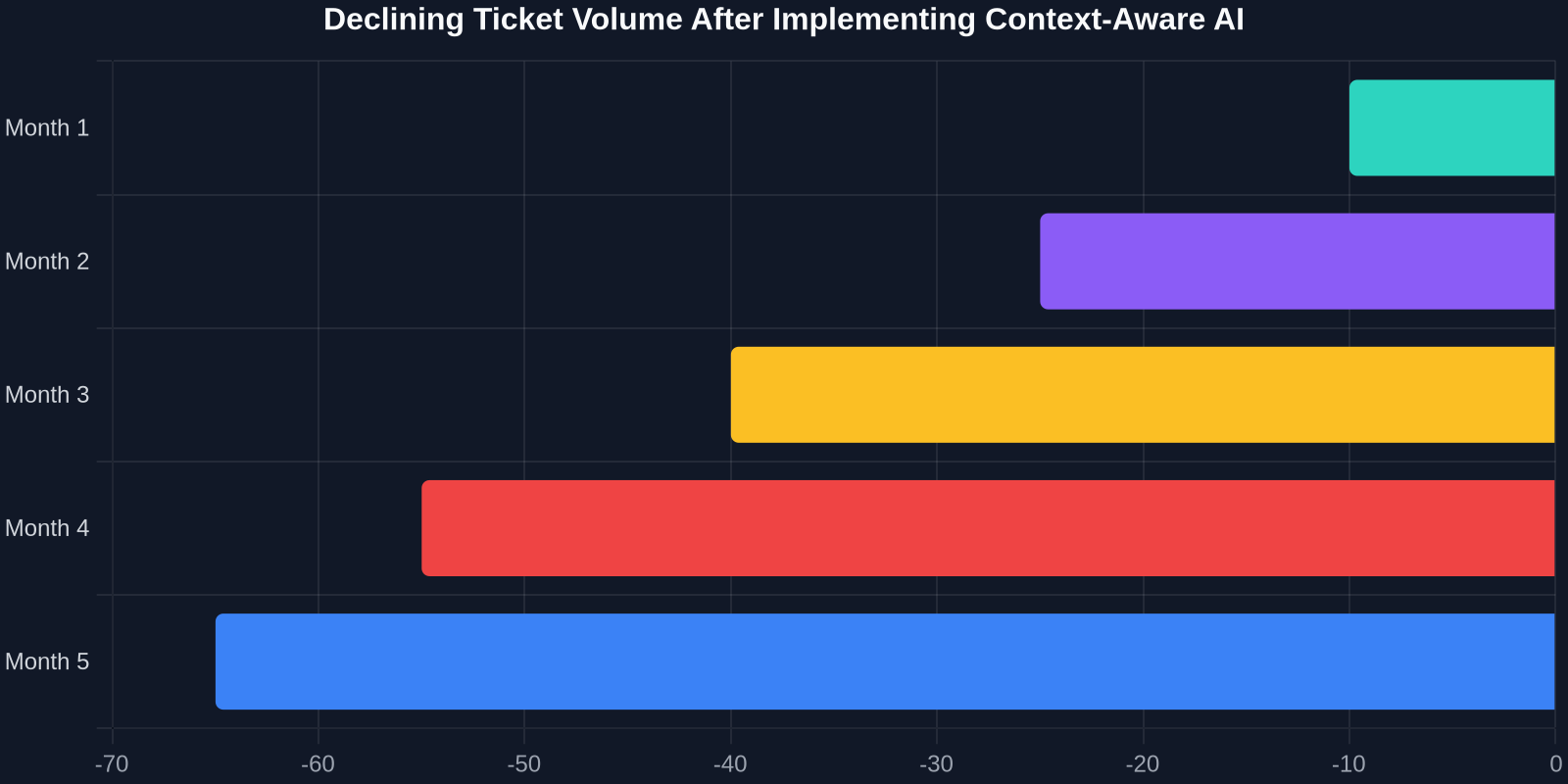
The decline in ticket volume didn’t come from hiding the contact button, it came from actually solving problems on the first try. Customers began tweeting about the surprisingly helpful chatbot, reversing the brand’s reputation almost overnight.
Conclusion: Stop Tolerating Bad AI
Customers are fed up with AI chatbots that waste their time, misunderstand their needs, and make them feel like numbers. But the solution isn’t to pull back from automation, it’s to do it right. The future of support belongs to brands that deploy AI with empathy, context, and a relentless focus on resolution, not just deflection.
Your customers deserve a support experience that feels personal, immediate, and genuinely helpful. And your team deserves tools that reduce hassle, not add to it. If your current chatbot is generating more frustration than loyalty, it’s time to explore AI that finally lives up to the hype. Successly can help you flip the script, from a bot your customers complain about to a bot they barely notice, because their issues are already solved.